
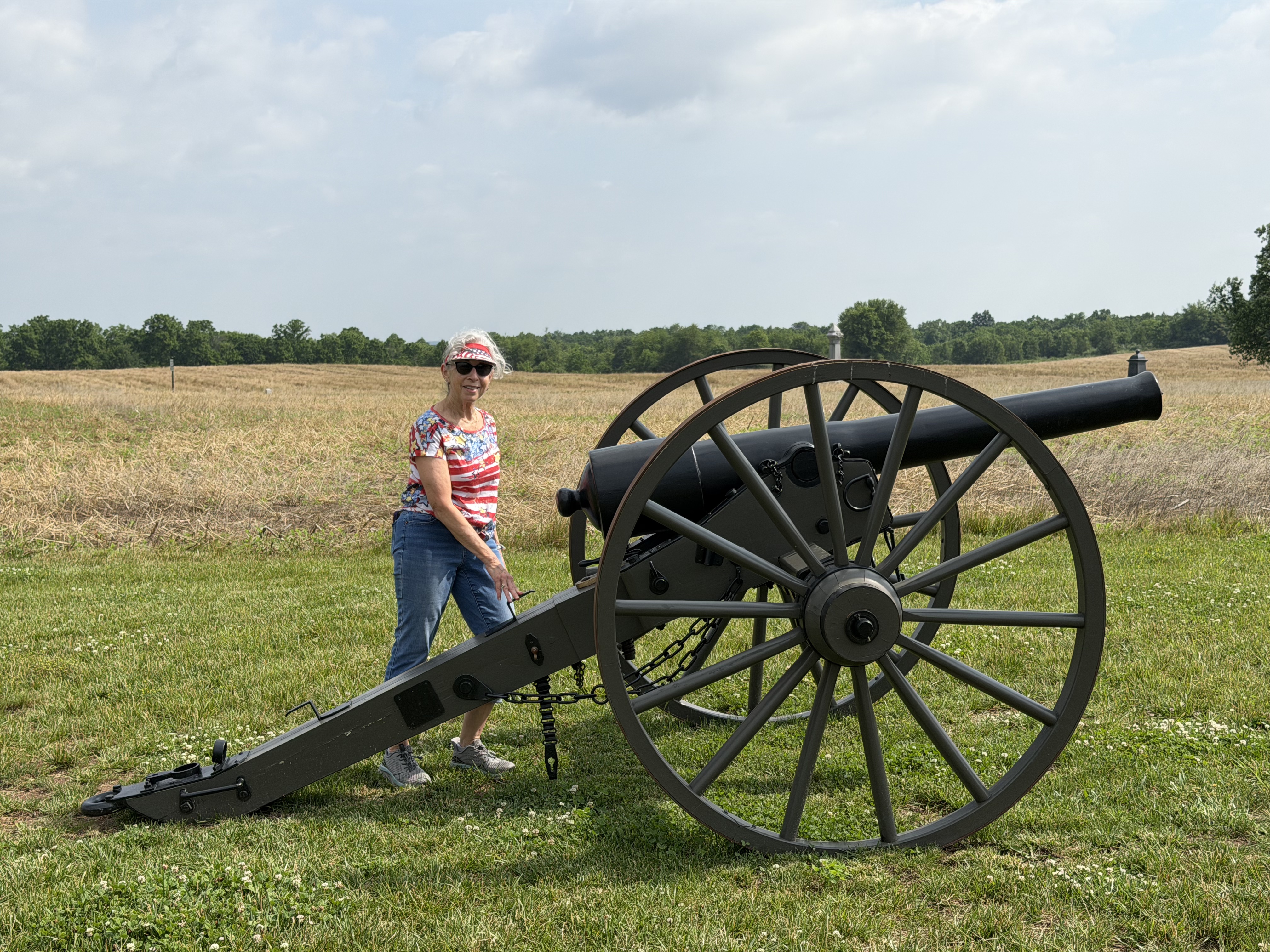
The drive to Gettysburg took us out of the mountains of West Virginia (go Mountaineers!) and into the farm country of south-central Pennsylvania. The route is partly through a small sliver of Maryland that pokes west into West Virginia, taking a sizeable divot out of WV just past the Cumberland Gap. We didn’t do more than stop for gas while passing through but we can still relate some Old Line State RevWar trivia.
Maryland didn’t see any major battles during the RevWar, but 28,000 Marylanders joined the Continental Army as “The Maryland Line”, which was highly praised by General George Washington, earning the nickname “The Old Line State” due to their bravery. These troops were crucial to the war effort, and we thank you all for your service. It is also noted that Baltimore Town (today’s Baltimore) served as the temporary capital of the colonies after the capital seat of Philadelphia was threatened with occupation by the Redcoats, with the 2nd Continental Congress assembling there from December 1776 to February of 1777.
We can also add another travel note here: the interstate highways of West Virginia and Maryland all seem to be more under construction than not. The extremely bumpy ride, much of it in a “single lane squeeze down”, played havoc with our kitchen cabinets. The upper cabinet where we keep our “unbreakable” Melamine dinnerware popped open despite a pillow and spring-bar put there to prevent that. The result was a nice pile of Melamine shards that was discovered when we set up in Gettysburg.
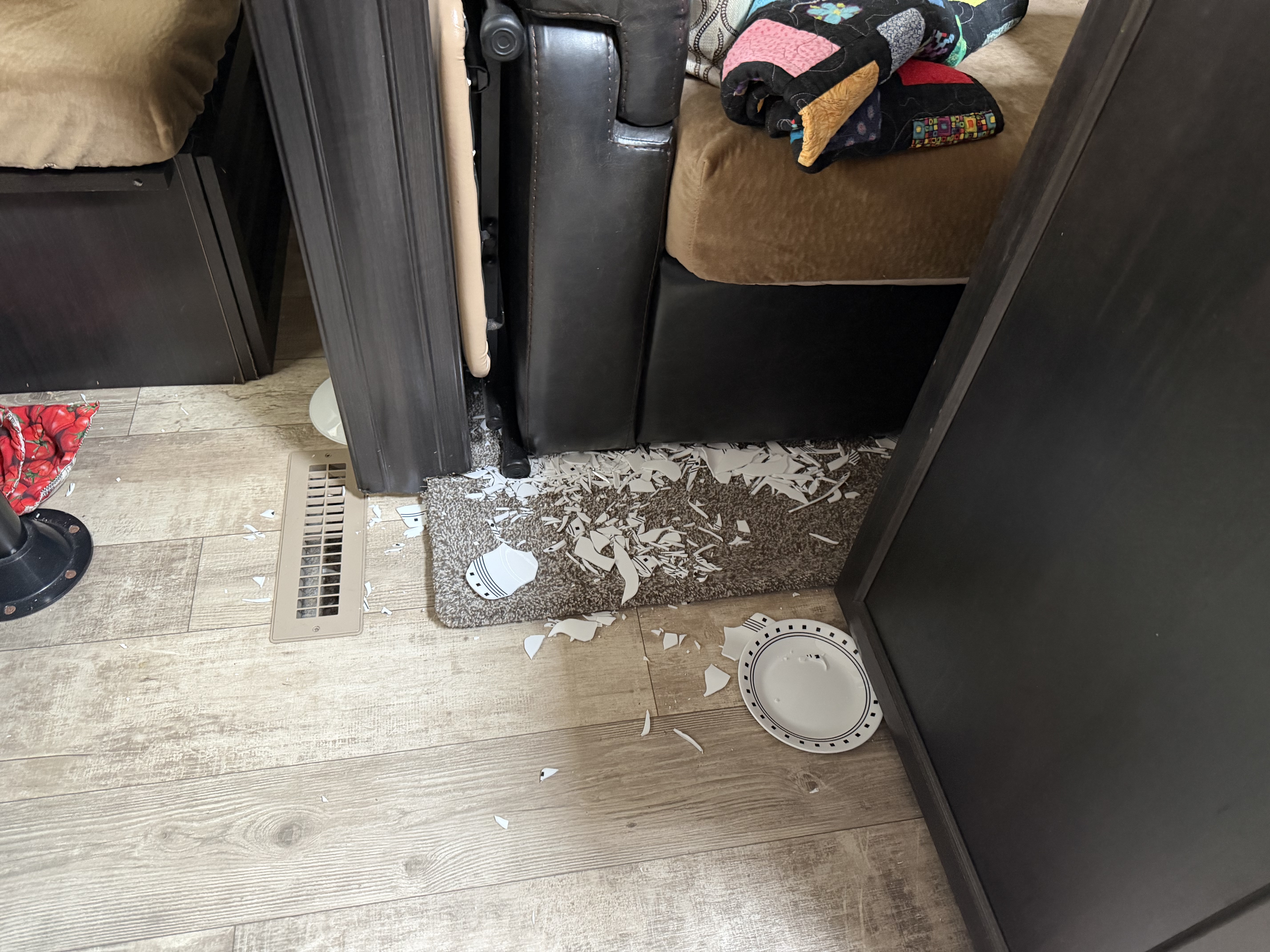
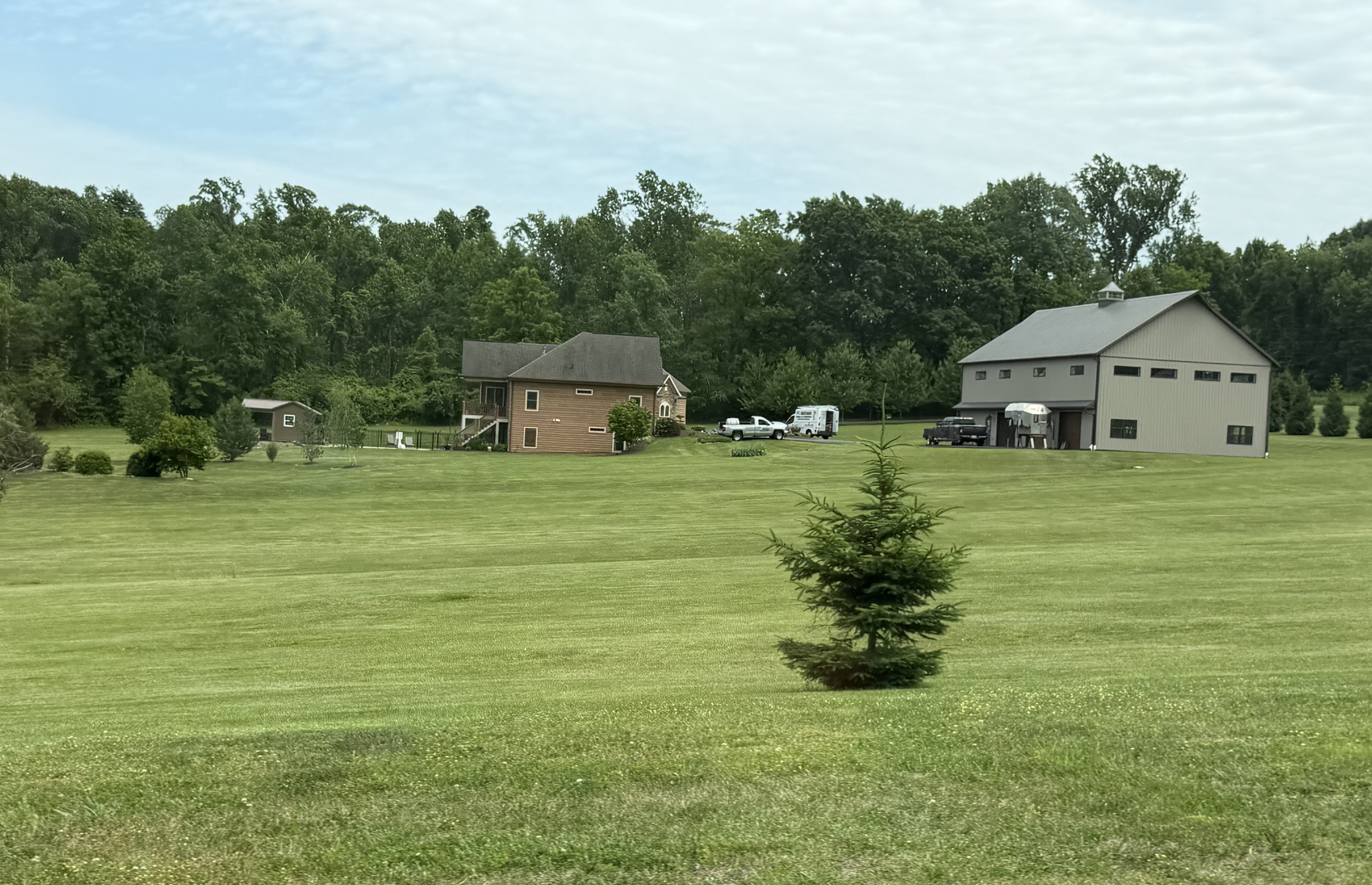
Beyond that not-unique inconvenience (it happened once before on May 26, 2022, during our cross-country move), much of the last bit of the drive was through some very pleasant countryside.
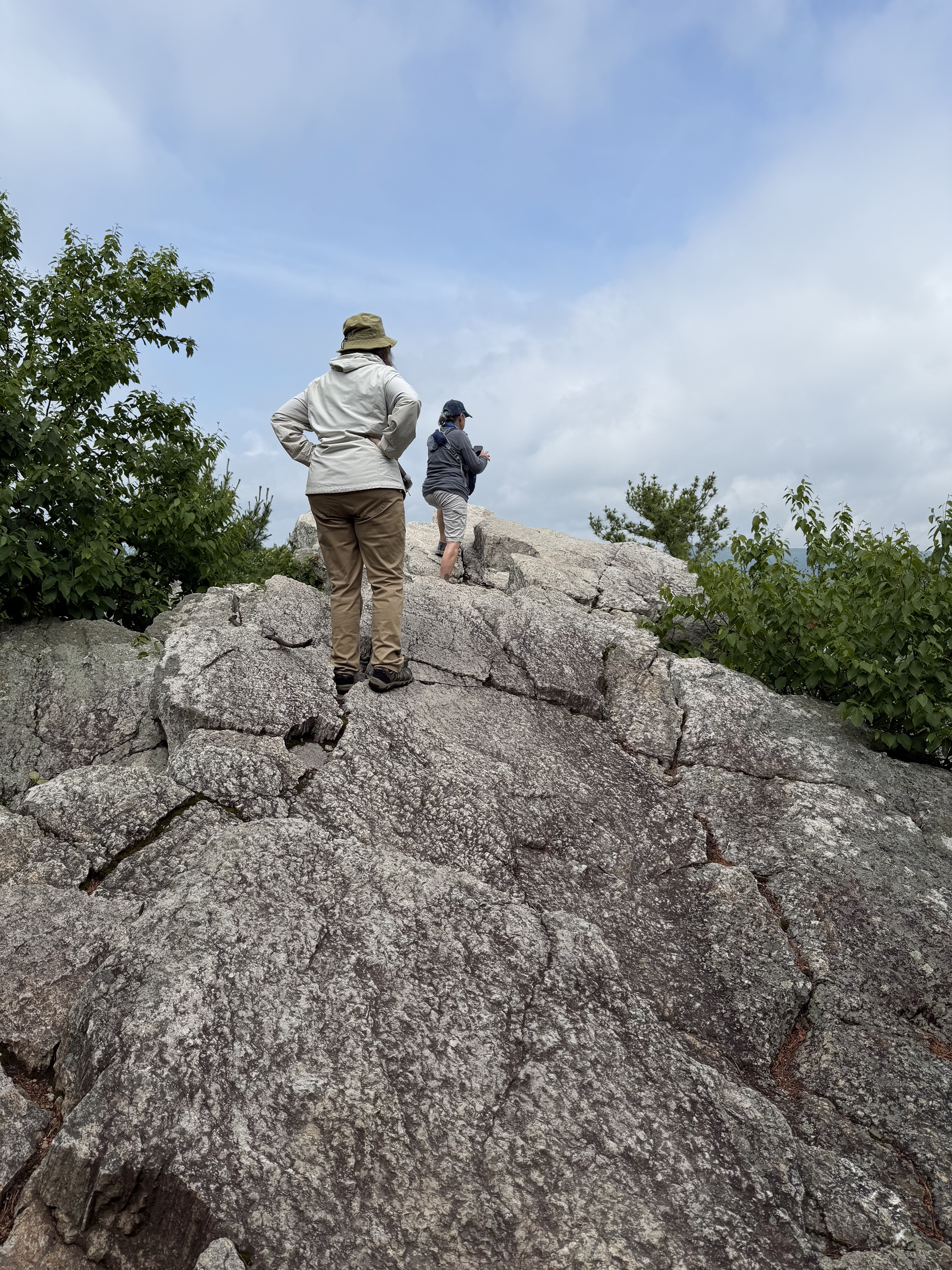
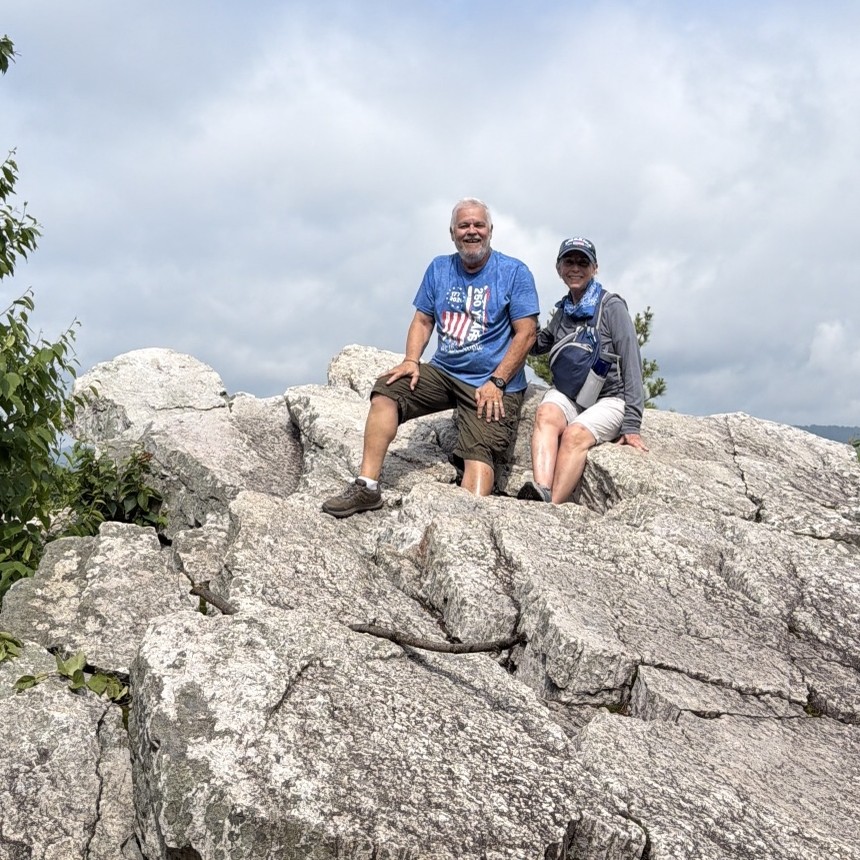
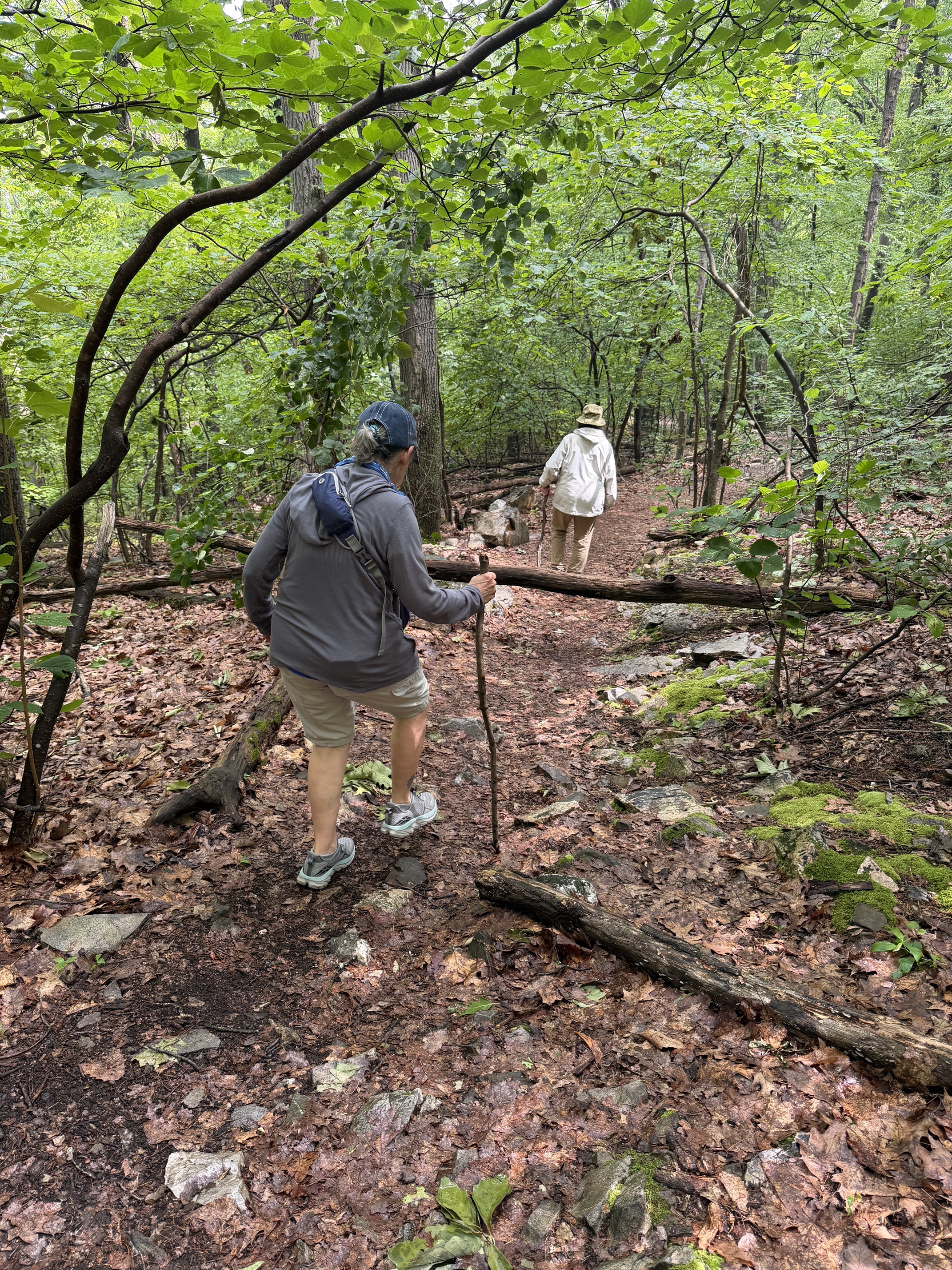
We spent the first of 2 days at Gettysburg Campground (totally recommended, 5 stars all the way) by visiting the Appalachian Trail Museum in nearby Gardeners Pennsylvania. Wendy had previously hiked a 13-mile section in Connecticut with her sister and thought it would be fun to hike a short distance of it with me. She got her wish for the “short section” part, it was only 3 miles. But she neglected to inform me that the first half was seemingly straight up a hill, and the return therefore straight down. We hiked the Pole Steeple Trail, which is an offshoot of the AT (shorthand for Appalachian Trail). The AT itself is a 2,200-mile-long trail through 14 states that has one end in Georgia and the other in Maine. It hosts some of the most rugged trail hikers in the world every year, and is famous for its “white blazes”, a painted slash on a tree or rock marking the trail path, with multiple slashes signifying something on the trail like a sharp turn or other trail intersection. Blue blazes mark side trails that branch off the AT — to water sources, shelters, viewpoints, campgrounds, or alternate routes. The Pole Steeple trail is a blue blaze trail, lending homage to the phrase “where in the blue blazes are we?”. I muttered it under my breath more than a few times.
We picked up a partner in the museum itself when we were discussing an appropriate “easy” short hike. Andrea, a local farmer, had come for a “short, easy hike” and Wendy asked her if she would like to join us. Wendy and I were in tshirts and shorts, Andrea was covered head to toe, shoulder to wrist, hip to ankle in hiking togs.
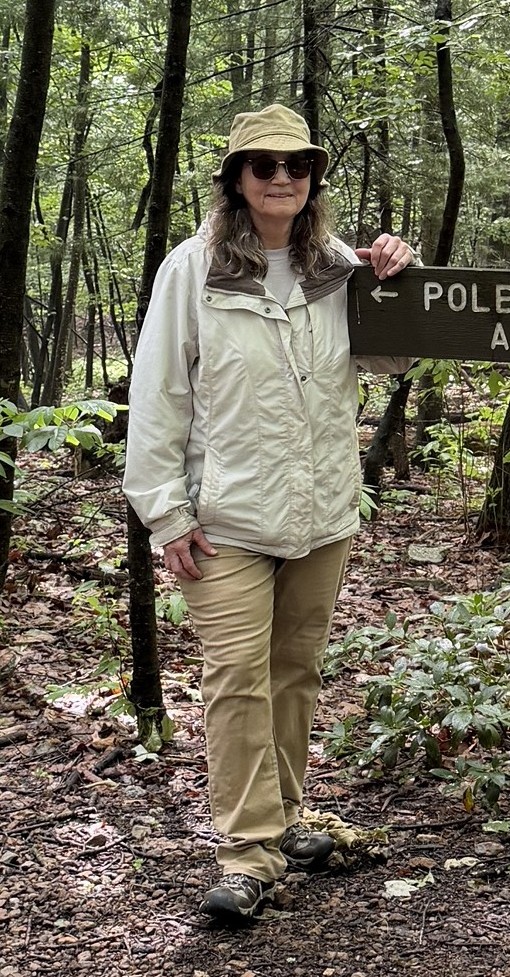
Here’s a Pro Tip: never ask a seasoned AT hiker, like the aging Ansel Adams type that runs the museum, for their recommendation of a “short, easy” segment. Their understanding of short and easy might be vastly different from yours. I think the only thing that kept me hiking straight up that trail, drenched in sweat and out of breath, was the thought that the two women, who started out behind me and quickly passed by me, were going to beat me to the top (which they did anyway). As much as this would NOT have been my short, easy trail pick, I have to admit the view from the rocky overlook, which you have to scale up to see, is totally worth it. And to be clear, I beat them down the trail, so there.
The overview was from a high outcropping that you needed to scale up to the top to see anything. The view was stunning, and made us remember the frequent thunderstorms that kept sweeping through the area every day. Thank God, not today.
Our second stop that day was to Harrisburg, about a 25 mile drive, to see the Pennsylvania Capital Complex and State House (remember our thing for state houses?). This one beats the daylights out of West Virginia’s, but to be fair Pennsylvania has had their capital longer and is better funded. This time we opted for the self-guided tour because all of the days’ guided tours were filled up. I think we did better, being able to pace ourselves faster, and having the flexibility to dart around and see things that weren’t crowded at the moment. There was a huge press conference in the main rotunda due to the fact that next week is budget week for the legislature and everybody was trying to get their voice heard.
We worked around that chaos and found some bored looking security guards to recruit as our personal tour guides. Jacob, guarding the Representative wing at the time, gave us the inside scoop on what to see, and where not to waste our time. He definitely recommended both the Representative and Senate galleries as well as the Governor’s Office, which we managed to do in short order without having to be herded along like cattle.
The sculptures and statuary are very impressive, as is the artwork and architecture. We highly recommend making this a stop on your visit.

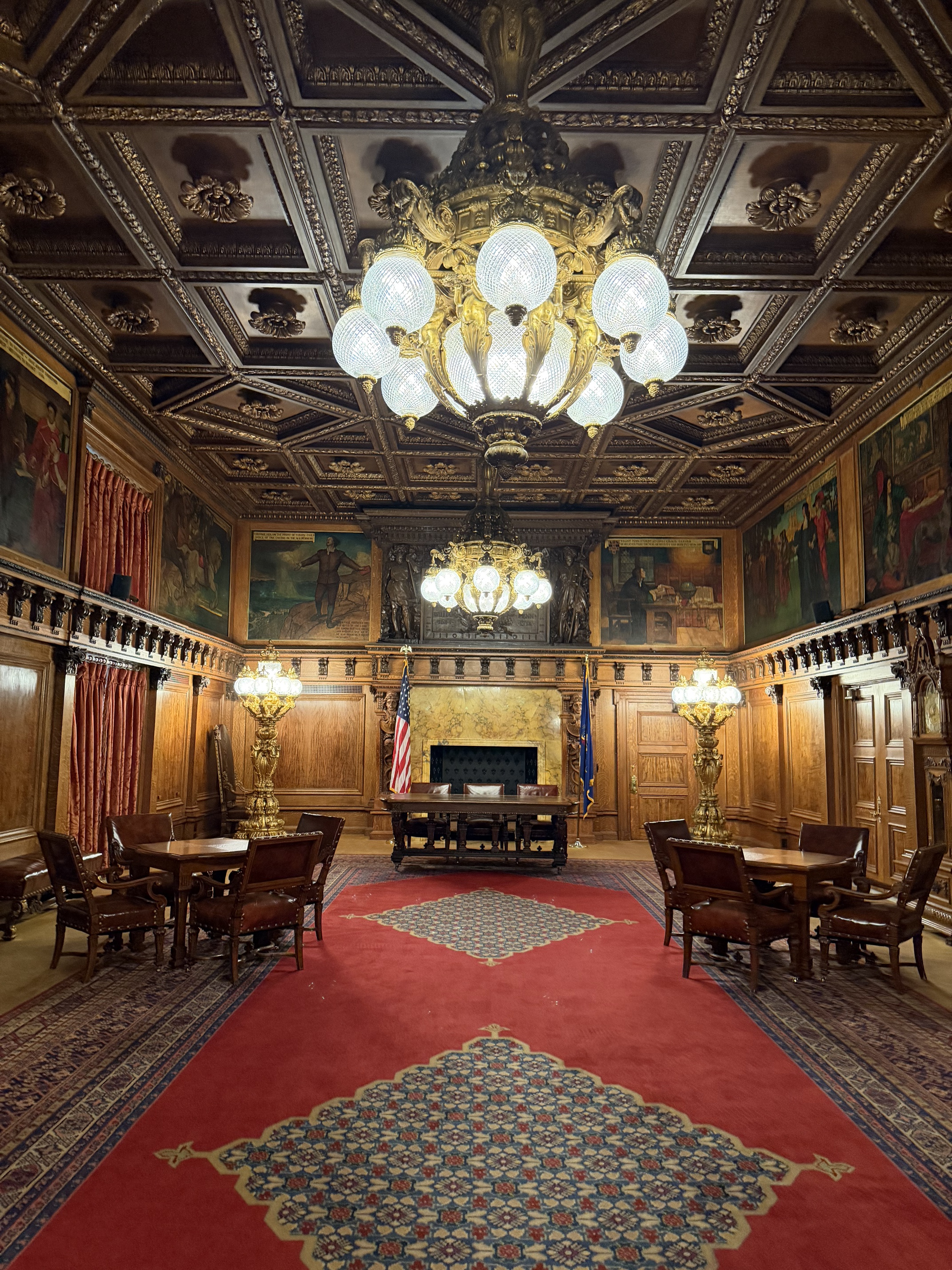
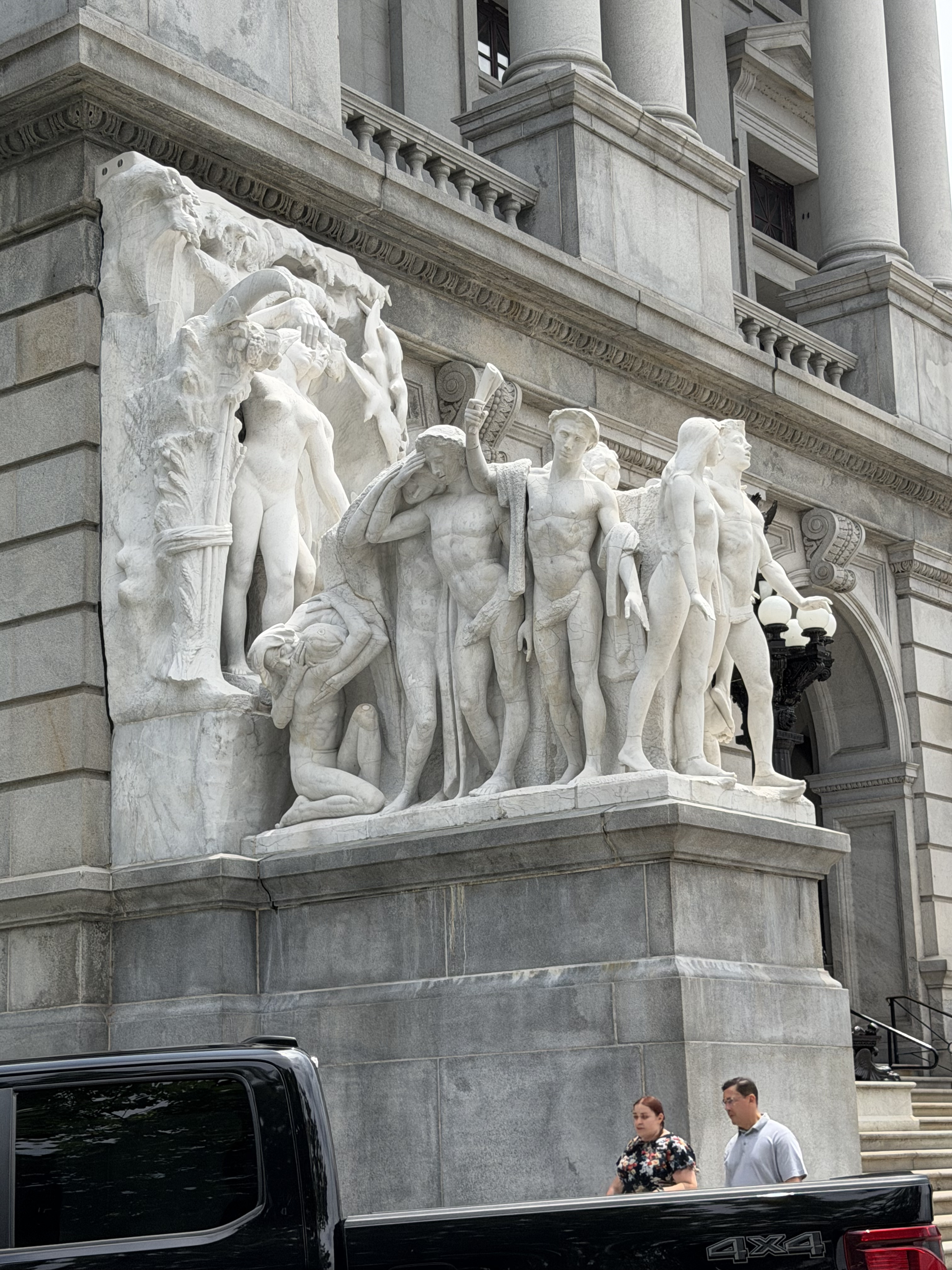

Pro Tip: when visiting the Pennsylvania State Capitol, take the self-guided tour and make sure to talk with the Capitol police guarding the House and Senate galleries as well as the receptionist in the Governor’s office. We found them looking bored and craving a little human interaction. As the regularly scheduled guided tours have as many as 40 tourists in them, you will get a much more personal tour!
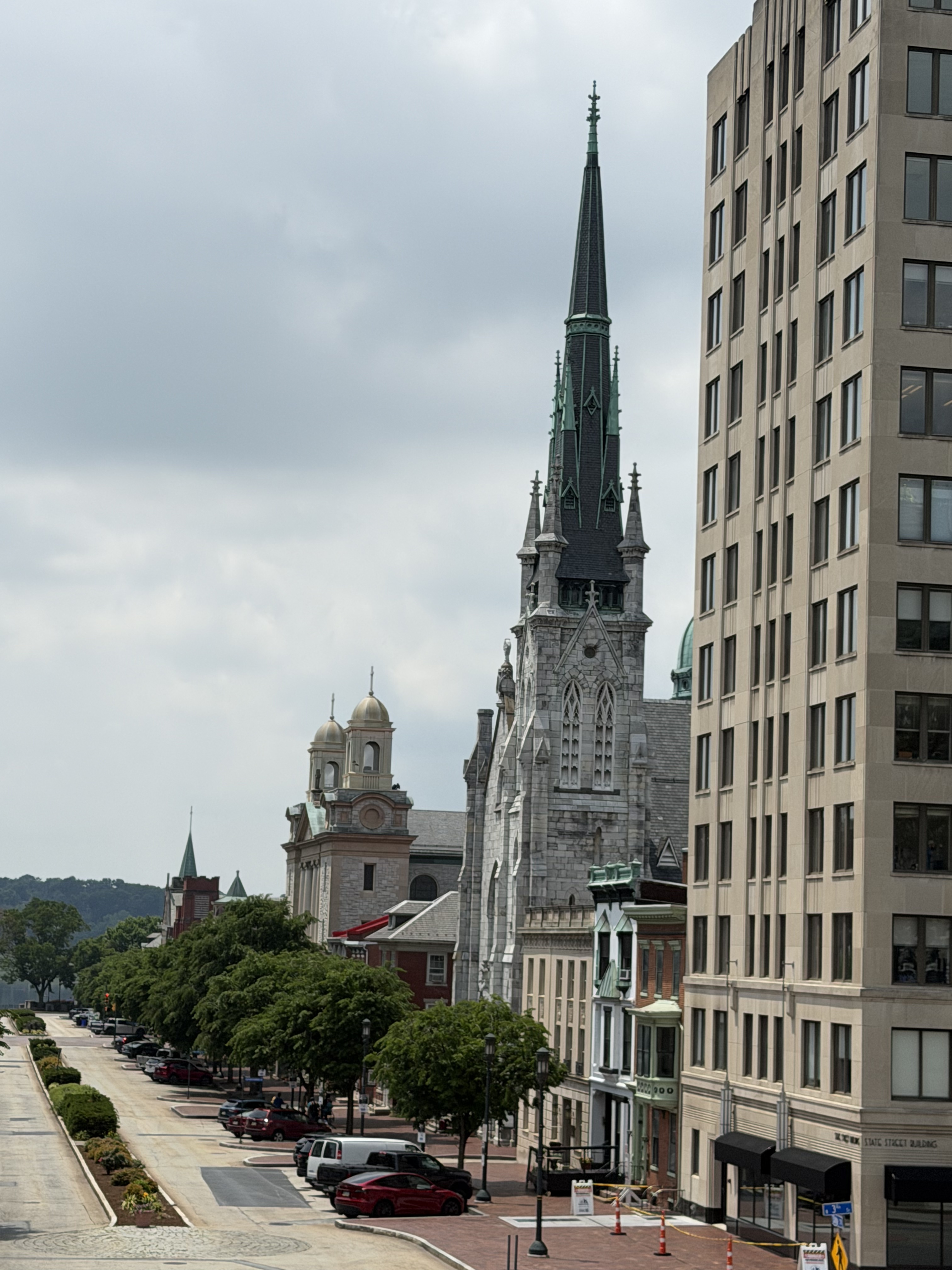
Of course, the city of Harrisburg is quite beautiful too, with stunning churches and old buildings. It is very walkable, and we had no problem parking the truck only one block over from the capitol building.
We dipped one more toe into the CivWar pool in our visit to Gettysburg. There is a very impressive Battlefield Visitors Center, and a super convenient self-guided vehicle tour of the battlefield. The battles raged all around the town, so the driving tour follows many roads all throughout the county. There is a nice brochure for the self-guided tour available at the Visitors Center. Plan at least 2 hours to finish it.
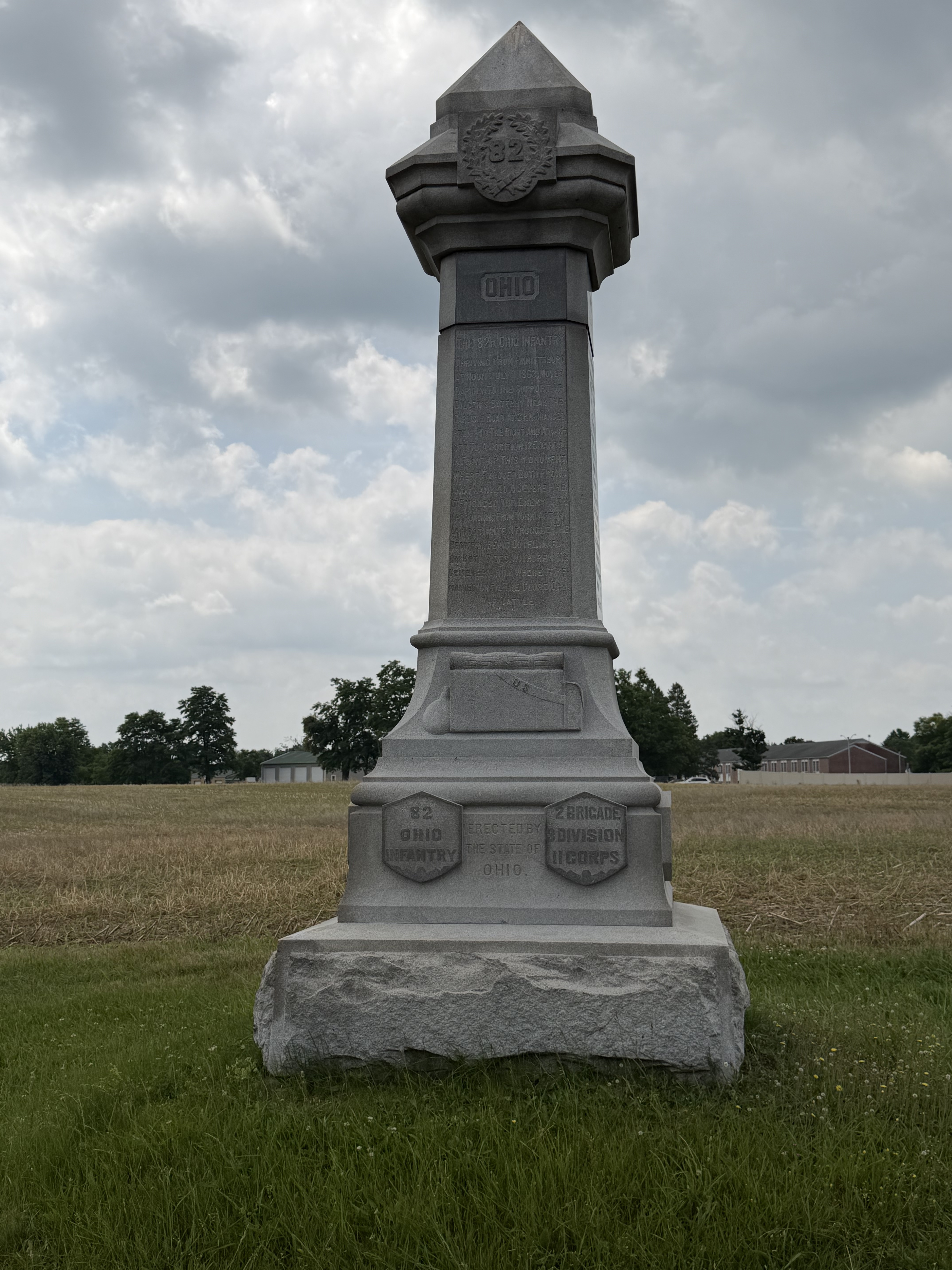
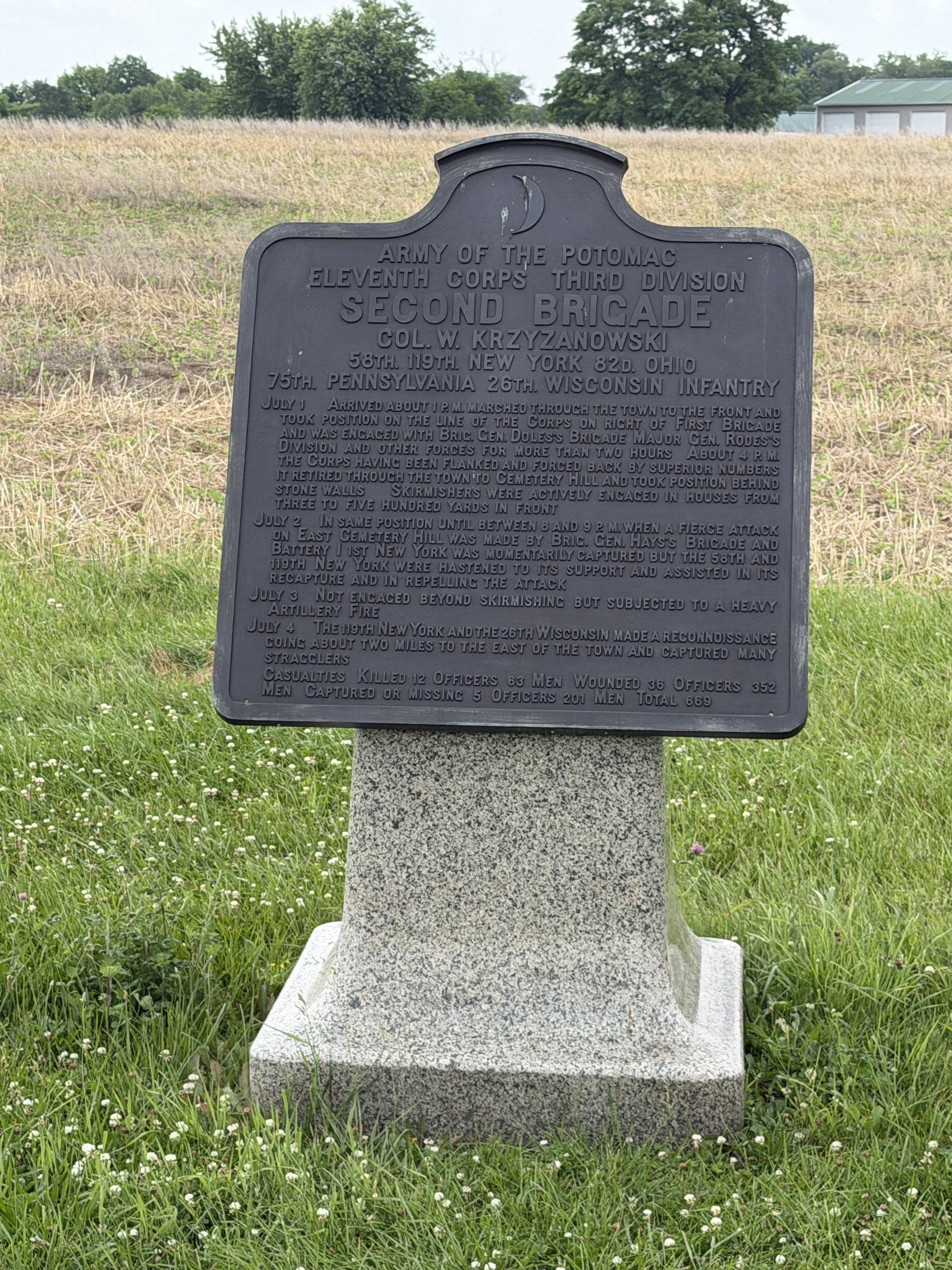
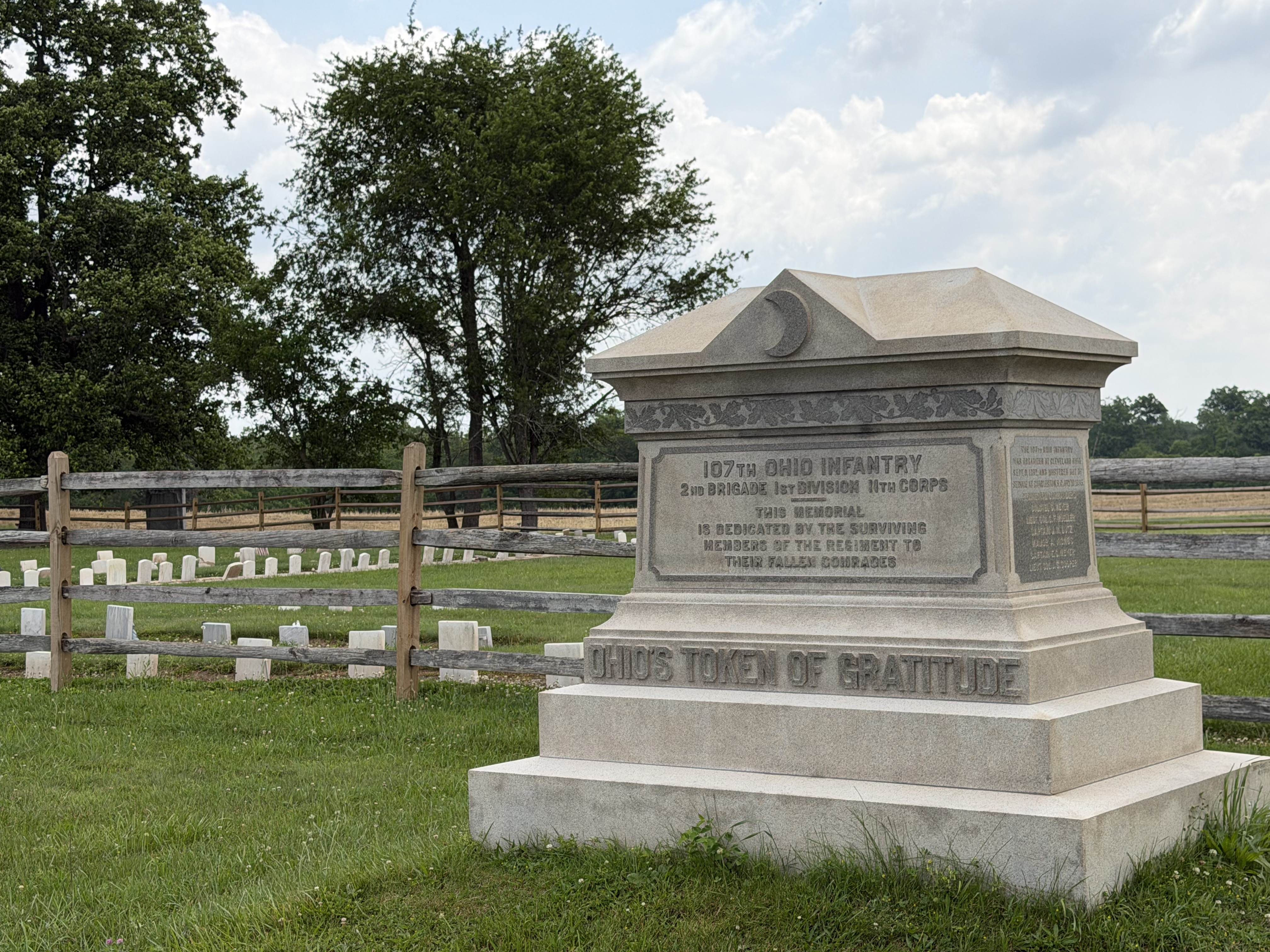
Gettysburg is at the intersection of several country roads that in the 1800’s collected trade and travelers. On July 1, 1863, a large confederate army and a smaller union army used those roads to converge on the town, confederates on the west and north and union to the east and south of them. This was the start of the confederate campaign to conquer the north and bring the war to a victorious close. They waged battle, starting on the first day in the open fields around the town, but the confederates rapidly overwhelmed the union soldiers, who retreated with great haste back into and through the town itself. The confederates chased the blues through the town and drove the union army up on top of Cemetery Ridge and Round Top, high ground east of town. From there the union army held their position for 3 days and on July 4th the confederates abandoned the town and retreated south (likely short of ammunition and supplies), starting a chain reaction that eventually pushed the confederate army to Richmond Virginia and surrender. Gettysburg was the beginning of the end for the south.
We spent our second day immersed in the town battle and found the newly-constructed Beyond the Battle Museum just east of town. It offers a very comprehensive historical display of Gettysburg and Adams County the includes lots of detail on the lesser heroes of the CivWar. Also included is an Immersive Experience of what it was like for locals when the battle ran and raged through their town. The display is the interior of a typical home, rattled and shaken by growing cannon blasts and musket shots, with soldiers yelling in the chaos outside. Sitting there listening and feeling that experience was frightening even when you know it is a simulation. We can’t imagine the fear and panic in the people of Gettysburg when the real deal was carrying on outside their doors and windows.
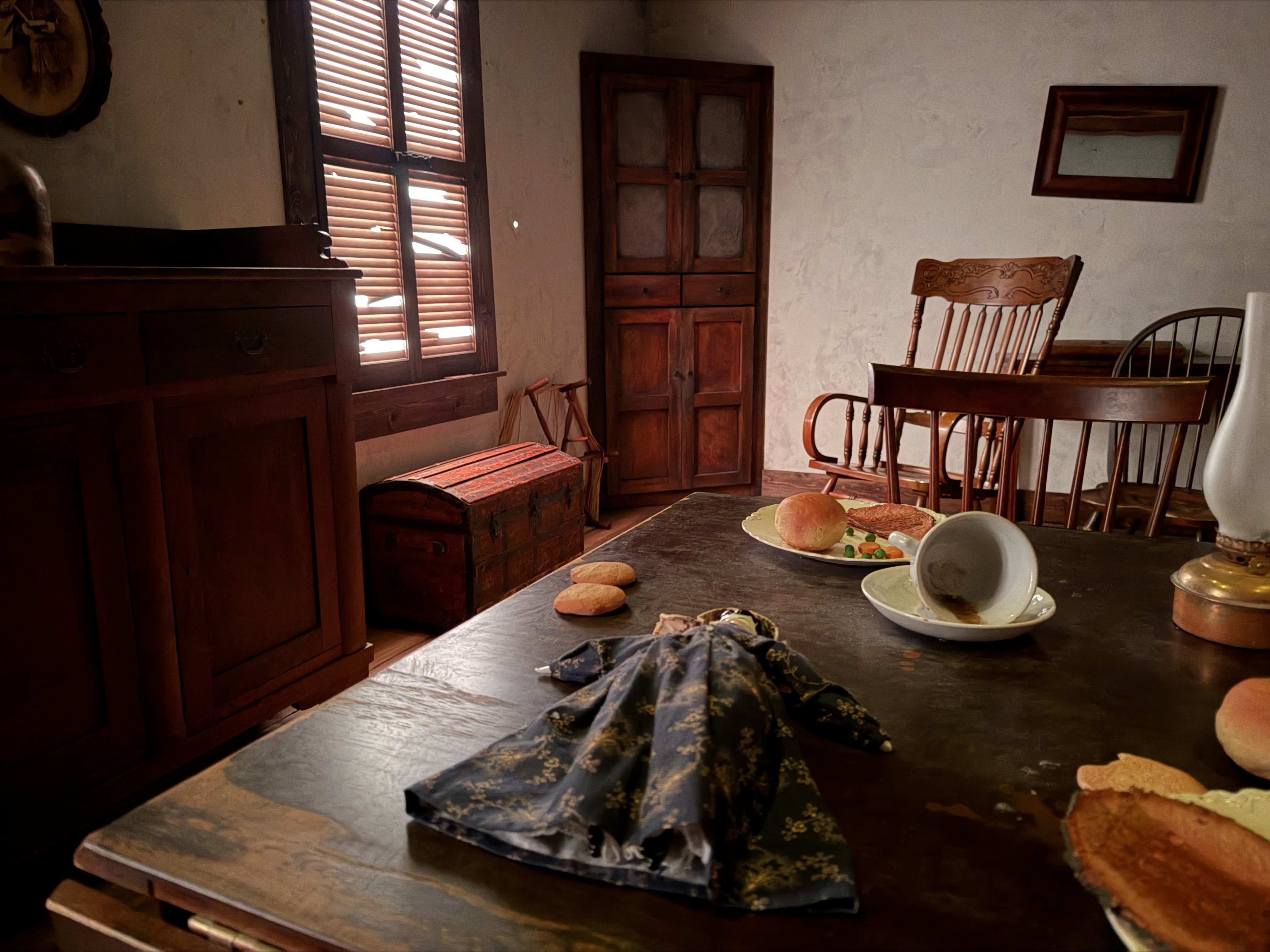
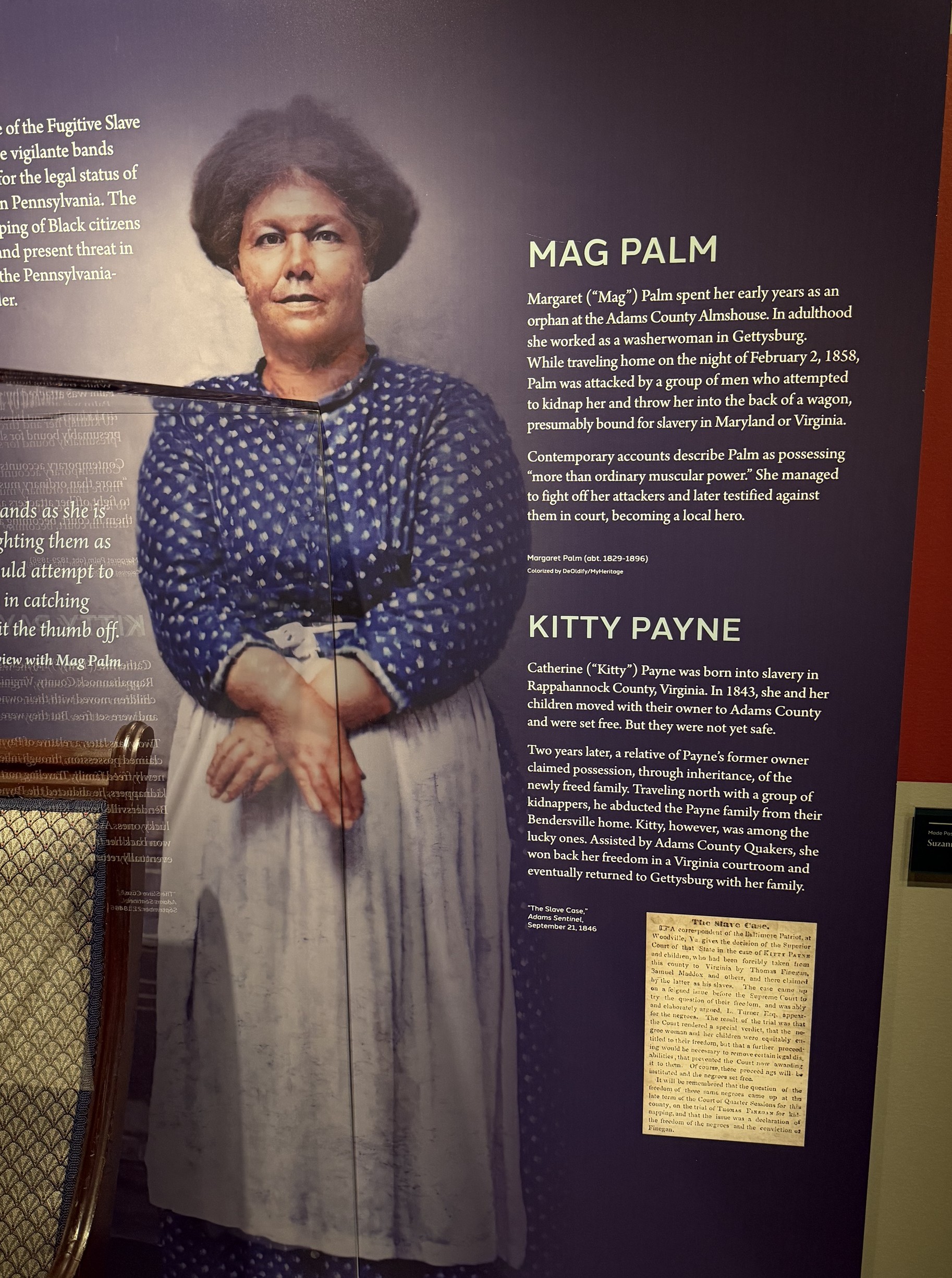
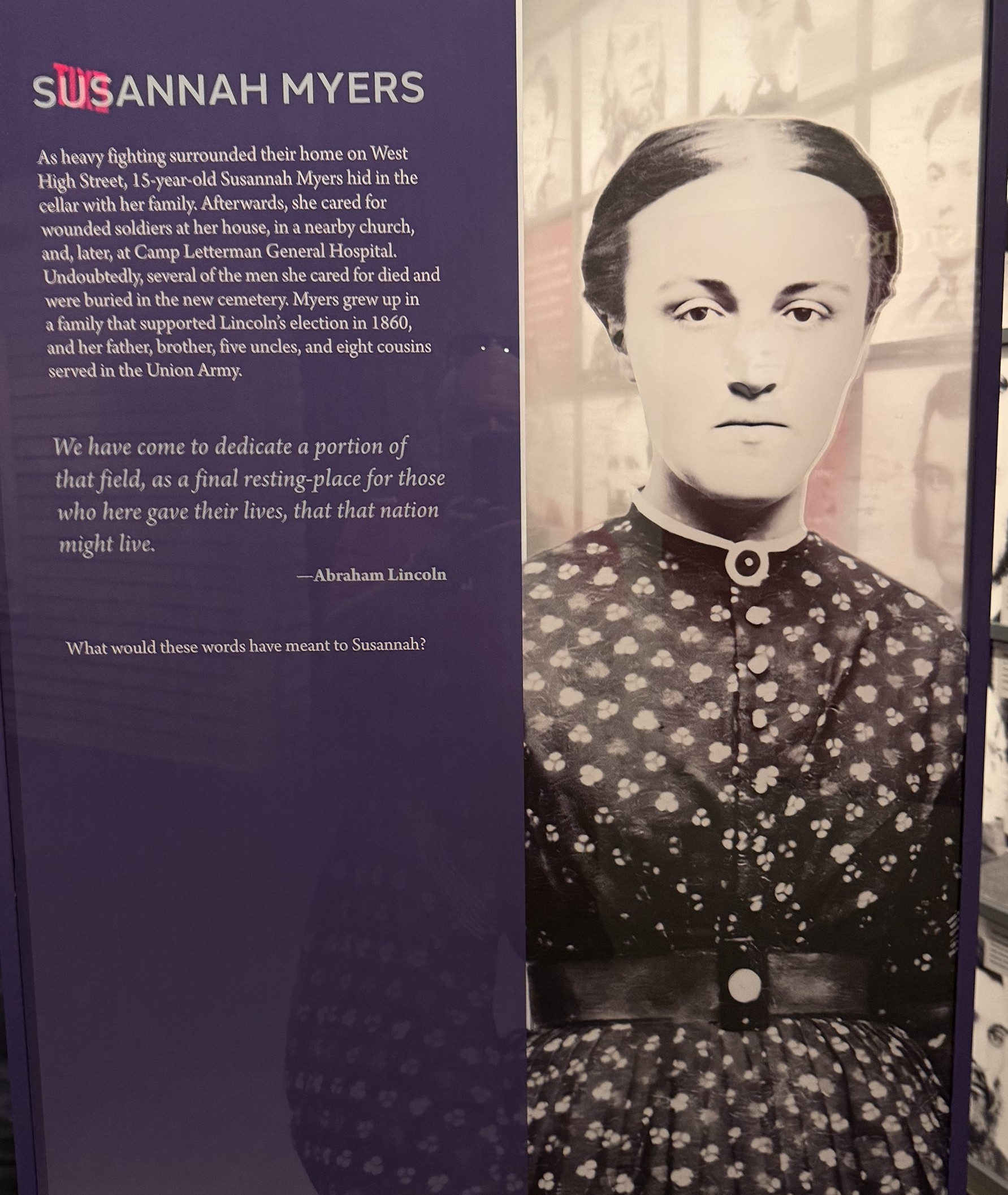
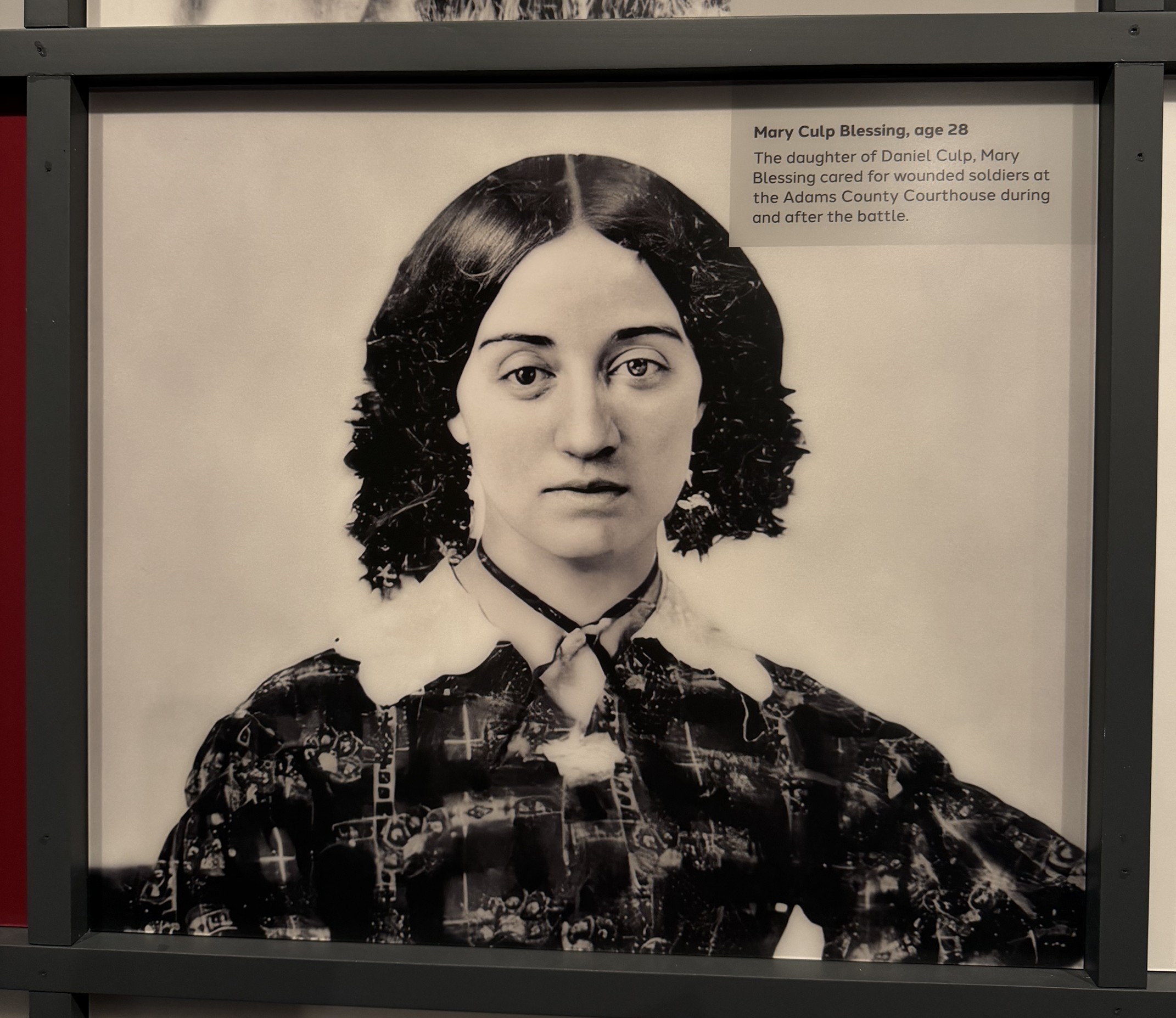
There are many exhibits dedicated not just to the history of Gettysburg and Adams County, but to the people that lived through the epic battle. This is a perfect place to help us herald some of the lesser-known heroes of America.
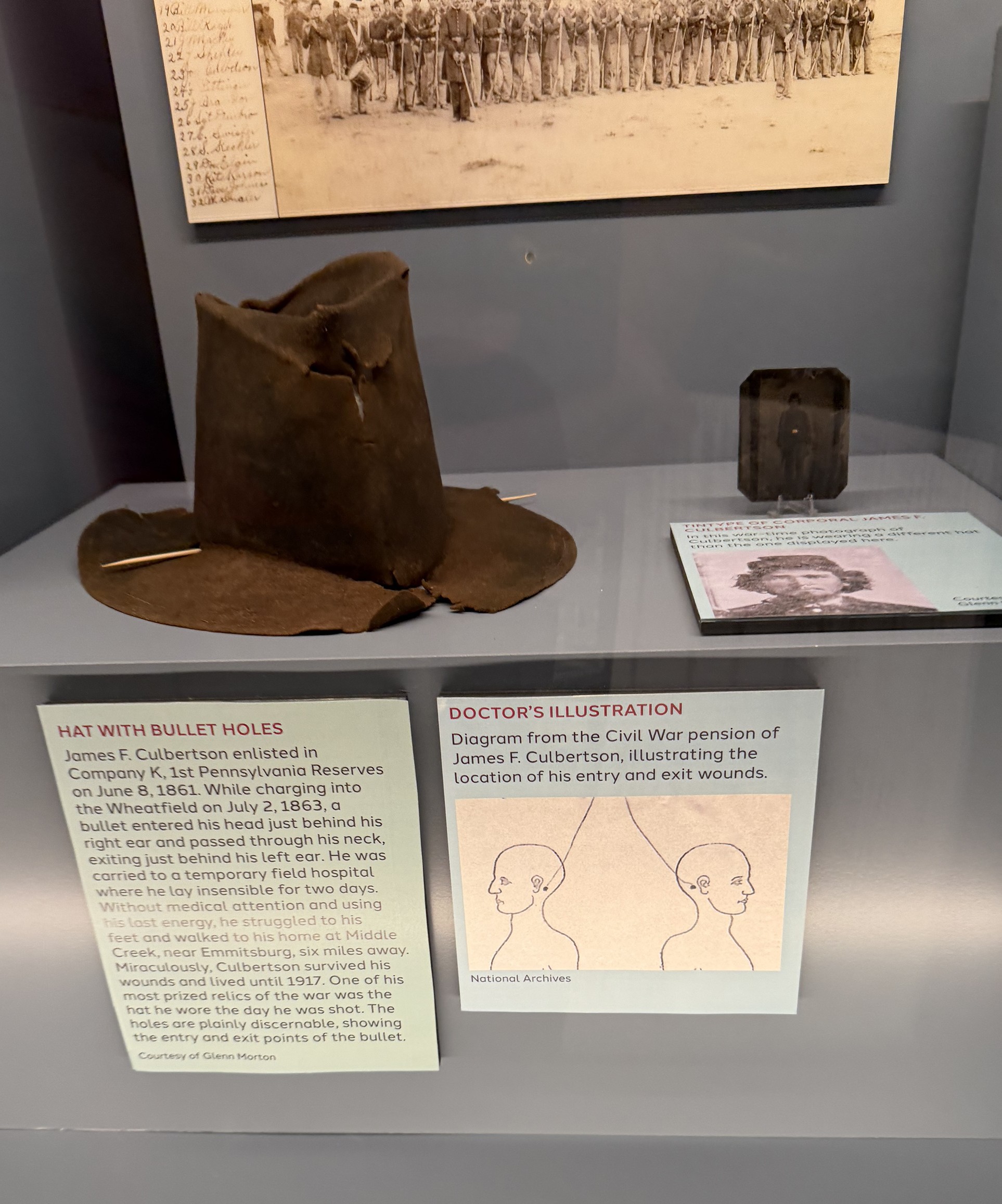
In the picture of the hat above, read the plaque carefully. This hat was worn by James F. Culbertson, a union soldier shot in the head on the second day of the battle. The stick through the hat shows the path of the bullet. He was treated in a field hospital and 2 days later walked 6 miles home. He lived another 45 years. This in a time when a mere flesh wound might spell death from infection for a soldier. Amazing.
Gettysburg had a large number of casualties on both sides, over 51,000. 7,058 soldiers were killed on both sides, and a large number of missing and presumed deserters contributed to the decision of the confederates to withdraw despite their apparent victory.
Gettysburg, the town, still has many of the original houses from the battle since the confederates, for some reason, didn’t burn the town to the ground before withdrawing. Many are marked with a plaque, and we walked several of those original streets to get a feel for how the chaotic chase must have felt.
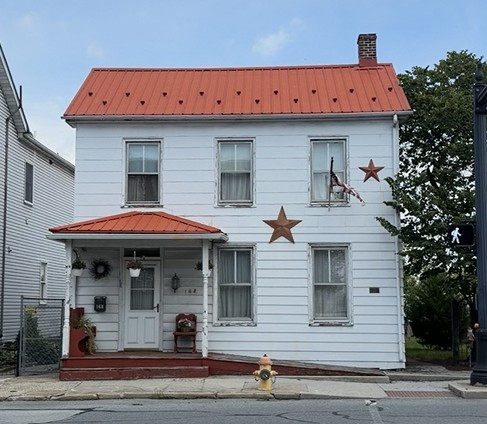
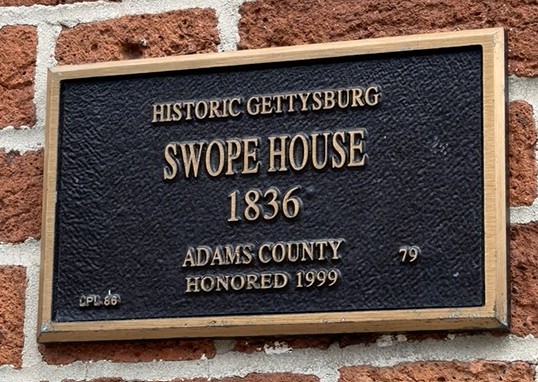
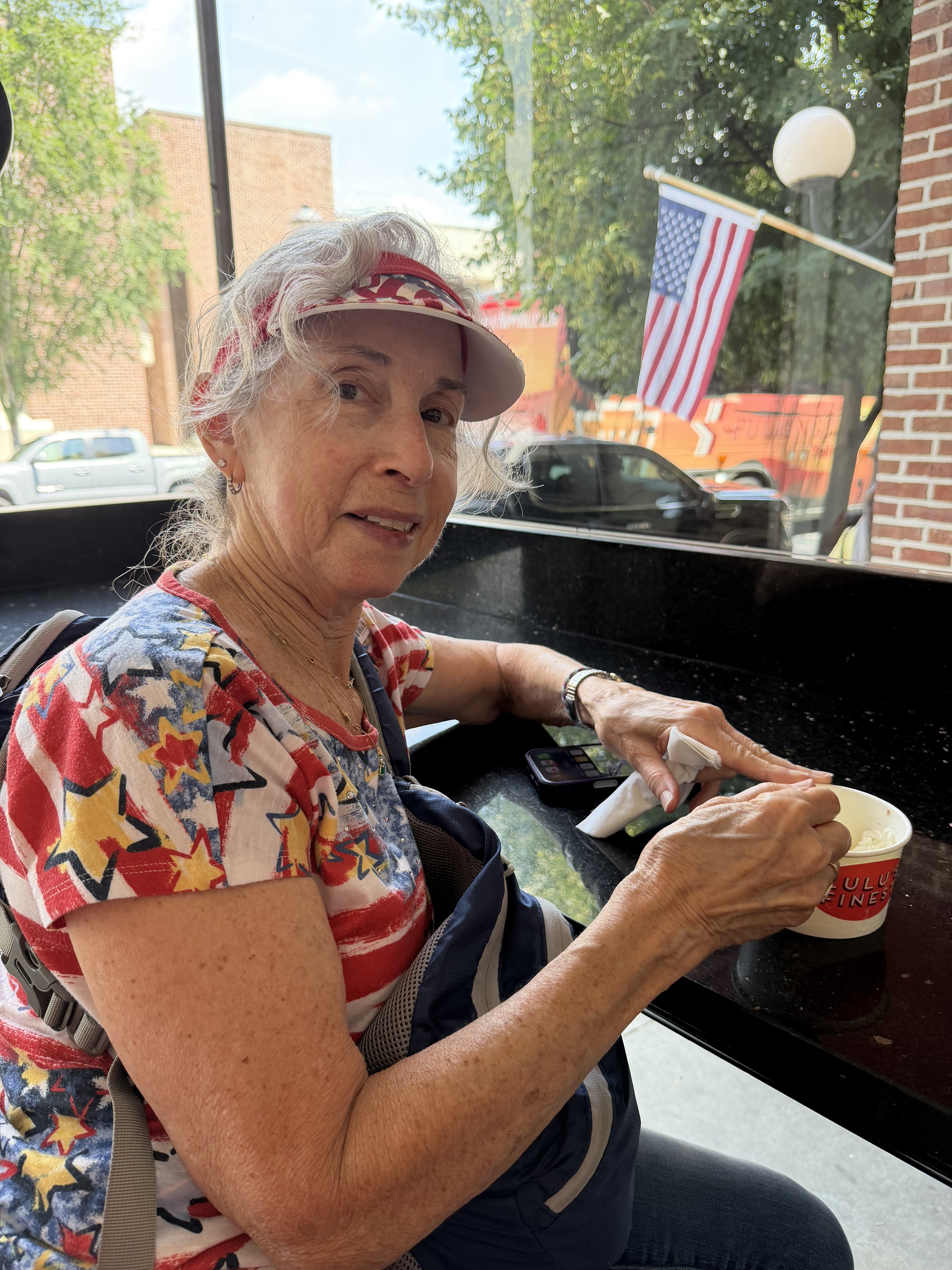
And wouldn’t you know, there was Lulu’s Finest Ice Cream, just a few doors off of Lincoln Square!

Gettysburg is a CivWar hotspot, and as we travel further east, RevWar begins to dominate again. While we won’t be stopping, we will drive through York Pennsylvania, previously known as Yorktown, which will have some comment at the beginning of our next installment. Next up, York, Lancaster and Amish Country.
Onward!
Tippy has a word.



Definitely a wonderful extraordinary adventure
HI YOU TWO…I MISS YOU GUYS OUT HERE IN THIS DEM LAND…
Be careful for that log that’s across the hike trail as you’re coming down. It does look like fun and a little exhausting. Frankie