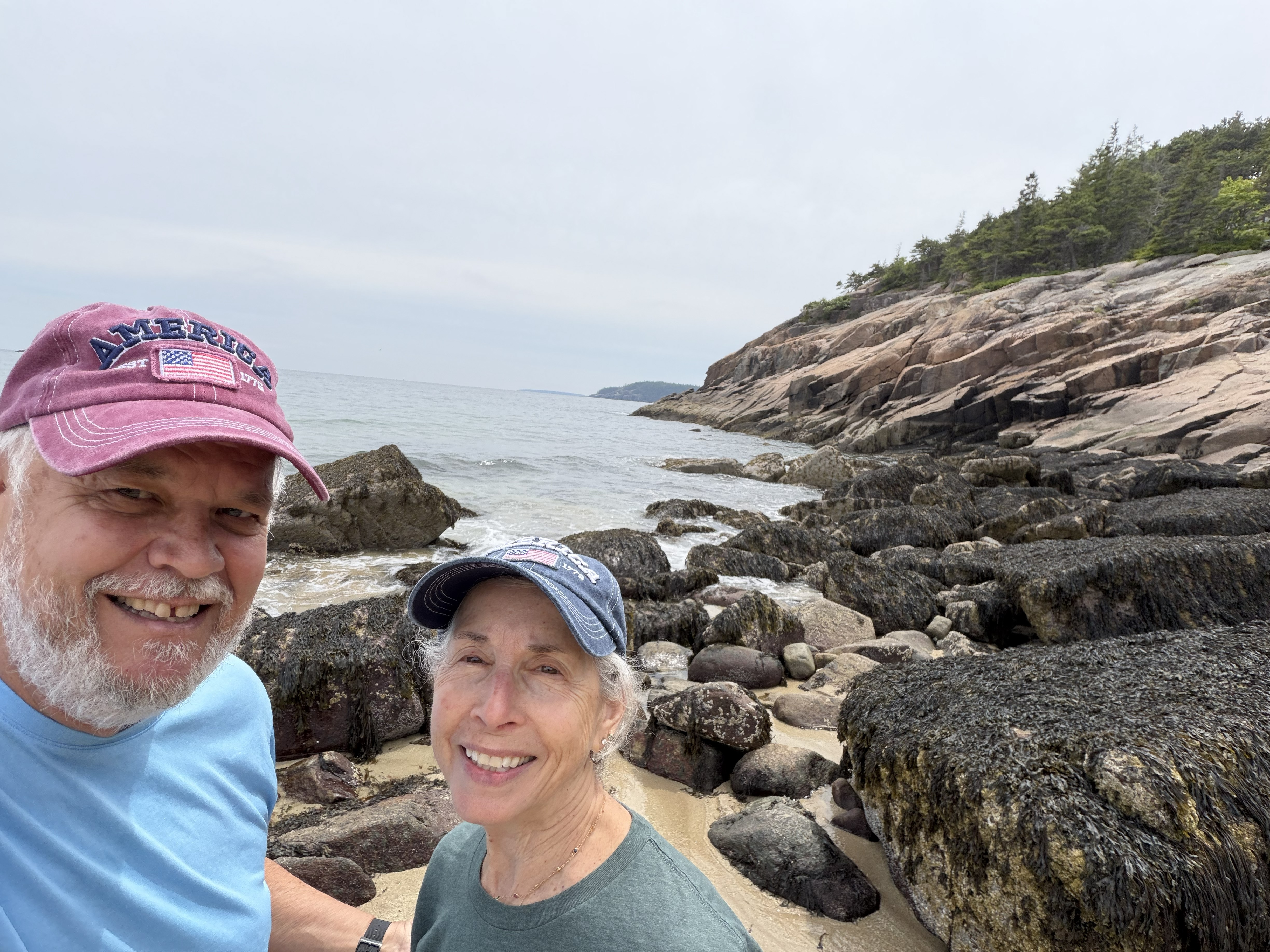
We are, again, on a multi-week trip around the country, this time to celebrate family. This trip has lots of activities (and we’re sure some surprises) for us, all laced together with grandchildren. We’re borrowing a line from Harry Caray, famous Chicago Cubs announcer (RIP 1998), that best describes our “opening day” for the trip.

Our 5-week tour kicked off in Cooperstown New York, the birthplace of baseball. In addition to the Baseball Hall of Fame, there are a few youth baseball tournament companies in the local area that offer summer “big league experiences” for young baseball players. The 2 big ones are Cooperstown Dreams and Cooperstown All Star Village (http://cooperstown.com). Each of these companies operate a large complex of up to 16 baseball fields with a centralized compound that provides housing and meal services for approximately 100 “12U” (thirteen-year-old bracket) teams from around the country to come and have a week of baseball with a major league experience feel to it. Friends and family then book all of the available hotels, motels and Airbnb’s in the surrounding area and crowd into all the restaurants a few times a day. It is quite a money-making enterprise.


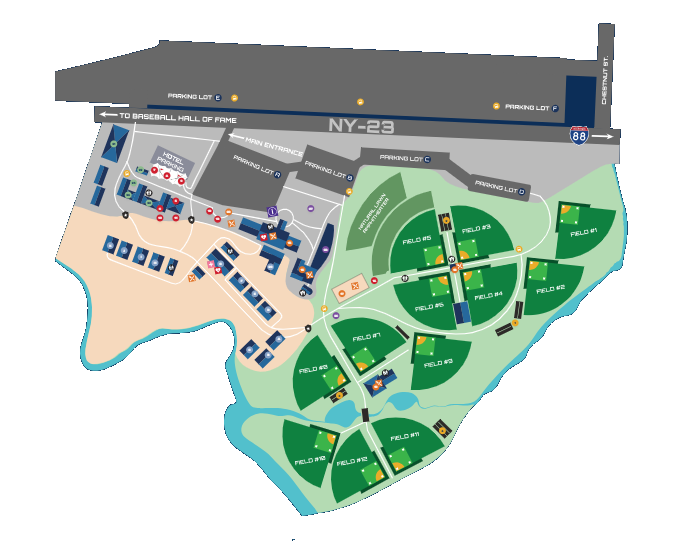
Our grandson Simon plays for (Seattle) City 12U Navy, one of 2 teams from the City Club that signs up every year to play (the other was City 12U Black). 96 teams were registered for the tourney that counted about 1,200 players. Each team gets a “bunkhouse” to stay in with their coaches and 3 squares a day, and each player gets a Cooperstown color-coded baseball cap and 2 Cooperstown jerseys (one “home”, one “away”), plus a giant bag of merch. Each team is guaranteed at least 7 games, 6 in “pool” play that seeds the teams for the tournament finals, and a round 1 playoff spot in one of 2 brackets (gold is the top 64 teams, silver is everybody else).
On opening day there is a big celebration that announces all the umpires and teams and then features 3 skills competitions: fastest base runner, turn-2 double play, and the Home Run Derby. Each team can nominate one player or double play infield team for each skills competition, and a qualifier is held early in the day to determine the final roster of competitors for each. Simon was nominated by City Navy for the Home Run Derby, helped by that fact that he had been on a tear recently with 5 home runs in the previous weekend games. To qualify, a player facing a pitching machine had to hit 5 homeruns within 60 seconds. Simon hit 10 and was one of 8 qualifiers out of the 96 contestants. He placed second to a kid named Bam-Bam that hit 12 (more on him later). That powered up the groundswell of Grandparent pride.
When the derby, the last event on opening day, finally started the crowd, which was perched beyond the outfield fence on the large amphitheater-like bowl surrounding the field, was in a total frenzy. Air horns were blaring, fireworks were crackling, smoke-bomb rockets were everywhere as the seconds ticked down to the first hitter. For the derby, each hitter chose a human pitcher, usually a coach. The first batter did very impressively, hitting 8 balls over the fence to the approving roar of the crowd. Younger siblings were racing everywhere to scoop them up while friends and family were sounding the warning cry whenever a ball sailed toward the crowd.
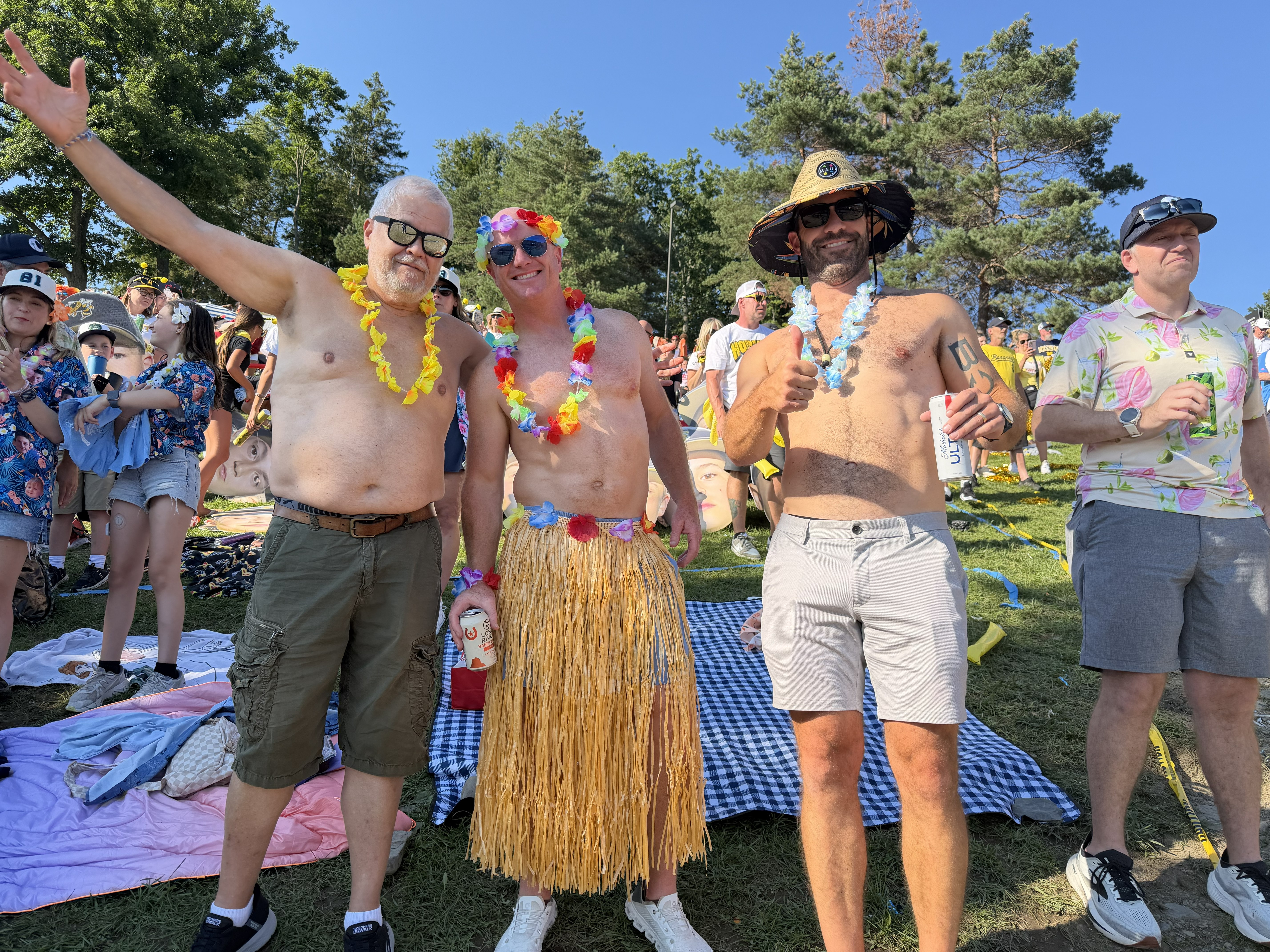
Simon went second. He had chosen his dad to pitch, a natural choice since they spend so much time together in batting practice. Dad had a strategy, a brilliant observation, to concentrate as much on volume as quality of pitches. You can’t hit a pitch that isn’t thrown, he thought, so he lined up as many balls on top of the bin, where he could rapidly grab them with the laces properly oriented and deliver them to the plate, which he did 27 times in 60 seconds. Simon swung like a beautiful machine over and over. A couple of times he had 2 home runs in the air at the same time, which led to us mis-counting his total, which we thought was 9. We were double checking with others in the group to make sure he had beat the prior batter when the judges announced that he had hit 12 of them out of the park. Our crowd went wild. The batters after him never put up more than 6 and we thought he had won it all, only to find out there was one batter left, Bam Bam. The dad next to me nervously muttered under his breath, “why does his name have to be Bam Bam?” We all got tense as he warmed up with his coach pitching to him. All this worrying was for nought, however; it turns out, Bam Bam hits way better off of a pitching machine than his poor human coach (who I have some severe empathy for), as he hit plenty of pitches but only put one over the fence by the end of his minute. Our crowd, all proud City Navy parents and siblings, went nuts. The Grandparent Pride bucket was in full overflow at this point. I’m taking an ounce of credit since I joined the adult Tarps Off group on the hill to cheer him on. It is hard to see in the picture, but that hill the crowd was on was pretty steep, making for interesting seating and standing postures during the 2 hour opening ceremonies. And we were sober, even if you also couldn’t tell that from the photo either.
The base running winner got a pin, the double play team got a plaque, and Simon got a massive pro-wrestling style belt that felt like it weighed 30 lbs. It’s pretty obvious what the signature event is in the skills contests.
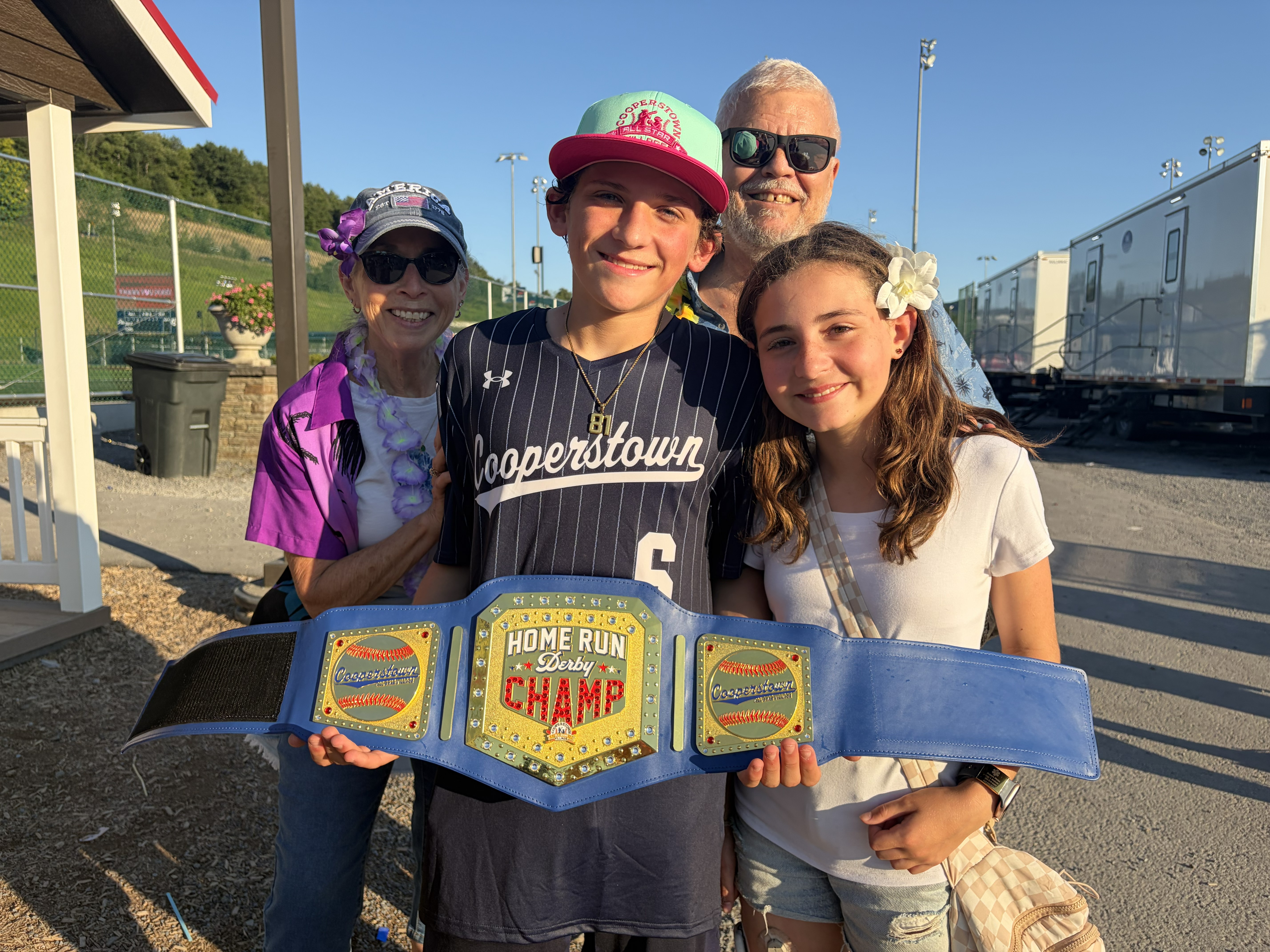
His picture will also be framed and hung in the village honors wall (the Home Run Derby is the only skill to get such an honor). No City baseball team has ever won the Derby, and there will undoubtedly be some serious requests from City Ball management to mount that belt on their office wall. We Grandparents vote to hang it on his bedroom wall.
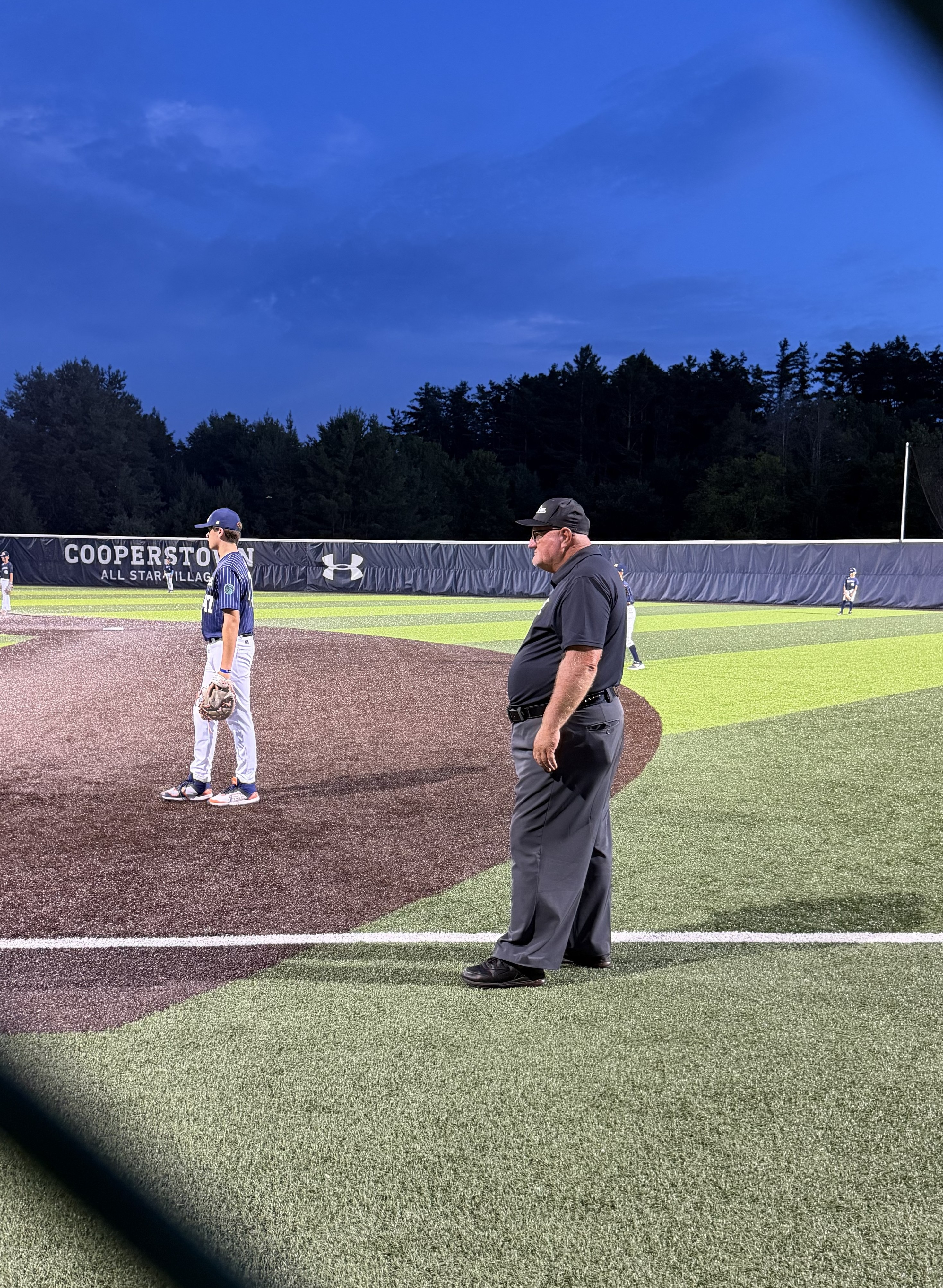
The tournament itself was a ton of fun. City Navy played 6 great pool-play games, winning 4 by a good margin. The two games they lost were by a whisker (9-10 and 6-7) and were easily the most exciting. They also featured the 2 most egregious umpire calls of all 6 games, both with called outs at 2nd base that were clearly not, and both going in favor of the opponent. Even the opposing coaches offered up that they couldn’t believe the call that went in their favor in the second loss. If that call had gone the correct way, it would have been the final out and City Navy would have had a walk-off win of 6-4.
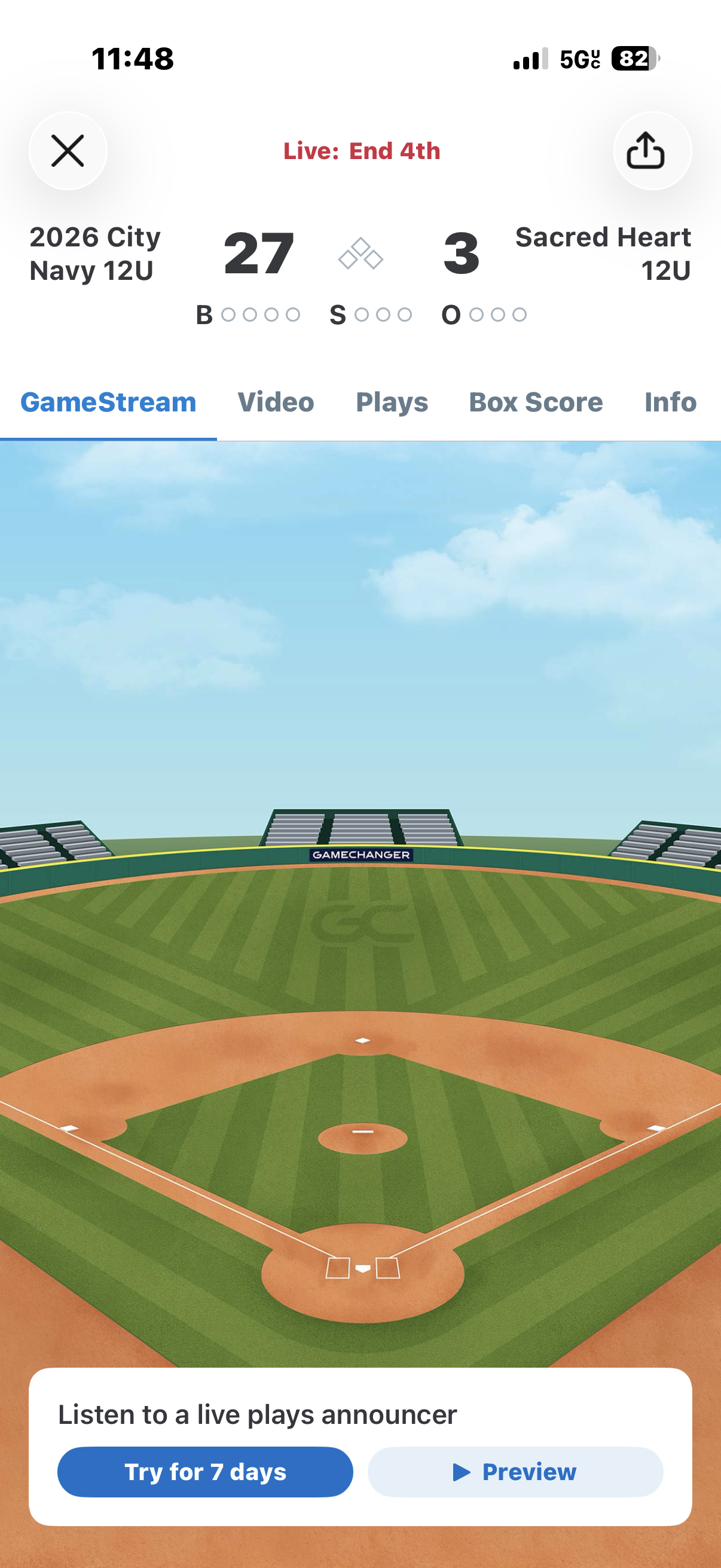
In game 3, played on the very warm and humid Thursday morning, they bested their opponent 27-3 and the game ended by the mercy rule in the middle of the 4th (City was the home team). One of their players, Ethan, had 10 RBI’s in the second inning, 8 by grand slams (yes, you read that right, 2 grand salamis in the same inning!). That second inning kept the opposing team in the outfield for an agonizing and very warm 30+ minutes. We in the winning dugout were lobbying for a FIFA-style hydration break for them, worried about their health and neck muscles watching all those home runs flying over the fence.
The last pool game featured a bleacher full of young tarps off fans (shirtless) who were cheering and rooting at the top of their lungs for most of the game. It was fun to watch all those kids having so much free-range fun.
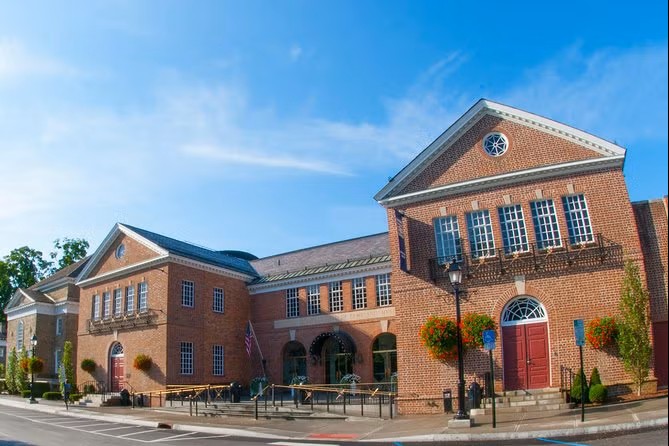
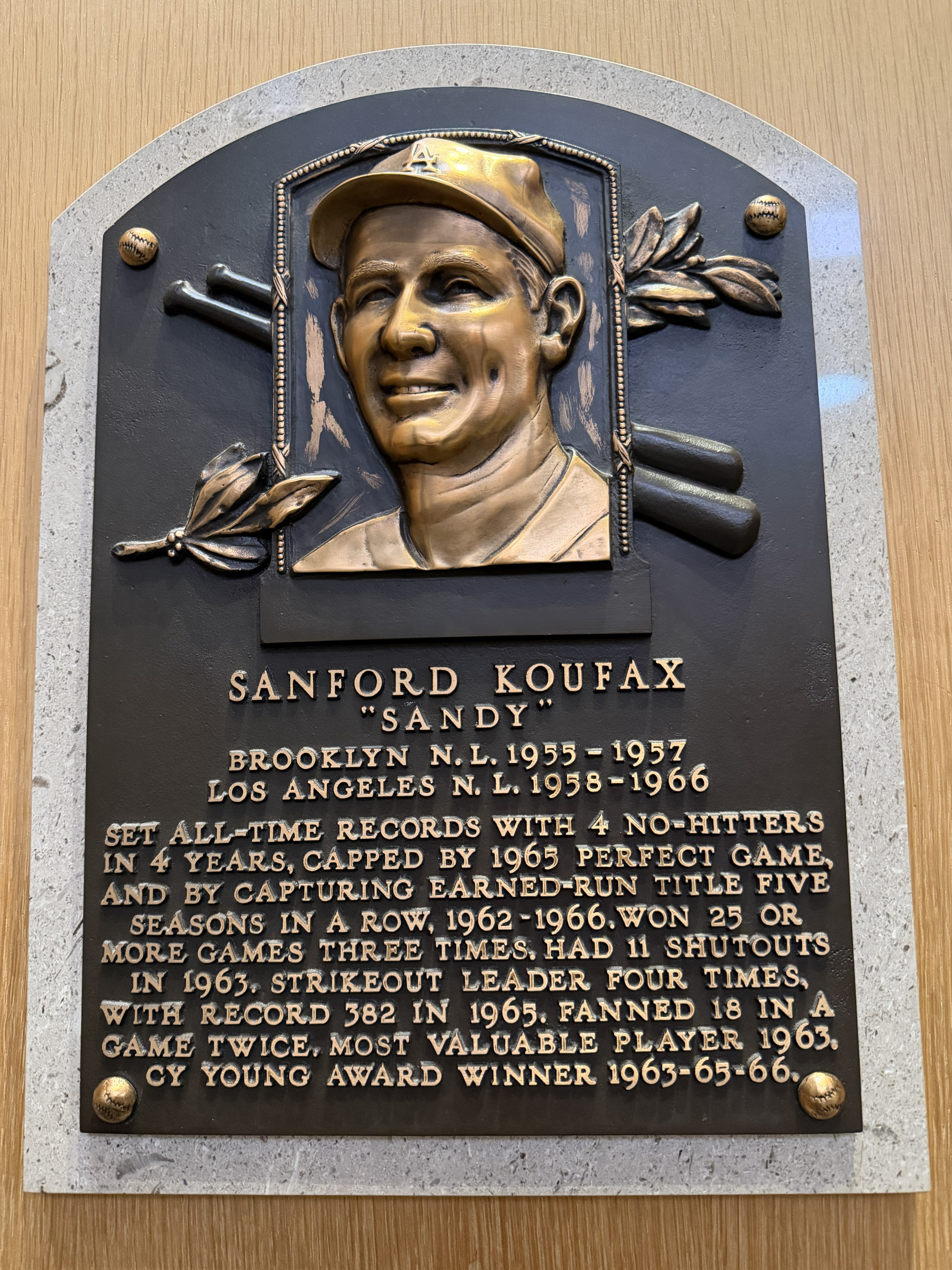
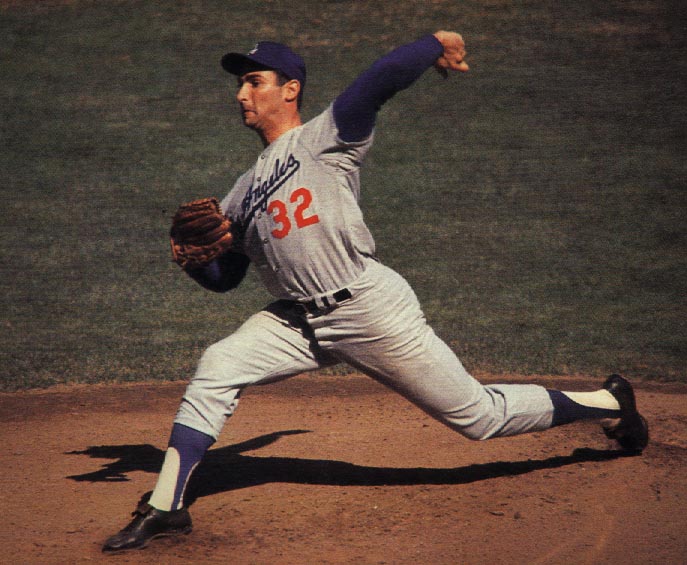
Friday had a large gap between the morning and evening games, and the City Blue team made a visit to the Baseball Hall of Fame, along with all their families and friends. We’ve always wanted to visit and see the plaque for Sandy Koufax, a favorite player of both of ours. We got to see it and everything else, but the overall experience wasn’t as awesome as we had imagined it to be. Maybe it was too crowded and too commercial feeling. We did both enjoy the movie in the Grandstand Theatre but totally did not enjoy the massive gift shop. We visited The Bat Store in town (where it all started, the sign says) and got a bat custom engraved for Simon to commemorate both his tournament visit and his Derby win. His sister Samara also got a little custom engraved bat designating her as “Sister of HR Derby Winner”. She is so proud of her brother. There was enough time in the afternoon before the final game for the ladies to catch a little Goat Yoga, staged in the visitor’s center for anyone to try. It was more like a petting zoo, but the goats are trained to jump up on any available back to get a treat. One larger black goat was besting all the others and would jump on anything that looked available, and Samara had just assumed the cat pose when he took advantage. That same over-treated fatty jumped up on Wendy and slipped off, leaving a little goat-scratch-fever scrape on her back. You pay your money (or don’t in this case), and you take your chances!

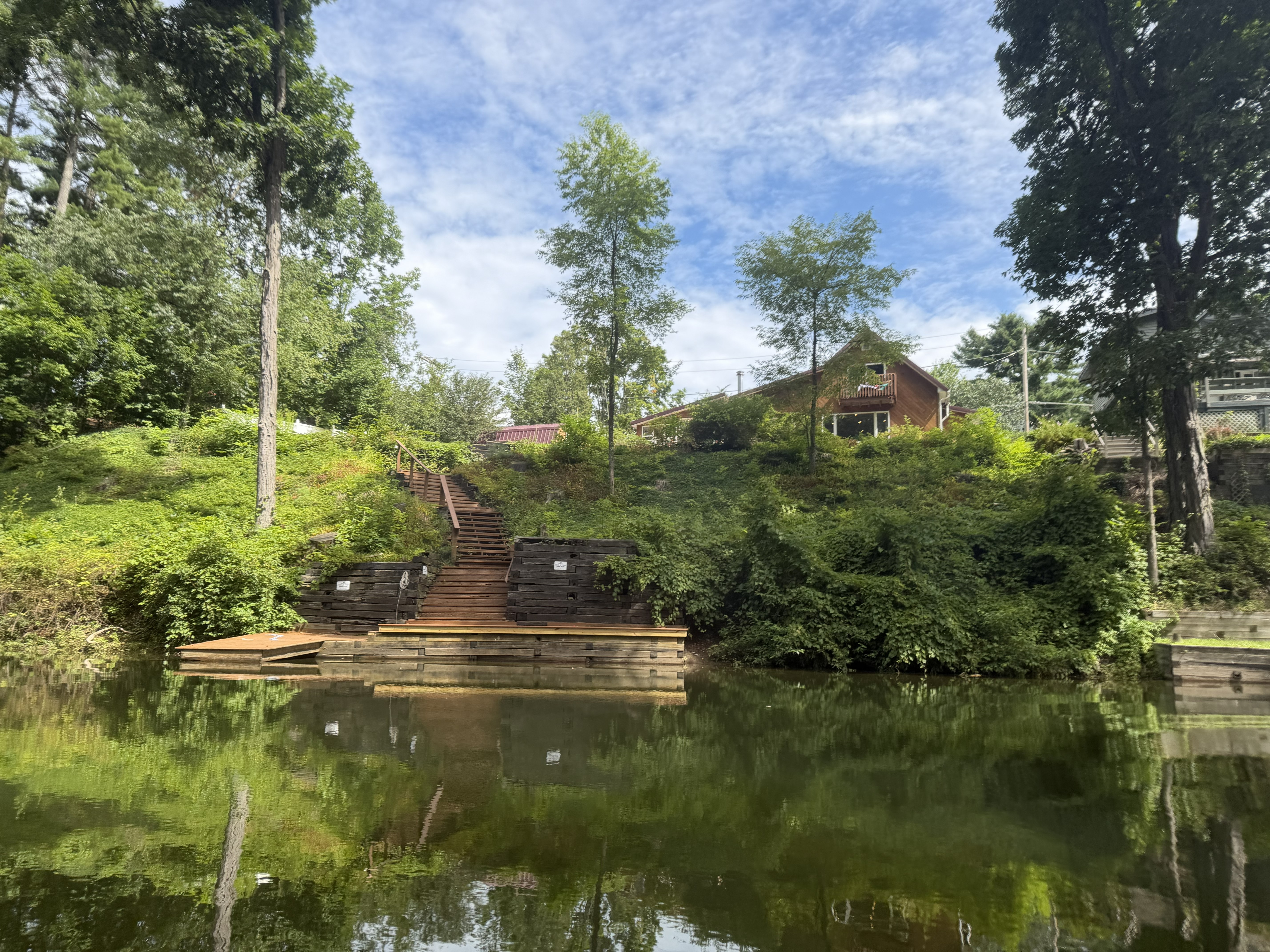
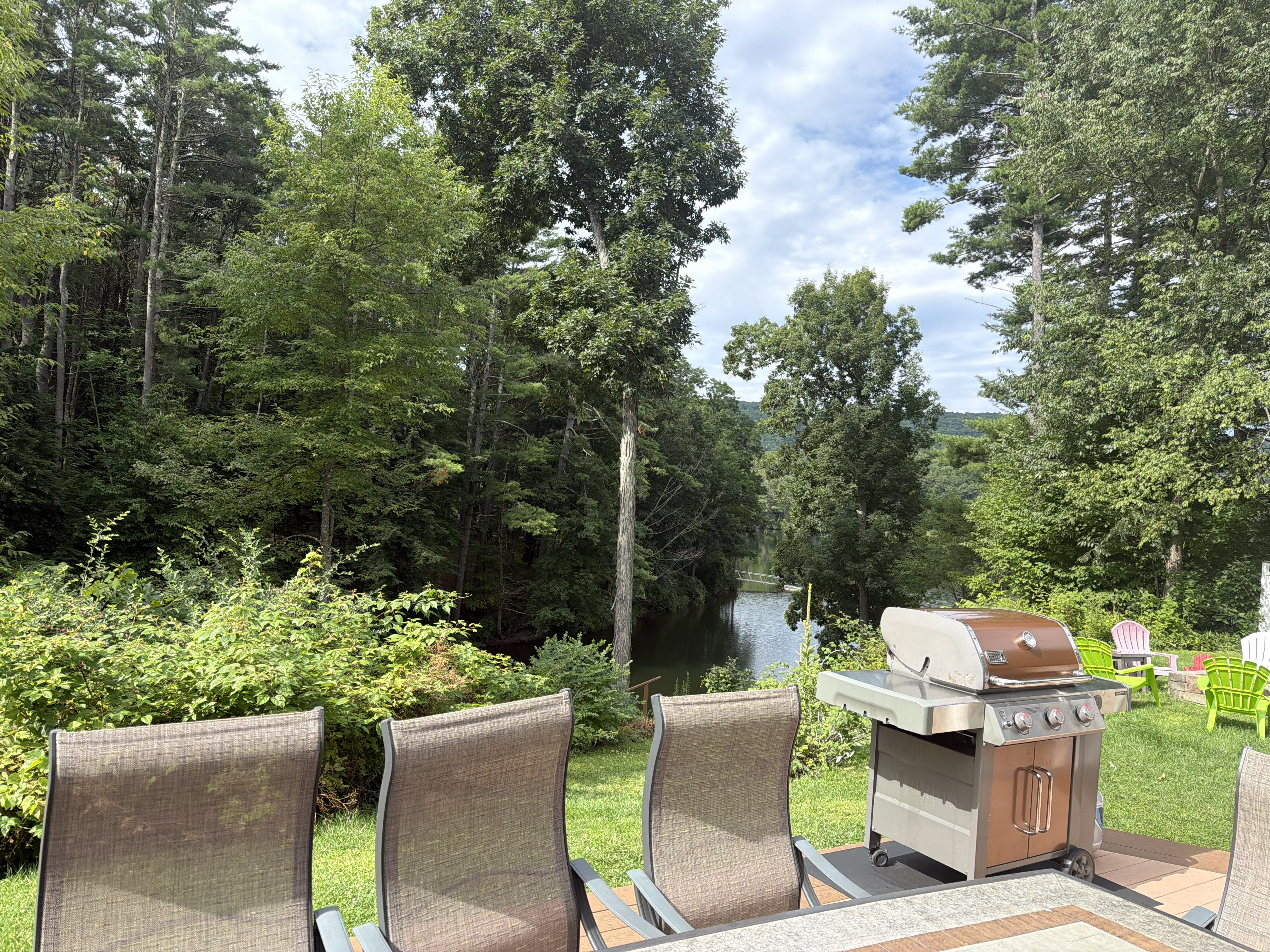
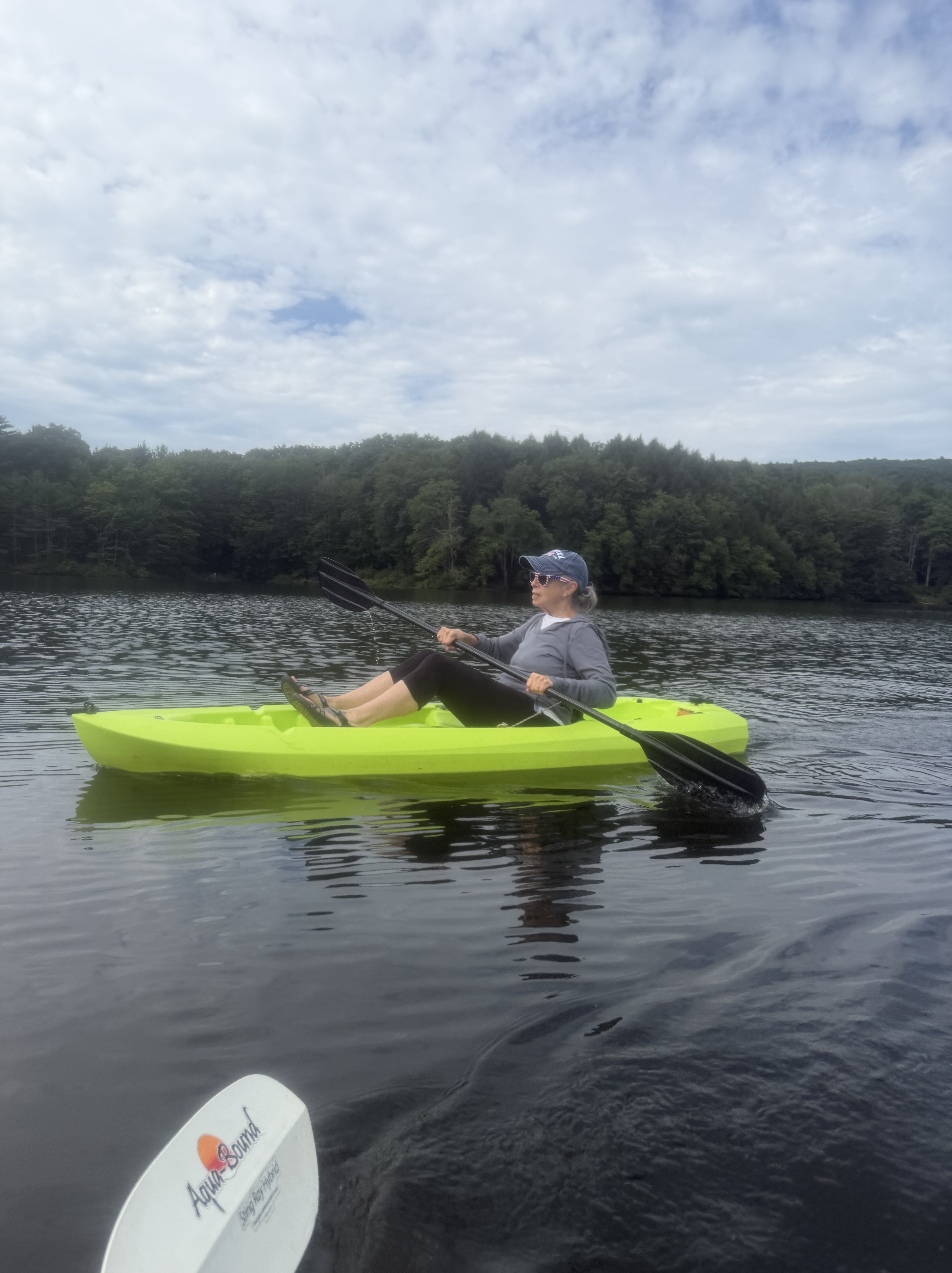
Sunday was the final full day of the tournament, and with the City Blue team turned out in the first round (only one City team has ever made it to the finals), the family took a nice leisurely day to relax in the beautiful lake house our kids had rented on Goodyear Lake and to celebrate Samara’s 11th birthday. After the morning Air Horn Awakening (actually this is the inaugural event of this new tradition) we had a wonderful pancake breakfast followed by present opening, swimming, kayaking, reading, and game playing, topped off with a glorious ribeye barbeque as we tried (and failed) to eat all the remaining food in the fridge prior to the Monday departure.
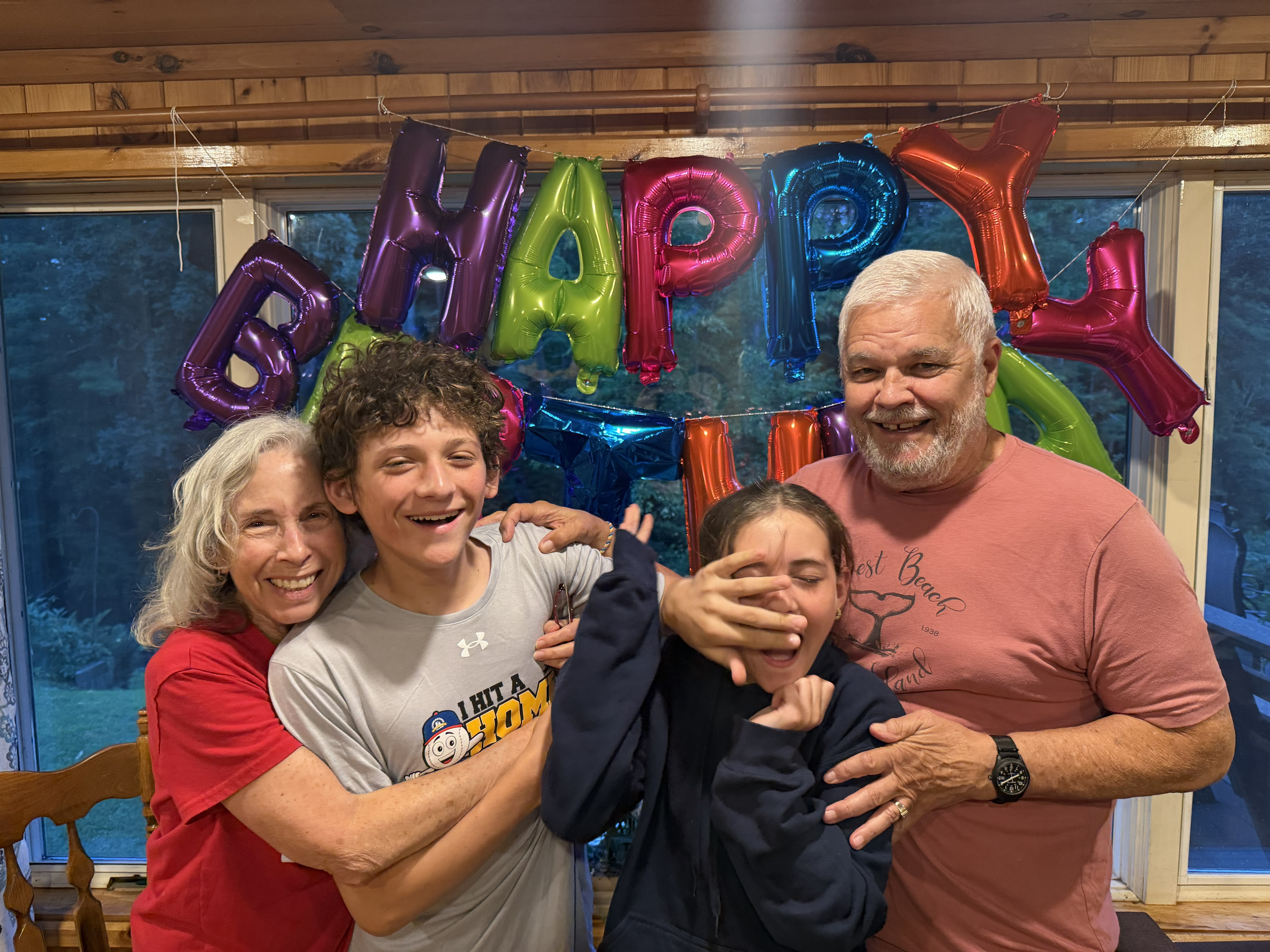
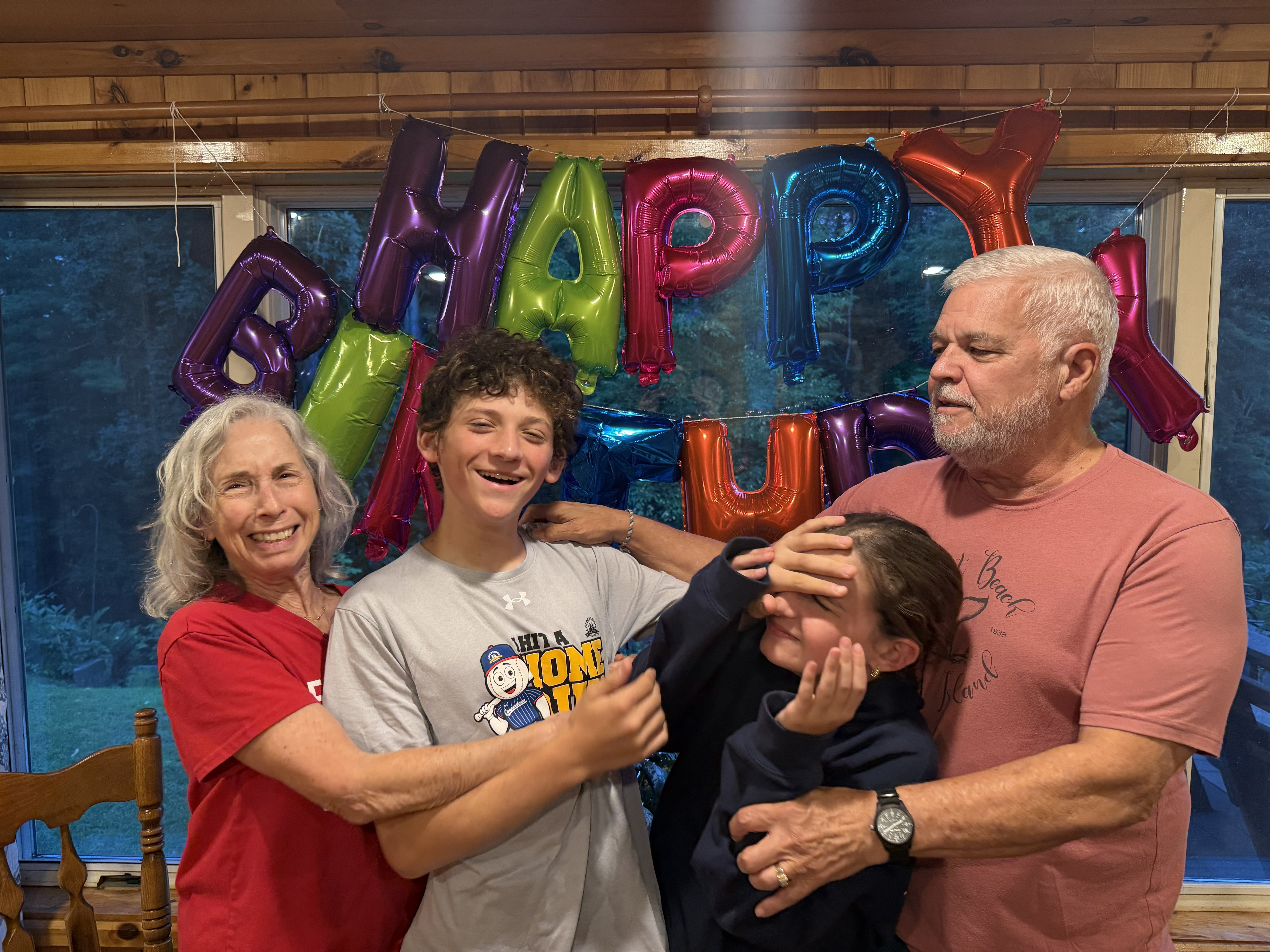
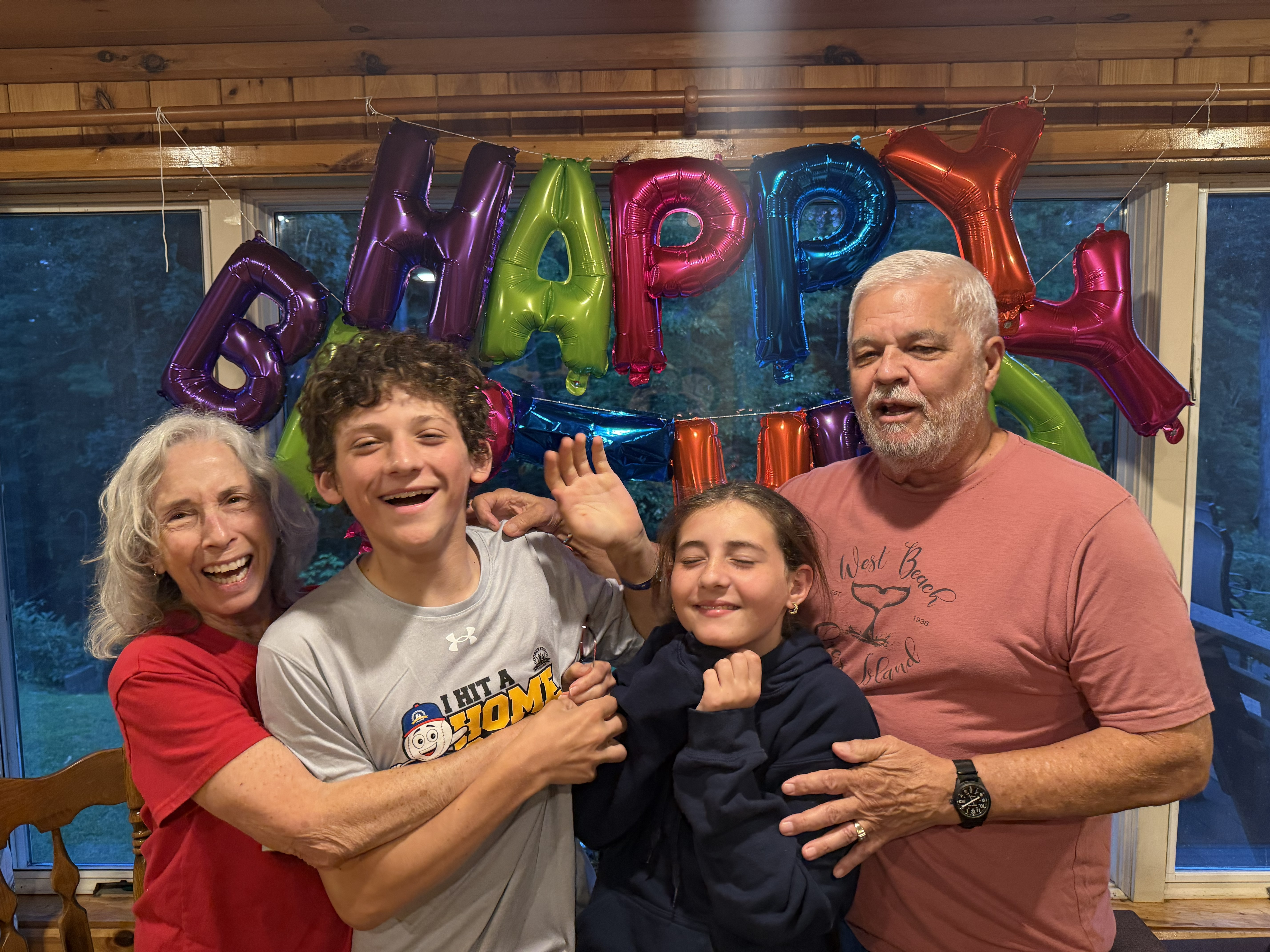
We always like a photo with the grands on every trip, and we tried (again) to get one with pretty much the same result as always.

And Tippy has a little to add…