
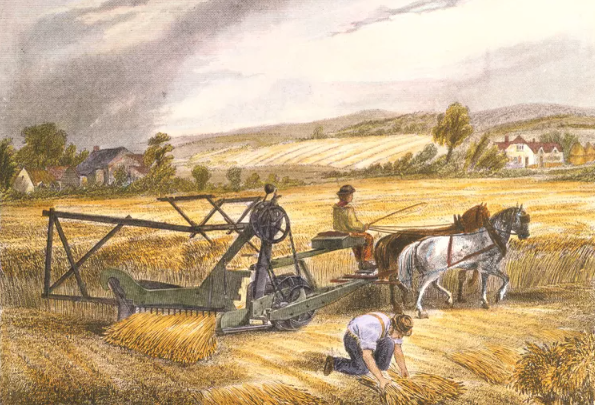
Whatin the heck do these two things have in common? Well, nothing, and everything actually. After the birth of our young nation, an era of entrepreneurship exploded across the land. As we traveled south out of Virginia and into the Carolinas, we passed an exit sign for Steele’s Tavern, and Wendy, of course, couldn’t resist investigating. This was the place that, in the summer of 1831, Cyrus McCormick chose to demonstrate his new invention, the McCormick Reaper, on a field of wheat owned by John Steele, the tavern owner. The single horse-drawn device that looked like a sled with some machinery on top of it, could grab a large swath of grain stalks while the heads were chopped off, discarding the stalks out the back, where Cyrus walked along and raked them into piles that could be bound up as usual. The horse, you see, was doing all the big work, which let a single man work not only faster, but longer and more efficiently. A new age of agricultural mechanization had begun, enabling dramatically higher harvests to feed a growing nation.
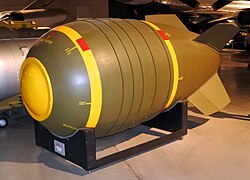
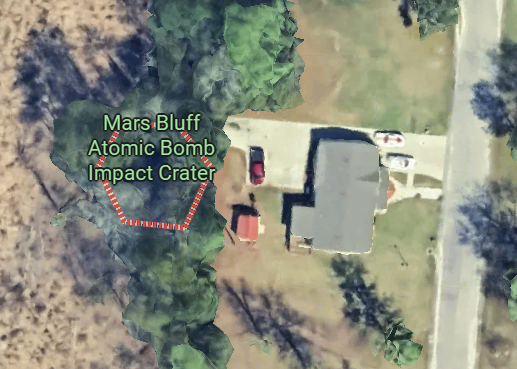
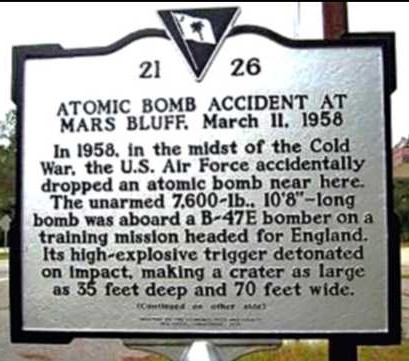
But what about the bomb? The connection is via geography. At the other end of our drive that day was Florence, South Carolina. Very near to where we camped is a small community named Mars Bluff, which would be entirely unremarkable if it weren’t the site of the only accidental explosion of an atomic bomb on American soil. According to the Florence County Museum, at 3:53 on Tuesday, March 11, 1958, a group of four B-47E planes took off from Hunter Air Force Base in Savannah Georgia in route to England. The small convoy of planes was performing a routine task that was part of a mission called Operation Snow Flurry. Operation Snow Flurry consisted of US military B-47s flying to England to perform mock bomb drops. Electronic receivers on the ground would receive signals from the B-47’s, and that data would later be used to determine the accuracy of the mock bombing runs. During the Cold War, Air Force bombers, such as the ones being used on this particular Tuesday for Operation Snow Flurry were issued a MK 6 nuclear bomb. These bombs were carried onboard in case the planes needed to activate during an emergency wartime situation. While preparing for their transatlantic journey shortly after takeoff, the co-pilot of the 3rd B-47 had pulled a lever that was meant to engage a locking pin in the plane’s bomb harness, thus keeping the bomb extra secure for the flight’s duration.

The co-pilot reported that a light indicated that the locking pin of the bomb harness did not engage. The pilot sent flight navigator, Bruce Kulka back to inspect the problem and fix it. Bruce, a short man, while attempting to pull himself up on top of the bomb to inspect its locking harness accidentally grabbed the bomb’s emergency release mechanism. It was at this moment that Bruce and the MK-6 fell down on to the plane’s bomb bay doors. The combined weight of the bomb and Bruce forced the bomb-bay doors open and released the MK-6 into free fall. Bruce, in desperation, grabbed for something and was able to save himself from the 15,000 ft drop. But there was no stopping the bomb. It had just left the plane.
A Mark 6 bomb isn’t nuclear unless its core containing the nuclear elements is installed. When Bruce Kulka and the MK-6 fell to B-47’s bomb bay doors its nuclear capsule was safe in a separate compartment on the plane called the “birdcage”. While not nuclear at the time of its unintended release, the 10 foot long 7,000 lbs. MK-6 (approximate value $2 Billion) still carried a substantial payload of explosives that functioned as its triggering mechanism.
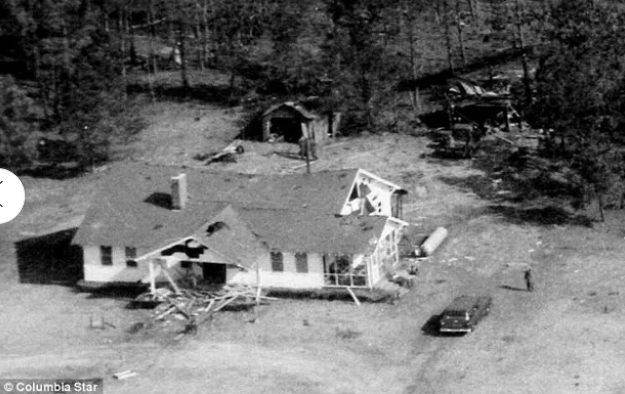
When Bruce’s bomb met the earth it happened to do so near the home of Walter “Bill” Gregg, 6 ½ miles east of Florence SC in Mars Bluff. The impact instantaneously created a 50×70 ft. crater 25-30 ft. deep. The bomb’s detonation leveled nearby pine trees and virtually destroyed the Gregg residence, shifting the house off of its foundation. Everything in the home was left in ruin. The blast also totaled both of Walter Gregg’s vehicles. Walter and his family were home at that time (4:34 PM), but they were fortunate in that they only sustained relatively minor injuries when compared to the damage of the Greggs’ property. One eyewitness, J.A. Sanders, driving nearby on Hwy. 301 at the time of the explosion reported that the force of the shockwave was so substantial that it was able to turn his moving automobile around in the road. Meanwhile eight miles away, Florence County employees reported hearing the explosion and being able to view the cloud of dust caused by the explosion from the roof of the courthouse. The Gregg family sued the Air Force and received $54,000. Adjusted for inflation, that would be $602,595 today. Except today, I’m pretty sure you could do about 10X better on the settlement, or perhaps selling the story to a tabloid.
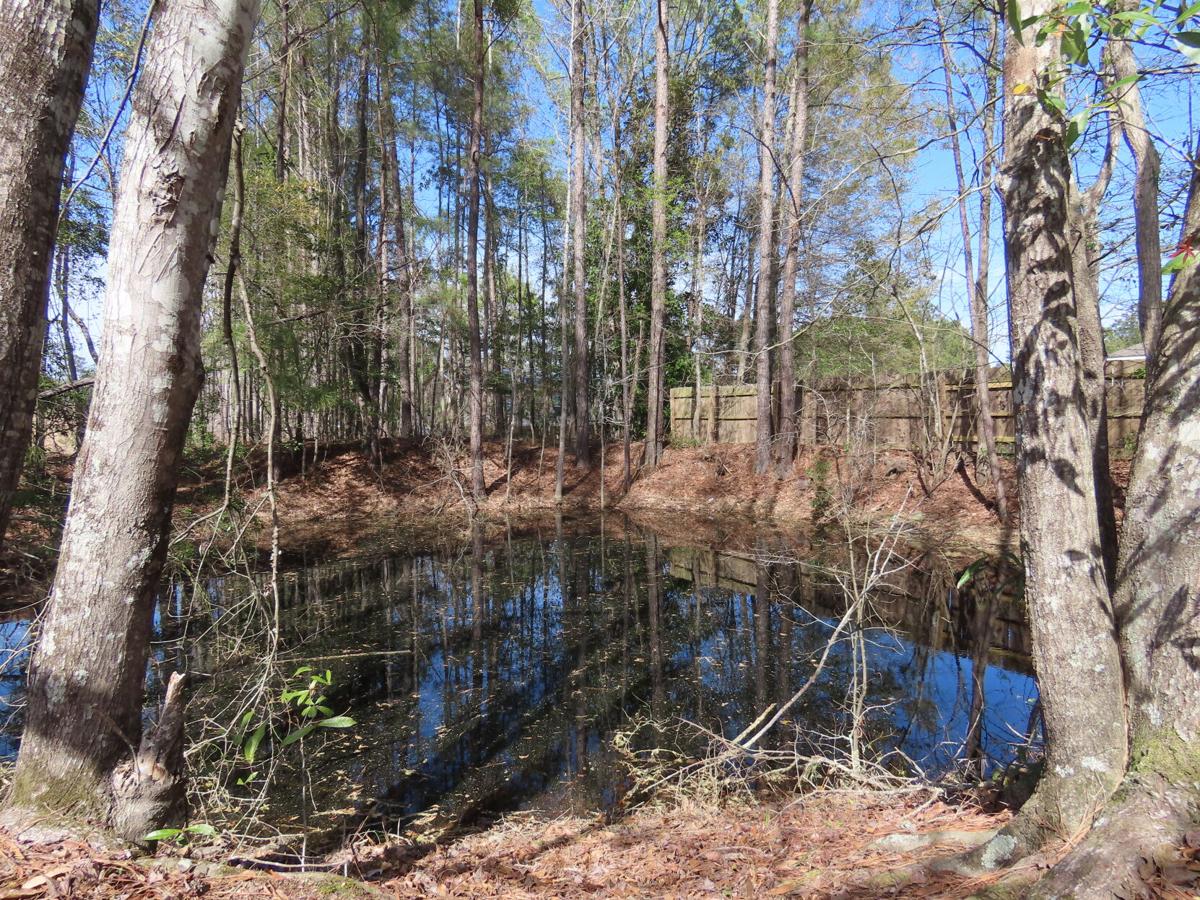
The site is still federally protected today by a long fence constructed to keep the curious out. We got within about 500 feet of the crater, which is barely recognizable today, before deciding we couldn’t make the arduous trek in on the 95☀ blazing hot day.
Entrepreneurship doesn’t follow a proscribed path; one path that leads to virtuous productivity parallels another that leads to possible planetary annihilation. At least in America, we are free to pursue either path. You can find more on the story here: Mars Bluff Bomb.
On a brighter note, Wendy’s research also uncovered the secret 14th colony! Well, the almost colony. From 1638 – 1655, an area that extended across the Delaware Valley, encompassing parts of modern day New Jersey, Pennsylvania, Delaware and Maryland, was known as New Sweden.
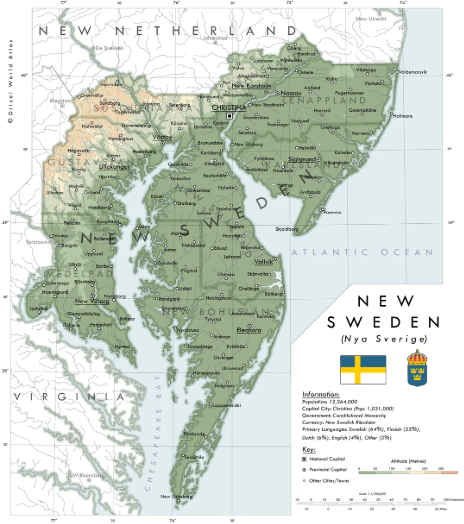
Created in secret, the under-the-radar colony, was created out of revenge by Peter Minuit, known as the man who negotiated the purchase of Manhattan for the Dutch. He had been scouting the mid-Atlantic for territory to establish New Netherland when he was abruptly dismissed, and seeking revenge he approached Sweden with a proposition to create a colony for them as the only non-represented European power in America. The land he offered lay north of Virginia and west of the Dutch purchased lands, which went all the way up to but not past the shore of the Delaware River. Sweden wanted the new colony, which was essentially squatting on prime Dutch fur-hunting land, to be kept on the down-low, but the secret didn’t keep for long. Fortunately, the Dutch didn’t have enough firepower to defend both New Amsterdam (today’s Manhattan) and the inland territory, so they ignored the incursion. The New Swedes actually built the first European permanent structure, Fort Christina, on the shores of the Delaware River in what would become the first American colony, Delaware.
Unfortunately, a hurricane took the life of Peter Minuet on a Caribbean tobacco-hunting trip five months after New Sweden was founded, and the 25 remaining settlers, with help from the indigenous natives, muddled along until 1643 when a 7 foot tall, 400 pound mountain-of-a-man named Johan Printz was appointed Governor. Johan built Fort Elfsborg and Fort New Gothenburg and expanded territory further into Maryland and Trenton New Jersey. Despite all the expansion, the territory was never profitable for Sweden, who cut off supplies in 1648 and began sending petty criminals and military deserters instead of productive colonists. Things when quickly downhill until a body of male colonists petitioned Johan, accusing him of abusing his authority. This is credited as the first success political protest in US colonial history.
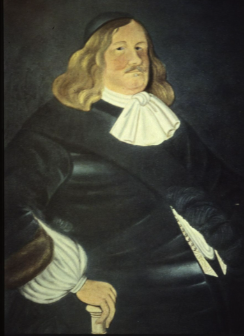
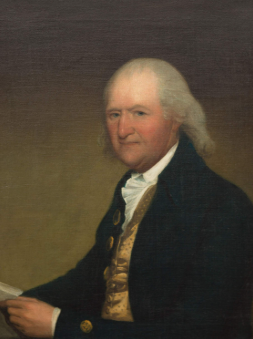
It didn’t take long for Peter Stuyvesant, the hot-blooded Governor of New Netherland, to grow tired of the upstart Swedes and send seven armed ships down the Delaware River to root them out, which they did without a single shot being fired. New Sweden, although absorbed eventually into Pennsylvania, were allowed to keep their own local government, and contributed much to the formation of the new nation in the 18th and 19th centuries.
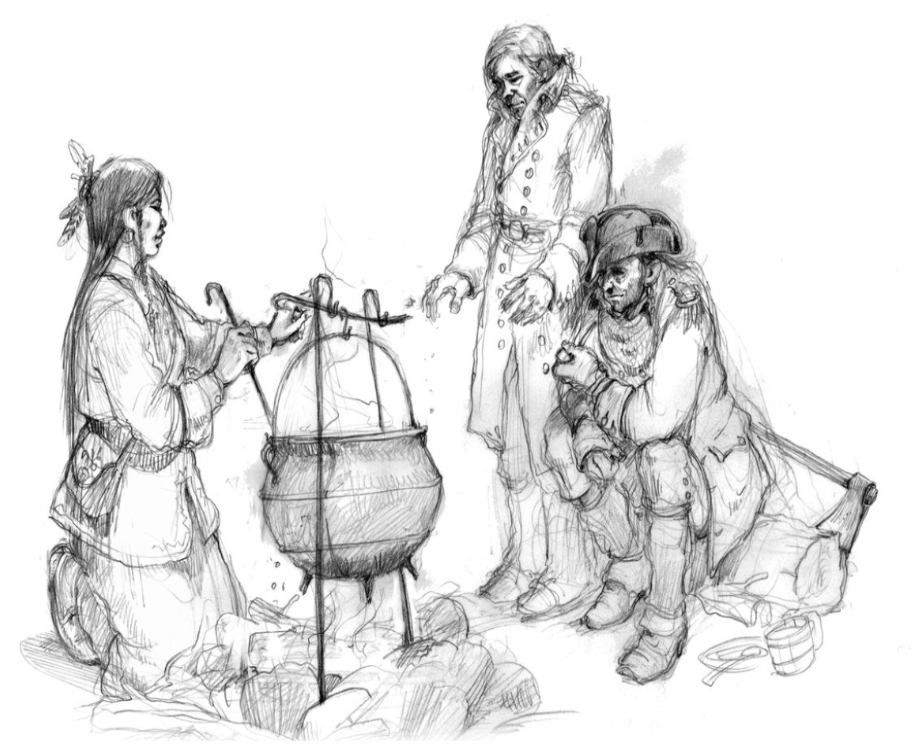
We previously highlighted great Women of the Revolution, and one reader (Hi Polly!) brought another to our attention: Polly Cooper. In January of 1778, George Washington had posted a request for help from Native Americans who had become sympathetic to the American cause because of mistreatment by the British. In February General Marquis de Lafayette delivered the entreaty to the Oneida and Tuscarora of the Mohawk Valley in New York, and in April of that year an expedition of about fifty Oneida made the 300 mile trek through snow and deep mud to Valley Forge to offer their services as scouts and guerilla fighters, and to deliver 600 baskets of badly needed corn to feed the starving troops. Polly Cooper was the only woman in that expedition. After the Oneida men were summoned home to defend against British raiders, Polly remained in Valley Forge to continue cooking and treating wounded and sick soldiers with her herbal knowledge of medicines. Without the help of the locals, it is highly unlikely that troops would have survived the winter in good enough condition to take the fight to the British once again, so we salute our Native American allies and thank them for their service.
And finally, as we trek the final stretch of asphalt to home, we offer up two takes on American heroism, one modern and one contemporary.
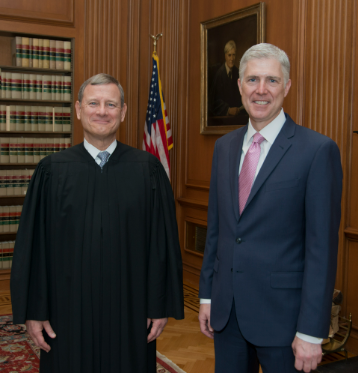
Supreme Court Justice Neil Gorsuch is known as not only a dedicated constitutional jurist but as a big fanboy of the Revolution. He partnered with author Janie Nitze on an essay in The Free Press (thefp.com) entitled Neil Gorsuch: The Heroes of 1776. In that piece, located here https://open.substack.com/pub/bariweiss/p/neil-gorsuch-the-heroes-of-1776, he relates the diary entry of Joseph Plumb Martin (the same diarist who penned on the hero Mary Ludwig Hayes) who related the dire conditions during the British siege of Philadelphia’s Fort Mifflin beginning in September 1777, one of the most brutal battles of the RevWar. “In the cold month of November”, he fought “without provisions, without clothing,” without even “a scrap of either shoes or stockings.” He observed the long lines of dead soldiers toward the end of the battle and observed “if ever destruction was complete, it was here.” He was just 16 years old. This is but one of thousands of American stories of the war, fought against overwhelming odds and against the largest armed force on the planet. But it emblazons the picture on us of the grit and determination of those early Americans to bring forth their vision of freedom and self-determination.
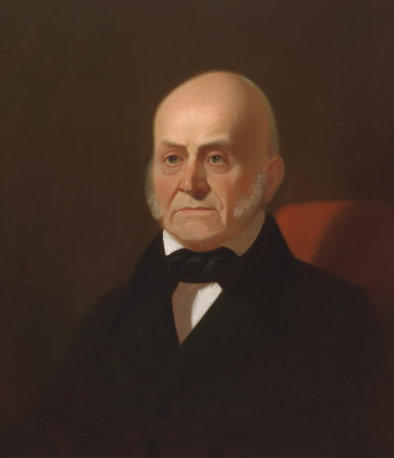
John Quincy Adams was President of the United States in 1826 when he learned that his father and Jefferson had both died on that Fourth of July. He wrote in his diary what many others were thinking and saying, that this was a manifestation of “Divine favor.”
Daniel Webster, who was invited to deliver a eulogy in Faneuil Hall in Boston the following month, called the passing of Jefferson and Adams on that day a “dispensation of the Divine Providence.” “Adams and Jefferson are no more,” he intoned, but “their work doth not perish with them.” “No age will come,” said Webster, “in which the American Revolution will appear less than it is, one of the greatest events in human history.”
Celebrate this on our 250th communal birthday. Celebrate this every day of your life. Onward!
A fitting end to our journey, the large Camping World Flag in St. Augustine FL
Tippy is feeling patriotic and can’t wait for the party to start!



What an amazing trip you two have had, and what a wealth of information you’ve shared! Are you safely at home now?? We’ve been keeping you in our prayers. When will you be in our neck of the woods again? We don’t have the exciting travel experiences you two have, but things are non-stop around here, for sure. Aiden has been with us full time since before school got out. Dan’s 3rd (failed) attempt to have cataract surgery on his left eye resulted in another rushed trip to his heart doctor(s) and another scheduled attempt at Cardioversion (July 21st). We are praying it can get him out of A-fib, and that he will STAY out of A-fib. My long awaited appointment with the spine specialist was Tuesday. He did a “dry-needle” procedure up and down both sides of my spine, and now I can’t bend, and can barely walk. I’m trusting that is a very temporary issue, as people are depending upon me for numerous upcoming events. Jason will be here today and spend part of the weekend with us. Michael turns 50 on Sunday, and we’re having a party for him; Michael Harter, Melissa and the kids will be her Saturday the 18th on their way back from Orcas, so we will do a lunch here. Paula and Howie will join us, and hopefully a niece (JoAnne’s daughter) and her family. (You’re not going to be up our way on the 18th are you?? They would all LOVE to see you). We’re doing an 85th birthday party for Dan’s sister Joan on the 25th (following Dan’s cardioversion and my re-start of physical therapy); Seafair weekend we’ll spend the 2nd at Dan’s employer’s place watching the Blue Angels; August 4th we host our annual Block Party here and on and on it goes….so I really need to carve out enough time to do all that needs to be done for Norma’s memorial gathering on the 16th of August. The end of August (the 28th and 29th) I hope to hold our annual charity garage sale. I just need some miraculous improvement in my back! One day at a time, right? We hope you two are doing well in every way, on the heels of your amazing journey! We look forward to hearing more when we next get together. Lot’s and lot’s of love! Linda and Dan