
Everywhere you go in Costa Rica you are acknowledged with the expression “Pura Vida!” A concierge helps you with your luggage and you offer “Thank You” (or perhaps “gracias”). “Pura vida” is as often the response as “de nada” (you’re welcome) or “con gusto” (with pleasure). But pura vida doesn’t mean either of these things, even though it is interchangeable with both. The literal translation is “pure life”, but just rolling it off your tongue imbues a richness to it that hints at the hidden meaning. I consider it more of a colloquial blessing or a Costa Rican verbal high-five. It’s also great for the practicing of rolling your “r’s” to sound more like a native. It’s not unlike using “Aloha” when coming and going in Hawaii to telegraph friendliness. We hear it constantly from the moment we first contact our tour agent, Pacific Tradewinds, to the last moment when the airplane door closes in San Jose on our return flight. It may have become a part of my lexicon….
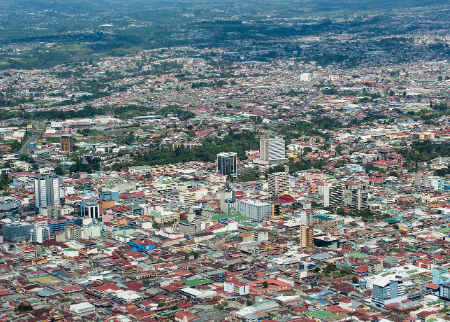
This trip to Costa Rica is 20 years in the making. The planning started on our honeymoon in 2005. Then the grandkids started coming. And then we retired into an RV and headed out to see the world (the whole “front end” of this blog chronicles much of that). The world got suddenly very small when one son got married and derailed our just-started “round the country” trip. Then we un-retired and moved a few more times. Many more trips around the sun later we finally re-retired and moved to Florida and bought and renovated one house and built another. So here we are, 20 years older and on our third trip alone (there was an unplanned long weekend in Savannah GA in the interim). All of the other intervening trips were with friends and family. I guess we get a honeymoon every 20 years whether we need it or not. We have resolved as a result to not wait even a full year before the next one.
Some of you readers may be travelers or maybe inspired to come to Costa Rica as a result of this blog, so it seems fair to start with some basic acquired travel knowledge. Much of this was gleaned from our natural history museum tour, or via banter with our tour guides and drivers. I say banter because that’s my style. Wendy has a much more journalistic interrogative and tends to get more intimate details. Her exchanges (muy poquito español) with others (poquito inglés) can be entertaining, and I sometimes intervene (um poco mas español) to referee and get a plausible result. The questions are often mis-heard, and the resulting answers have nothing to do with the original query. But we eventually get where we need to be on the give and take, and these tips are the result.
Tip #1: Language. You don’t need any español at all to come to Costa Rica (but if you have um poco, fantastico!) Elementary through High School education is mandatory for all children here; if you refuse to go to school (or are expelled for less-than behavior) you literally go to a labor camp until the day you are 18 (and your parents are in b_i_i_g trouble!).

There is no military here, so as a kid your best shot is to go to school and do well, and the government is dead serious about it. In school, English language is mandatory, and you must pass basic fluency to graduate. There are always slacker students that pay more attention to girls than language of course, but most of the natives speak at least enough English to get you through a simple conversation. And hotels and restaurants are overwhelmingly staffed with English speakers. You can take these Spanish basics to start you out: “cerveza”, “tequila”, and “Donde está el baño?” These should be sufficient for your most critical needs. You can also use “la cuenta, por favor” to sound polite and erudite.
Tip #2: Weather. December through April is the dry season. You may be fairly confidant of outside activities not being interrupted by anything more than a light and brief rain. You can carry an umbrella, but it’s likely just going to be dead weight.

November and May are transition months where you can get some surprise thundershowers, which are brief but very intense (like taking a literal shower). Your umbrella (even a poncho) will be marginally effective; you should just resolve to get wet and dry off after, or duck inside and wait it out. The rainy season from June to October has semi-regularly occurring rainstorms that you might be able to plan around. Sometimes you can set your watch to them. We walked less than 100 meters to dinner one night in a thunderstorm with two golf umbrellas and arrived soaking wet. But since everyone in the restaurant was also soaking wet, it really didn’t matter. The waiter brought us a towel. It is always warm (75F to 95F) and always humid (99-100%), except maybe in the highlands where you are unlikely to travel because the roads are nothing more than semi-paved goat paths.
Tip #3: Clothing. We found that very light, wrinkle free shirts, like my Guy Harvey river shirts or my Dri-Fit polos, are perfect! You can get as wet or sweaty as you like and be dry 10 minutes after you hit an air-conditioned room. Shorts are definitely a solid yes, especially the lightweight easy-dry ones. If you don’t have supermodel legs, long but light pants. Sandals or flip flops are a big YES, but hiking shoes are a must for the treks (the lighter the better, with grippy soles). Water shoes for your aquatic activities, especially for river rafting where you need to stick your feet into a stirrup in the raft to keep from falling over the side. A collapsible umbrella, just in case (we never once opened ours up but came close a few times). A light windbreaker, waterproof is best, you won’t need it for the wind. Cotton tshirts and shorts/pants will stick to you like a wet towel, think Dri-Fit breathable polyester for your best comfort.
Tip #4: Money. The Costa Rican colón is the local currency. The exchange rate as of this writing is .002, meaning 5 colóns is equal to a penny. We met a street vendor who had a huge stack of 5ers and was selling them for US$3 each, making a tidy profit of 9,000% (yes, we bought one, they are beautiful).
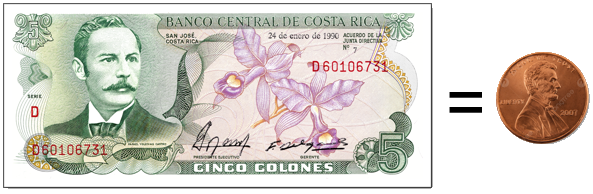
You can literally use them for notepaper because notepaper is more expensive. But the US$ is also widely accepted as long as you can do the math: multiply the colón price X 2 and divide by 1000. A 5,000 colón meal is US$10. Easy! You will pass several money changers (tipo de cambio) in customs, but you don’t need to stop. If you do you will likely end up with a giant stack of bills about 100 times taller than the money you exchanged for them. And you can barter better with good old US cash.
Tip #5: Tipping. There are no simple answers here. I asked many sources and got no standard answer. It’s best to think of it as a function of your budget. My loose calculus is: $5 for a driver who helps with your luggage; $5-10 for the waitstaff that delivers your free breakfast at most hotels; $20 for a good tour guide (unless you are sharing him with 4 or more people, then $10); $5 for a cab or transit van driver (plus the fare of course); think about a bulk tip at checkout for the attendants that schlep you around in golf carts and the concierge ($100 for 5 days at our 5 star resort with at least 20 rides); and $5 per night for the maids that clean your room and turn it down at night. Bring a stack of $5, $10 and $20 bills in addition to your credit cards. Nobody takes Venmo that we found. Oh yeah, if you do REALLY good at fishing, $100 for the boat was my call (captain and deckhand).
Thursday, May 1: We launch today and fly from Florida to Costa Rica. This is our first time using the new terminal C at Orlando/MCO. It has a large digital aquarium in the center, displaying a video of manatees today. Meh. Only 2 families with small kids going in, it took up the whole center of the space. There’s has to be a better use of space than some high tech, already-needs-repair multi-screen home movie system.
Our 10AM flight was easy. I always upgrade our seats for the legroom and early boarding. This trip we were surrounded by a crowd of 40-somethings going together on vacation, and the free drinks part of the upgraded section got a good workout. The Goliath-sized guy across the aisle was nearly comatose after the 3-hour flight, but thankfully he was a happy drunk. We were heavily outnumbered, and their chatter indicated that they had an extensive warm up in the bar for breakfast. Pura Vida!
At arrival in San Jose, immigration was 15 lines wide, and about 10 people deep, and this was at the end of a Disney-style winding line. When you get to the front of the snake line, you get to choose your kiosk line, and you guessed it, the one we chose was the slowest. Even when we jumped left and right, we only fell more behind. But, hey, Pura Vida, right! We were on Costa Rica time (aka Mountain Daylight but has about a 20-minute plus or minus window for “on time”). And yes, they do ask where you are staying, and for how long, so be prepared. Many of those in front of us weren’t, with lots of digging through purses and even luggage for information.
We opted to stay at the Doubletree near the airport and had a private transfer arranged. We were cautioned to pre-arrange this transportation because there is a very large and boisterous transportation industry at work at the exit from customs, and much of it is “bootleg” or un-regulated. Cabs are available, but make sure you are in an actual cab stand with an official sign.
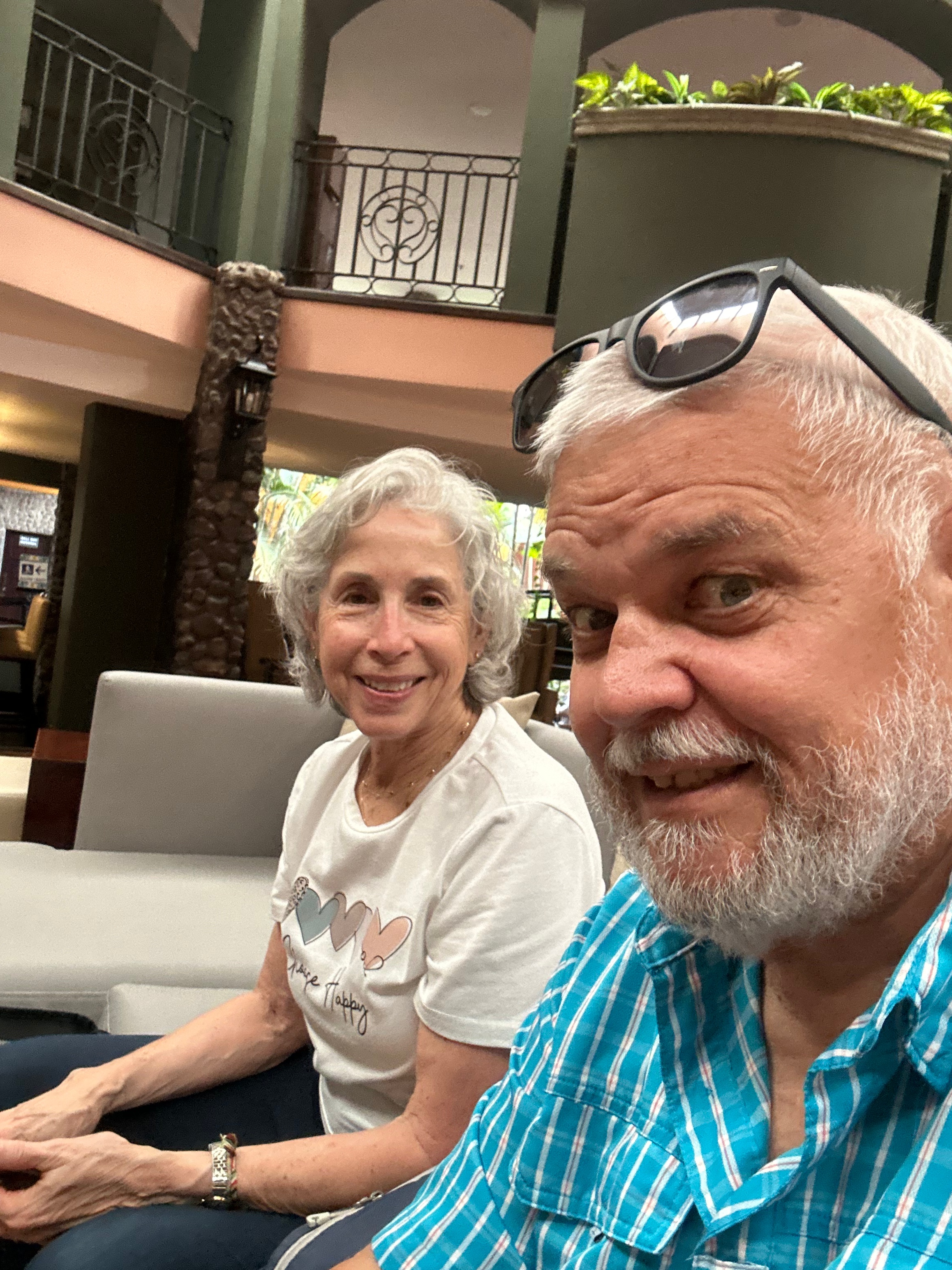
Our driver held a small whiteboard with our name on it, and in no time we were in his air-conditioned (thank you God!) van and off to the hotel.
We arrived early, about lunch time, but the hotel had been notified by Pacific Tradewinds and had our room ready. We didn’t upgrade this room since it would just be a convenient place to stay on arrival before we were whisked off into the country.
After check in we took what was supposed to be a short walk to a local market to acquire a few pieces of fruit (a morning wakeup necessity) and some toiletry items.
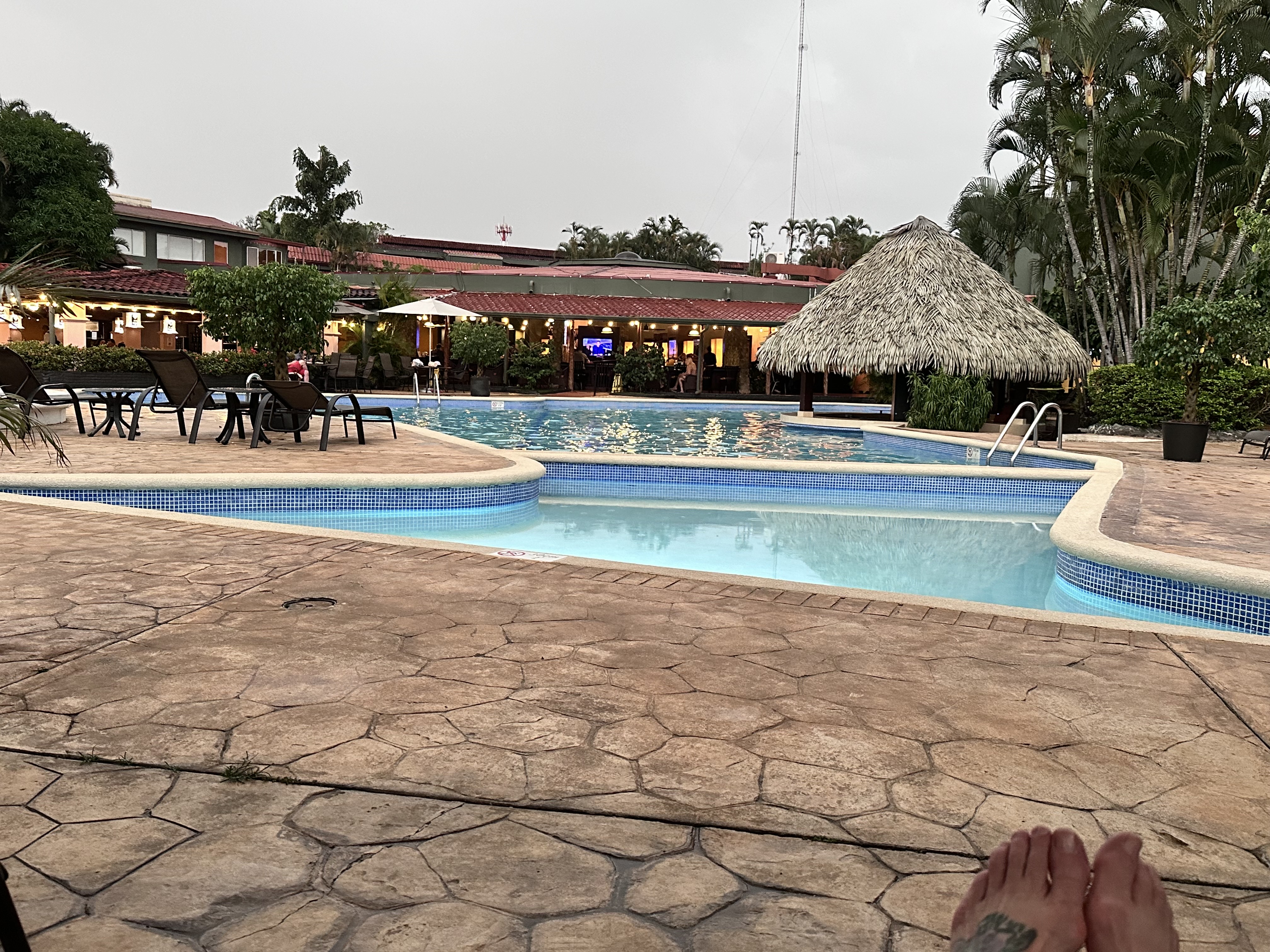
When you miss that small right turn and go left instead, it’s easy to walk an extra mile or so until you realize you literally “just missed” the market. In 90 degrees and 99% humidity this point is driven home quickly. We tripped across the market while navigating a short cut back to the hotel, got our items, and made a beeline for the pool to commiserate.
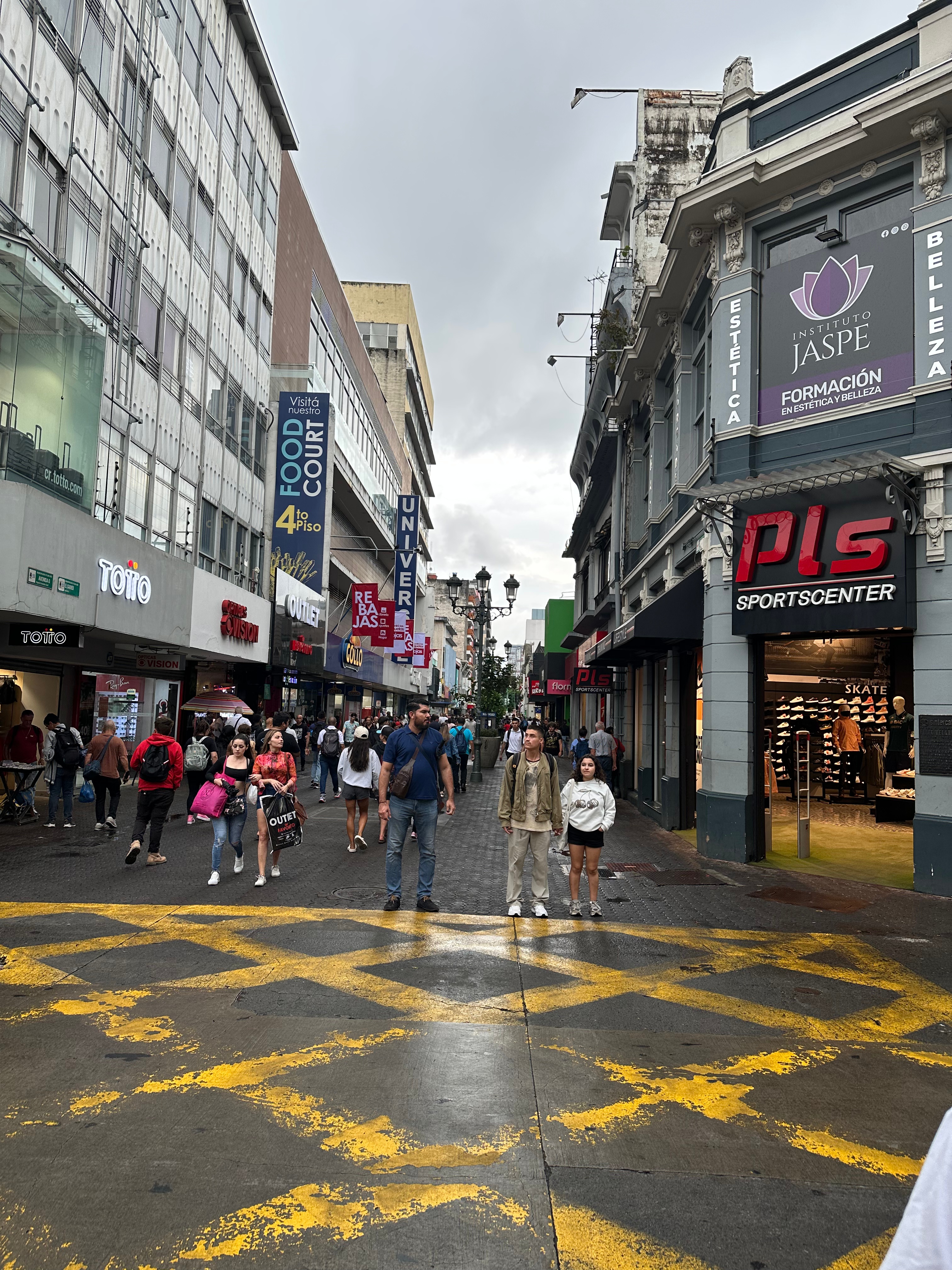
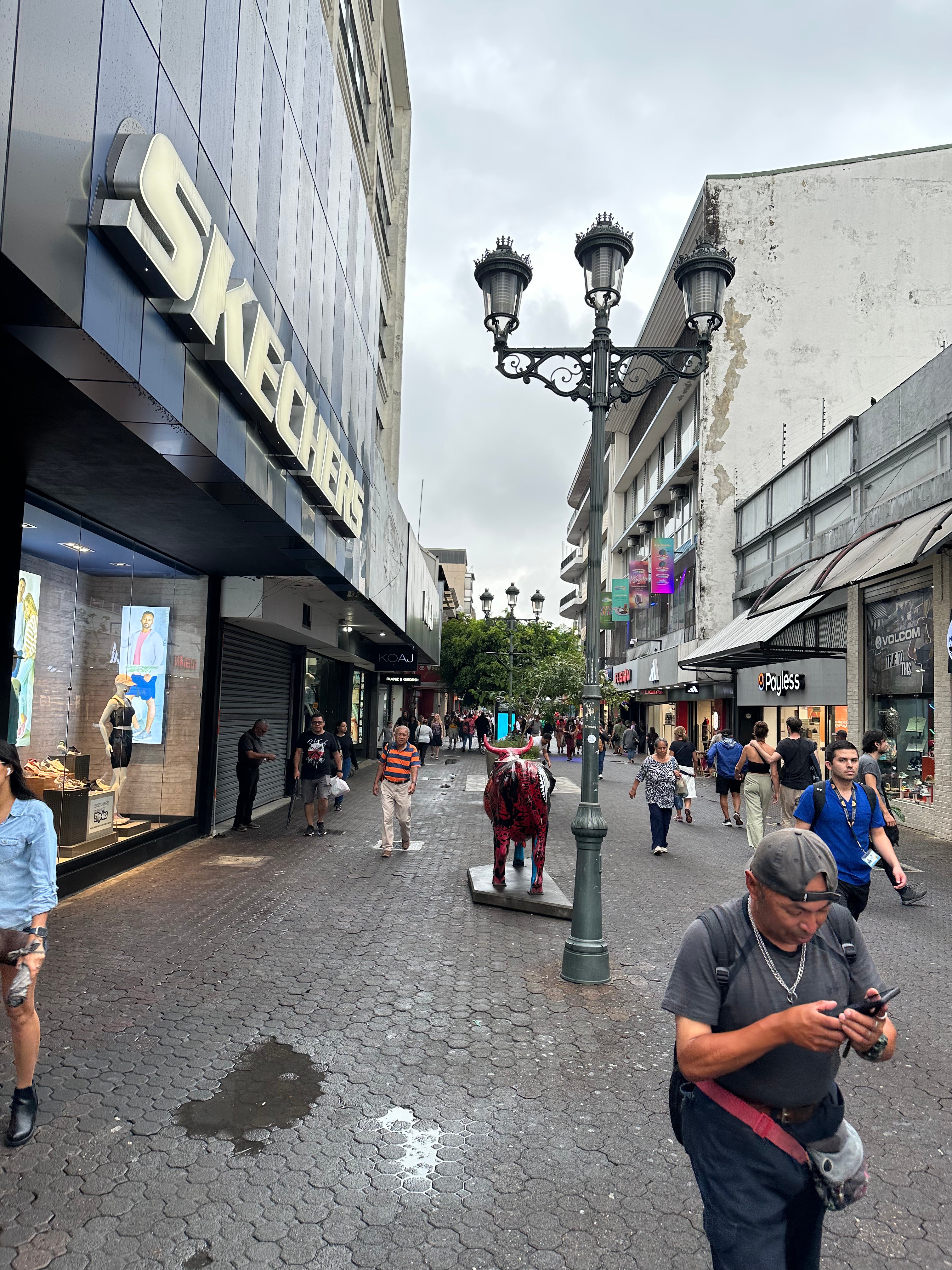
Friday May 2. Our original itinerary had us overnighting in San Jose near the airport, then taking a tour to a coffee plantation for breakfast and a park the next day. That tour had us in a car for 6 hours, and we blew it off to take a 5-hour walking tour of the old city of San Jose instead. The notes about the tour recommended “rain gear or an umbrella”. Umbrella is the clear winner here. While on our way to the tour start in the small transit bus (included in the price of the tour, a good Pro Tip), the skies opened up. It must have rained 2 or 3 inches in about 30 minutes. Several streets were flooded with 6-10 inches of water. We had a party of 5 and our tour guide modified our schedule to put us on inside venues for the first 2 hours and that strategy paid off handsomely. The rain quit, and we got a nice long walk through the center of the city, mostly in the Central Market area.
Pedro, our guide, was quite a character. He gave us the historical, the hysterical, the cultural, and the reality-check views of San Jose and Costa Rica in general. Population? Officially 5 million, ½ of them in San Jose. But there are also 2 million more illegals, who are either fleeing south from Nicaraguan poverty and oppression or transiting north from Panama toward the southern US border. But the US border has slammed shut, and many of the northern-bound transients have just been frozen in place. 2 million more mouths to feed and house is a lot for a population of 5 million. Luckily, about 20% of the official 5 million are expats from the US, Germany, Spain and France, and they, along with tourism, bring a lot of cash into the economy. So, somehow, it works. It certainly hasn’t spoiled the natural beauty of this place, or the overwhelming friendliness of the people. Pedro pointed out some street beggars and a few small homeless encampments, and while we aren’t used to this in Florida, Los Angeles and Seattle have Costa Rica beat hands down on blue tarps and tents. It isn’t even close. I think even Denver wins this one.

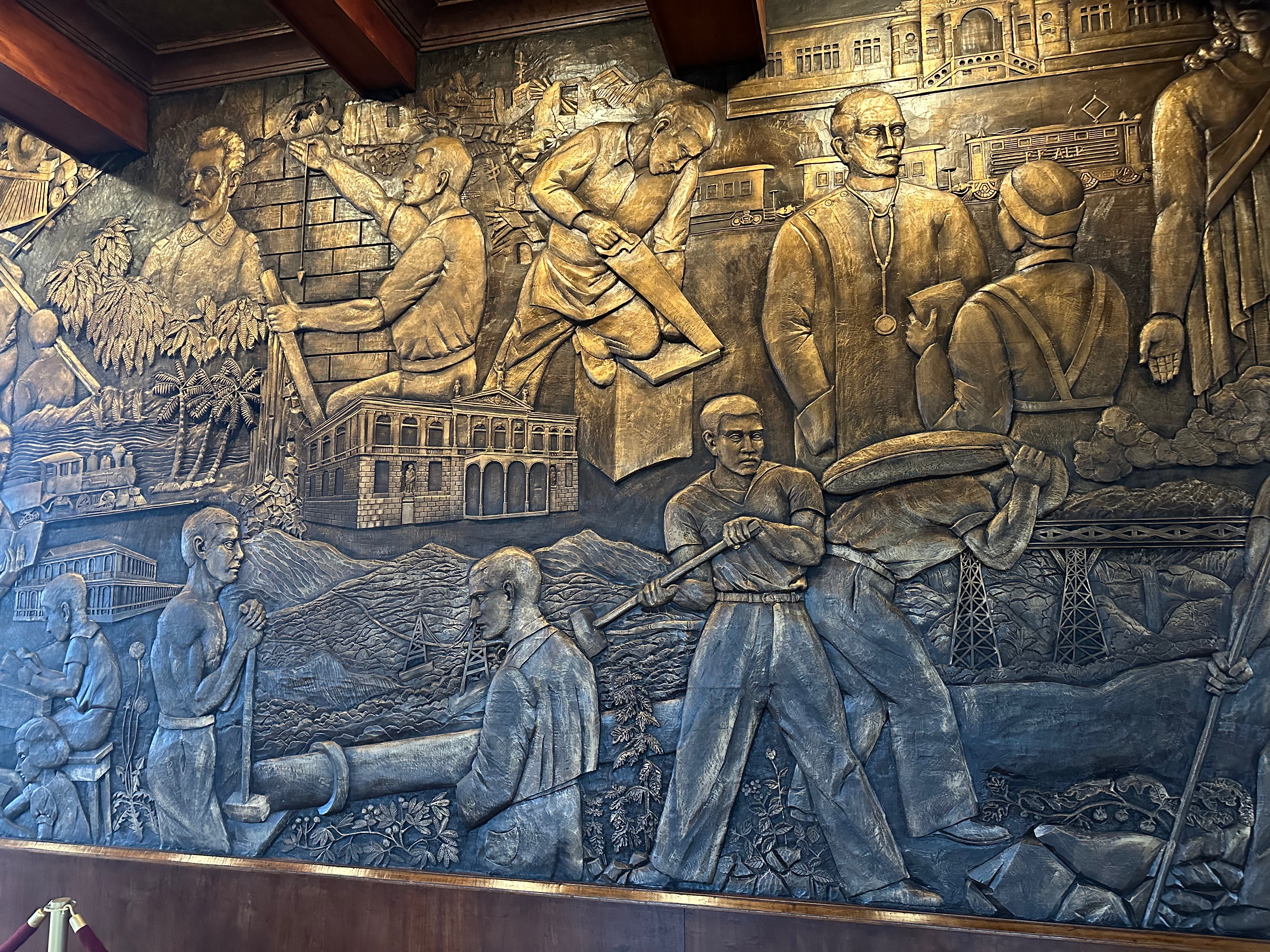
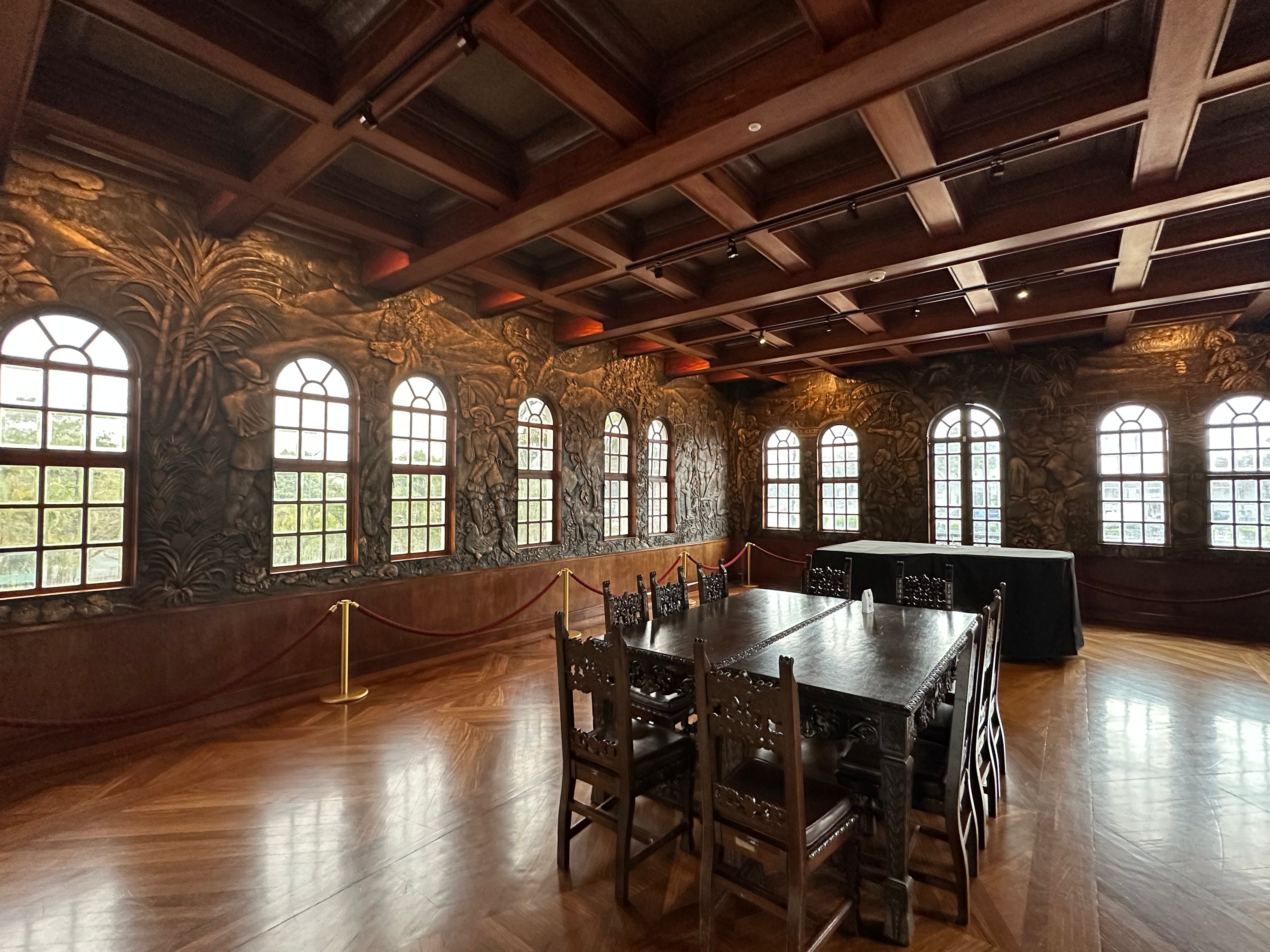
And who knew that Costa Rica went to war with America in 1856? Well, not officially. In the nineteenth century, Costa Rica didn’t have much of an army. (Even today, they don’t have an army at all, although they have a Policiá Nacional charged with keeping order.) That may have encouraged the thinking of William Walker, an American filibuster who sought to use his own army to establish slave states in Costa Rica and Nicaragua to take advantage of the lucrative coffee plantations and marketplace. Walker’s forces, though made up of Americans, acted independently and were not an official U.S. military force. This conflict is known as the Filibuster War (1855–1857). The natives of both Costa Rica and Nicaragua rallied and Willy lost, of course, as did slavery in the Americas. And something else we never knew, the original plan for the central American canal between the Caribbean and Pacific coasts was along the river that separates Costa Rica and Nicaragua, 100’s of miles north of the final location in Panama. If you study a map, like I did, you might scratch your head and wonder why that location wasn’t better. It would have required way less canal building. There must have been some other geopolitical persuasion, like a plethora of armed civilians left over from the Filibuster War.
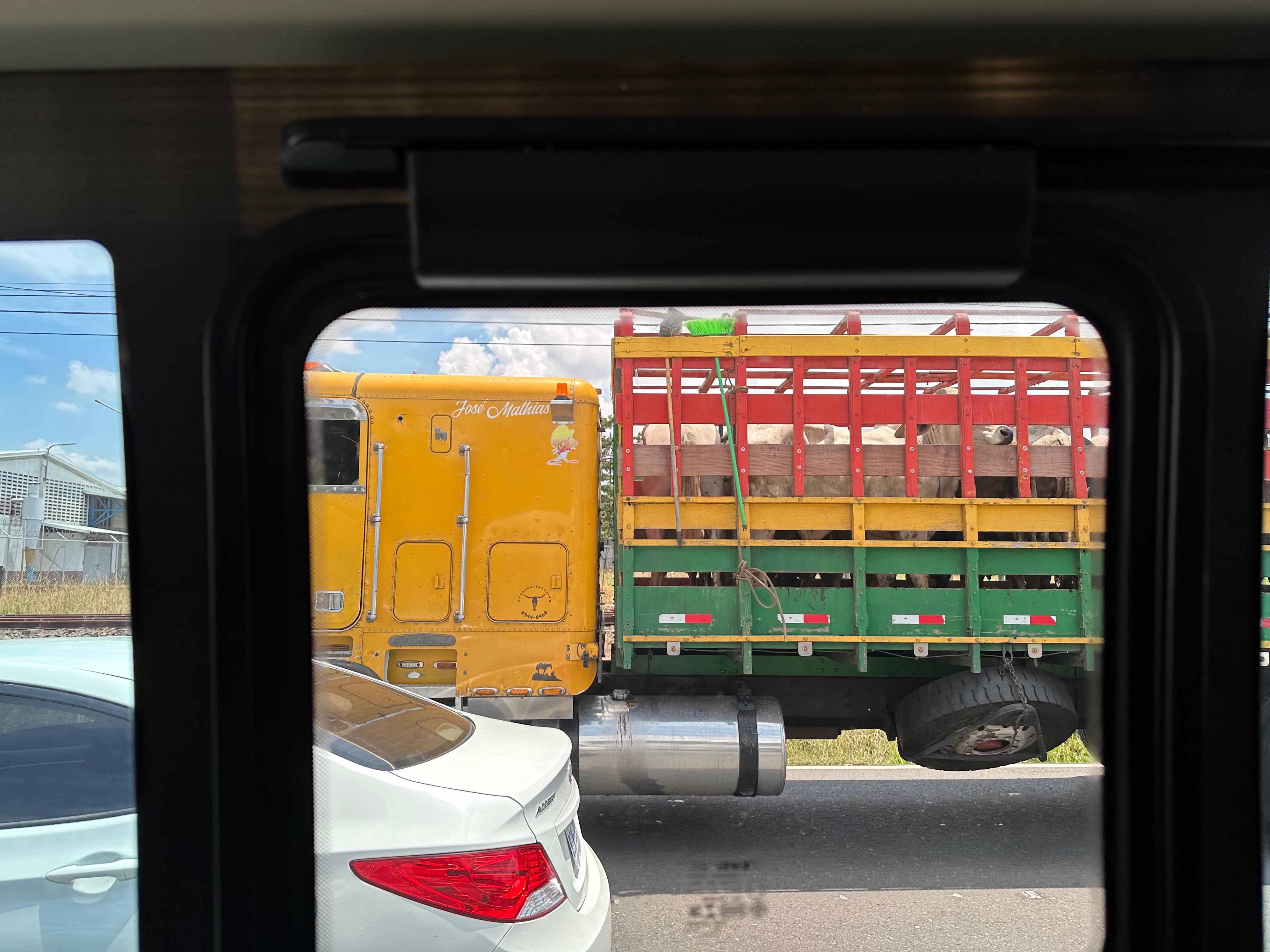
How about that bit about not having an army? Costa Rica’s last civil war featured their small army siding with the government and ½ of the population against the other ½. So, when that ended in 1948, the victorious National Liberation Army, under José Figueres Ferrer, formed a new government much like the US model: three branches, an executive with an elected President; an elected legislative; and a judicial (elected and appointed). There are 3 political factions in Costa Rica (like many Central and South American countries), the communists, the socialists, and the capitalists. A compromise between them was reached on the new government’s charter, taking a little from the commies (social security), some from the socialists (land preservation and public ownership, education and sustainability), and the rest from the capitalists (free markets, easy taxation, small government, and a stable currency). But nobody wanted to have an army anymore because of the bad taste the last one had left them. So far, so good, but time has a way of testing these choices very thoroughly. By the way, this last tidbit of history lesson was compliments of Adrès Morera (Andy), our tour guide at the National Park. More on him later.


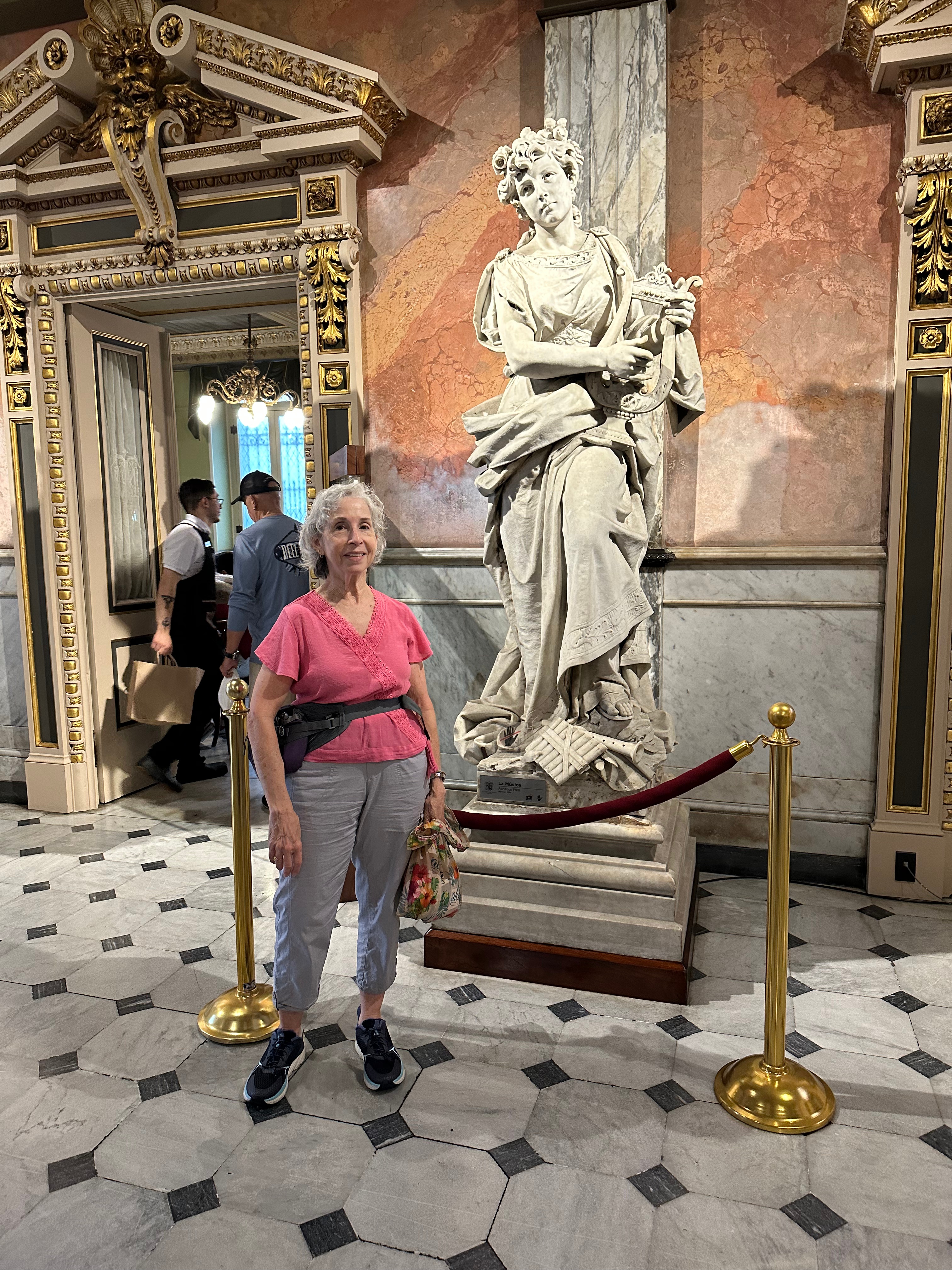
When we travel we typically eat our way through a country as the true test of its cultural richness. We ate at the Doubletree the first night, sharing 3 small-plate traditional meals: Costa Rican tacos (similar to taquitos but with highly flavored beef filling), a beans, rice and salad plate with mayo and ketchup dressing (the local equivalent of thousand island), and shredded chicken empanadas (which were excellenté!) The second night we went to a Mexican place and tried the locals take on traditional Mexican tacos, and they were really good. So far, the food scores a 10.
Saturday May 3. Today we go by private car to our next destination, Arenal Springs Resort & Spa, just 4 miles directly north of Volcán Arenal, the most active and prominent volcano in Costa Rica (there are 7 active ones and about 200 dormant ones). Our hotel is built around a natural volcanic hot spring, with four pools of different temperatures from 97F to 104F. The mineral content of the water is said to have powers of rejuvenation; we are determined to give them a serious test.
The 3-hour drive is surprisingly populated with small towns along the entire route. I guess the 2½ million that don’t live in San Jose all live pretty close to the roads through the country. Our driver fashions himself to be a protégé of Parnelli Jones, but maybe this is just the “Pura Vida” way as the roads constantly look like a giant-scale pinball machine. Amazingly, we saw no collisions, but lots of high beams flashing as our driver overtook other cars, trucks, bicyclists and even pedestrians walking double wide on the side of the road. Along the way our driver pulled off the side near a fruit stand and in his “sufficient” English waved us over to a tree where a mother and baby sloth were sleeping.
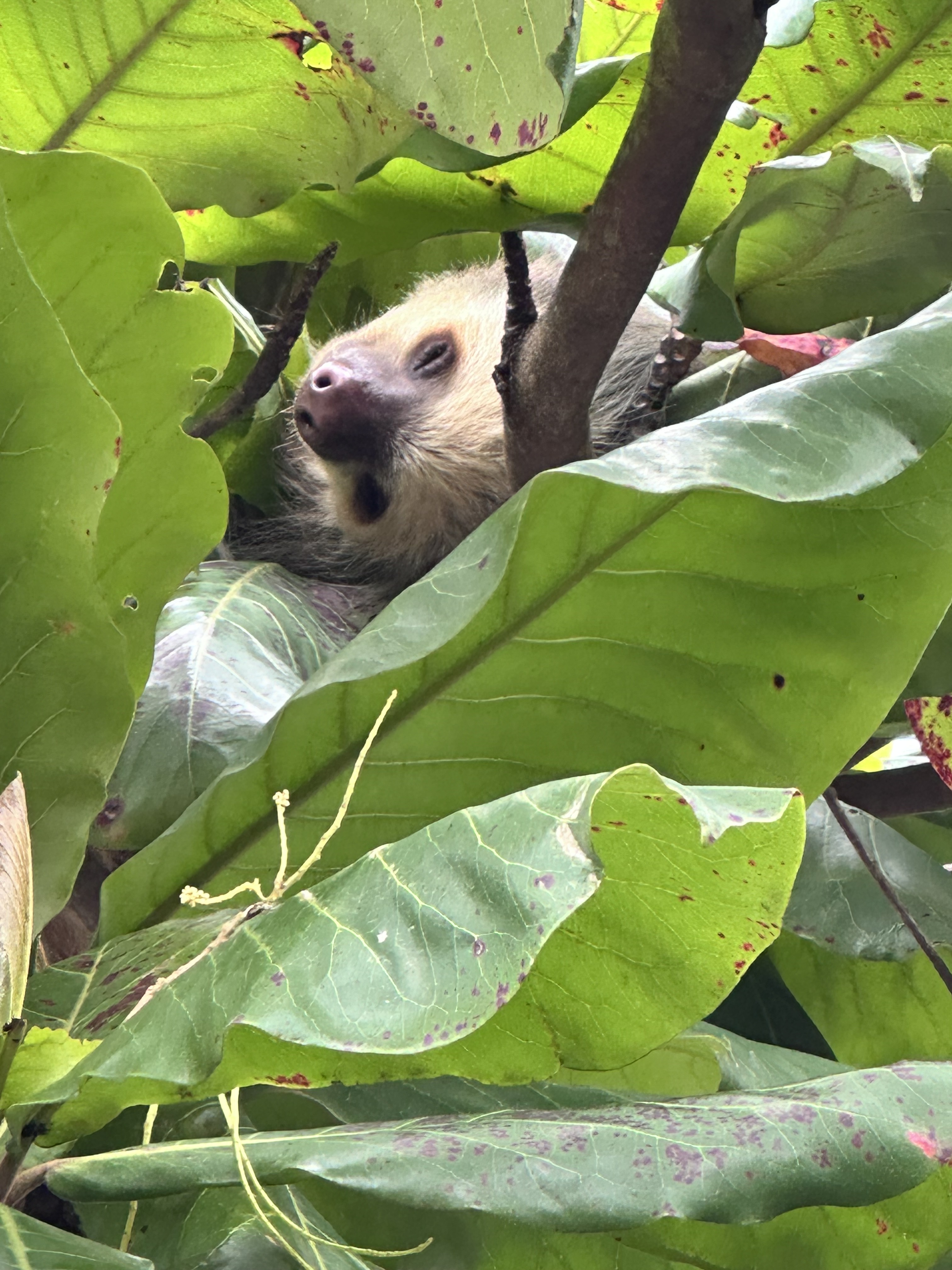
Sloths are a national icon of Costa Rica, and we expected to see them everywhere, but we are very fortunate for our driver pointing them out as it would turn out to be a several days-long sloth-free streak for us. We spoke to lots of people who had been here for a week or longer that had yet to see one “in the wild” (there are “sloth parks” where you can go to see them).
There are farms as far as you can see, and they look to be small family affairs. We are told that rather than fences, the families mark their boundaries with rows of madero negro trees, also called Quick Stick because you can break off a branch, stick it in the ground, and in a week or so a new tree is growing. They grow quickly and need no care, and we see tens of thousands of them planted close together in straight lines to mark the fields. Some are planted so close together they act like a fence to keep the dairy cows corralled.
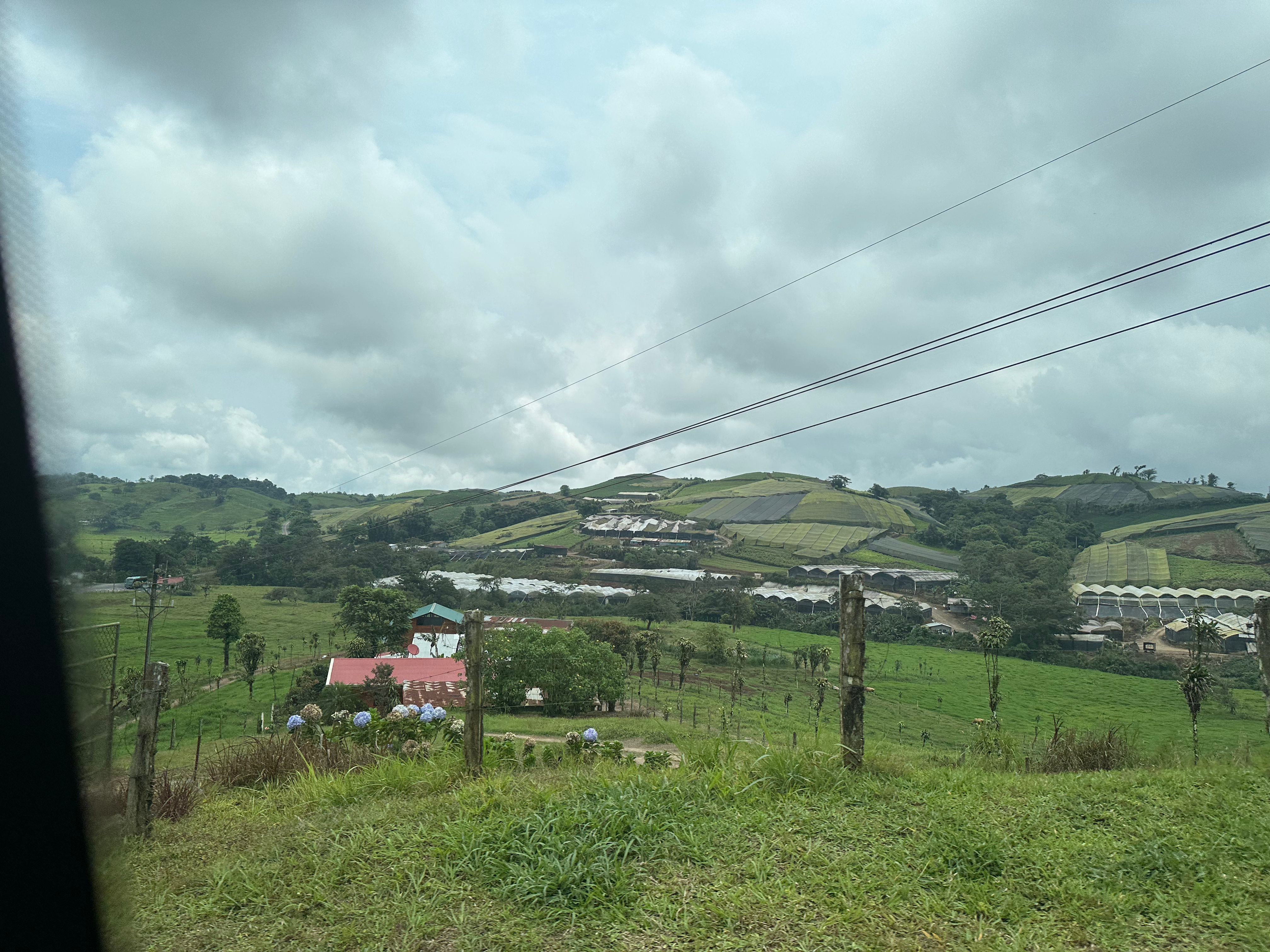
There is a stark difference between the city and country. The cities, more densely populated and also more attractive to those without housing or very much income, have lots of slum-like areas with small shacks with tin roofs. These tend to be in cheap land areas close to highways, so they are very visible while you are traveling about in the ciudád. In the country, things are clean and orderly. The houses look well cared for, the small markets are cheerful and colorful, there is much more greenery. The country feels much more like the Costa Rica we imagined, and the pace of life feels much less stressful. There is a lesson lurking in there for us gringos.
Next up is our stay at the Arenal Volcano! Pura Vida!

 MUDDSCAPE