
Arenal Springs Resort & Spa is a fortress. As Costa Rica, so far, seems to be a very peaceful and low-crime country, especially in the tourist areas, it feels like it is intended not so much to keep bad guys out as it is to reinforce a feeling of security for the guests to relax.
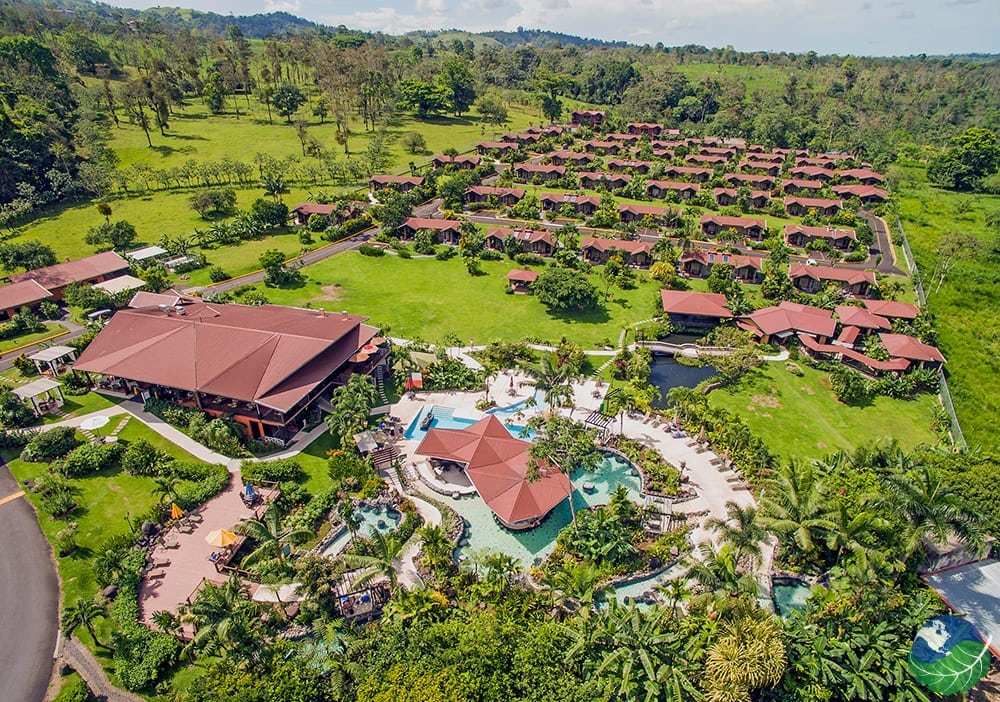
The guest rooms are arranged throughout the property in small buildings on streets that look very much like a small housing development. Our room is a duplex superior bungalow with one glass wall side that faces Volcán Arenal. The volcano is also the source of the superheated aquifer that feeds the mineral springs on the property. The spring runs at a constant 104F 24 hours a day, and the flow cascades from the “hot pool” at the top of the terrace through 2 more pools (one for adults, one for kids, @101F) and then into a large “cool pool” (97F) at the bottom that is adjacent to a much cooler freshwater pool.

The “cool pool” has a large swim-up eating and drinking bar. Being the start of the low season, none of the pools were ever crowded, but the swim up bar was packed all the time. On closer examination, it was the same crowd of partiers the whole four days we were here. I think I might start a rehab clinic next door.
Sunday May 4: May the Fourth be with you! We saw exactly no Star Wars themed characters or fans on this day, except maybe some of the characters from the intergalactic bar scenes at that swim-up bar. Do these people ever sleep?
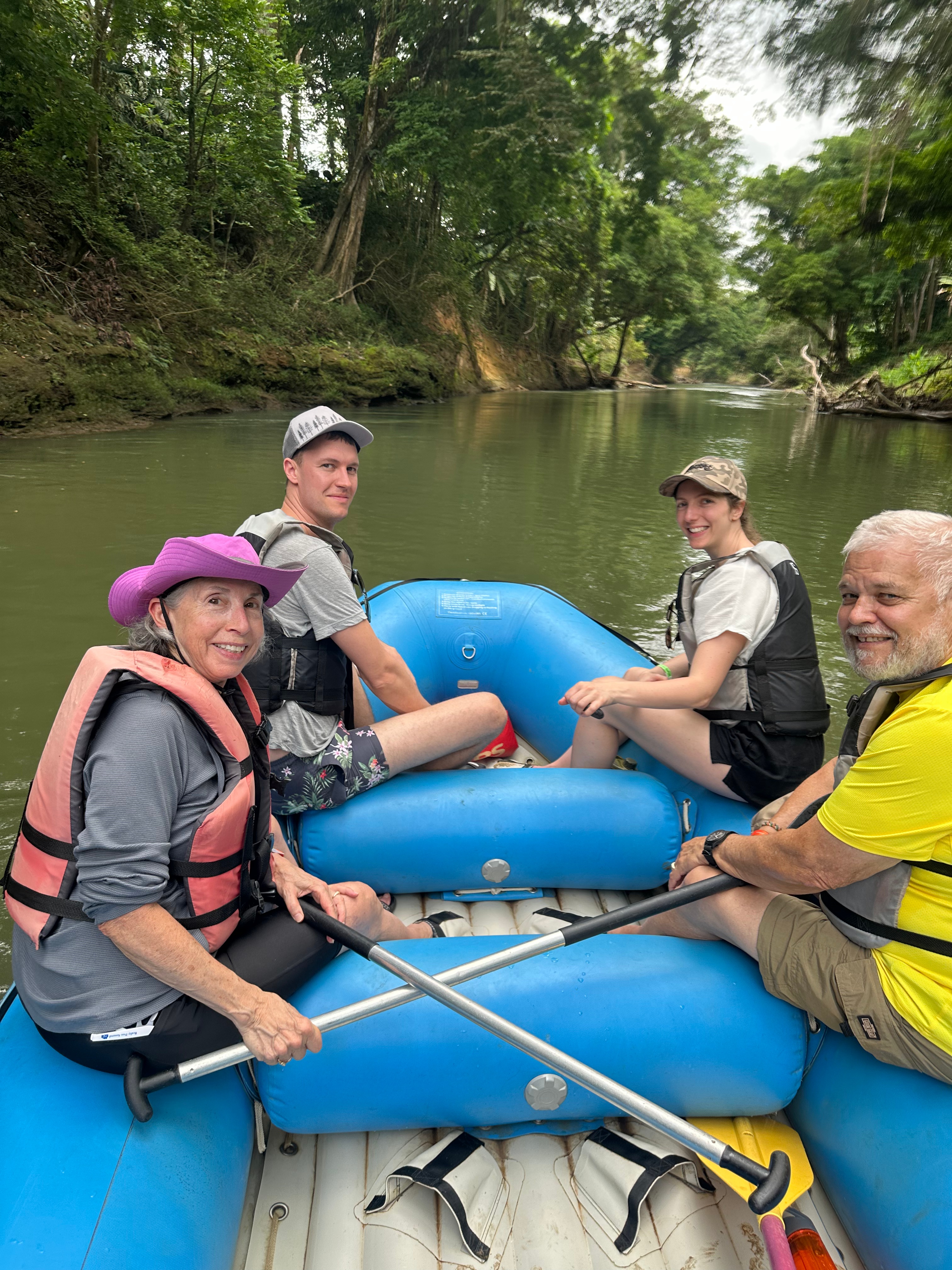
This day we paddle our way to bliss with the Safari River Float on the Rio Peñas Blancas. This tour, and tomorrow’s Hanging Bridges tour, were arranged through Canoa Aventura. They are impeccably precise on their pickup schedule, which we greatly appreciated.
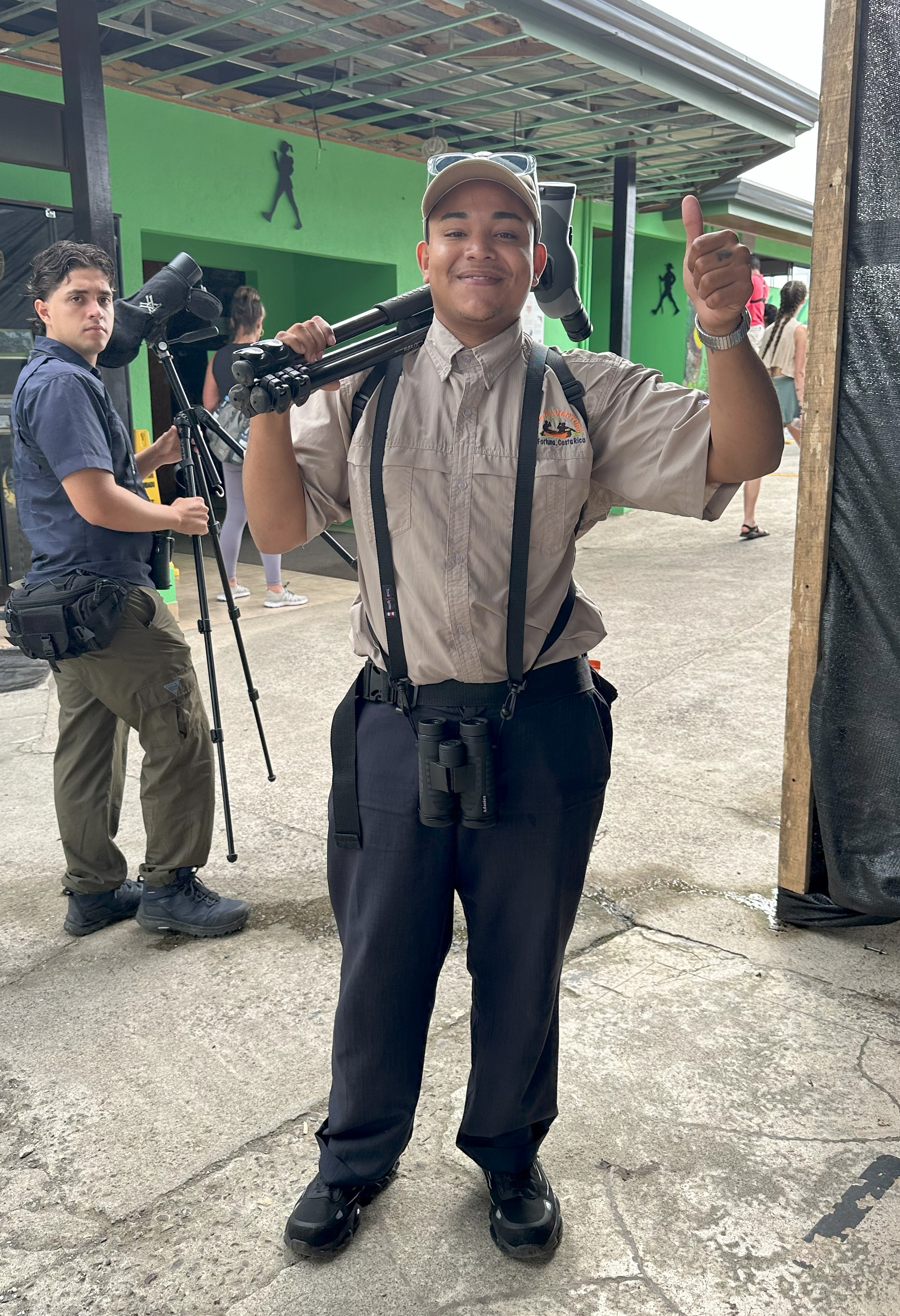
Our guide today is Samuel, a smiling and funny young man recently graduated from a specialty college where he majored in Eco Biology. He was offered an internship with Canoa that turned into a full-time job, and they are lucky to have him. His bubbly enthusiasm made the tour so fun that we requested him for our tour the next day at Hanging Bridges.
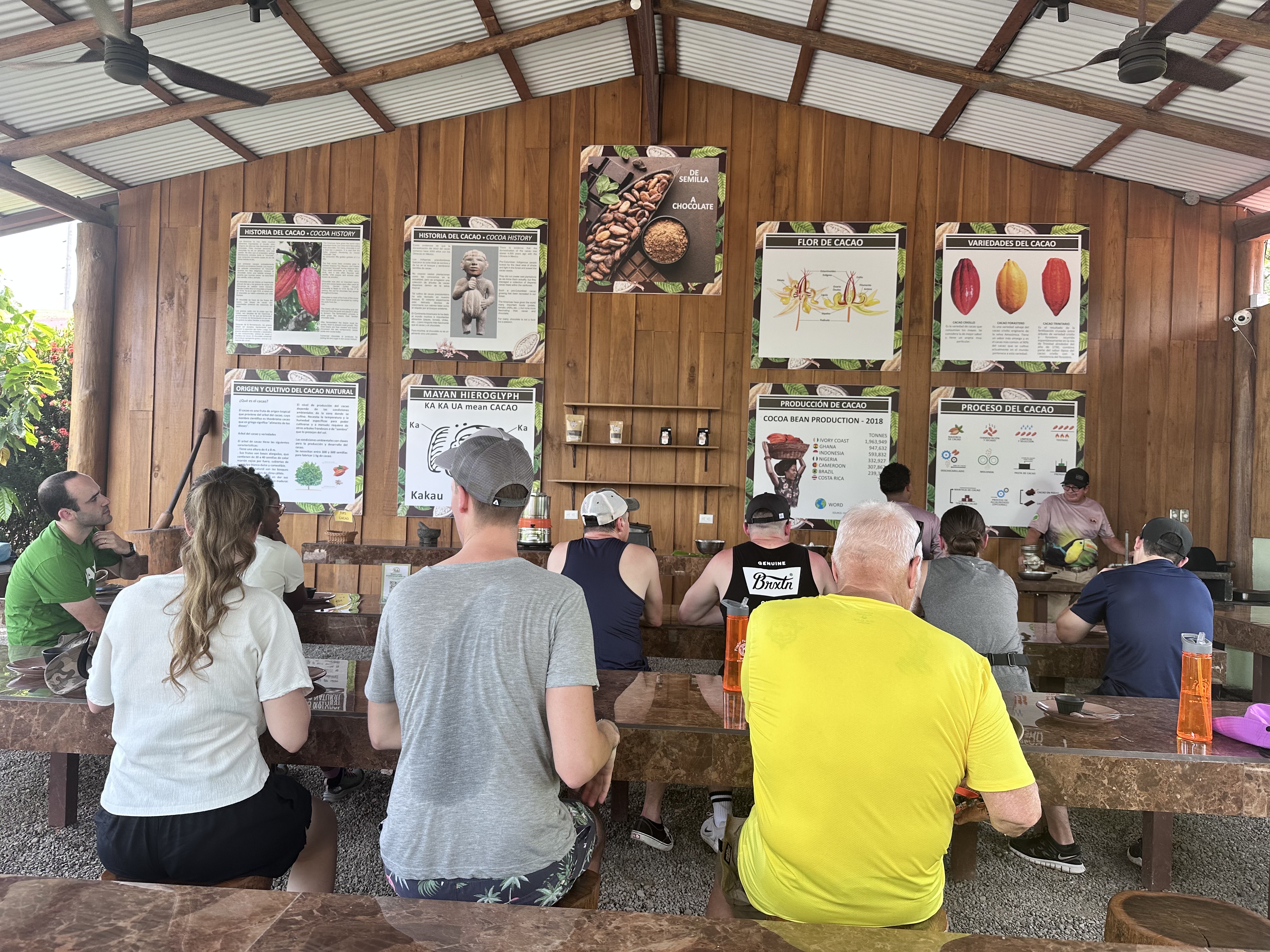
This float is about 2 hours and covers 10km, about 6 miles. The Peñas Blancas flows to the confluence with Rio San Carlos and the tour ends at a Canoa property that houses their float terminus, a chocolate factory (we all got to see how it’s made and eat some!) and a moonshine still for making hooch out of the surrounding sugar cane. We were treated to a local snack dish of warmed tortillas with cheese and fried plantain, accompanied by a choice of water, coffee or sugarcane tea (hot or cold). If you have a sweet tooth like me, the sugarcane tea is amazing, and the simple snack was surprisingly filling and deliciosó. Everyone was offered a shot of moonshine but we passed as non-drinkers. At 130 proof Samuel says it can make the “moon shine” in a thunderstorm. One shot sends you to heaven, the second shot sends you to the trunk of the transit van for the trip back to your hotel.
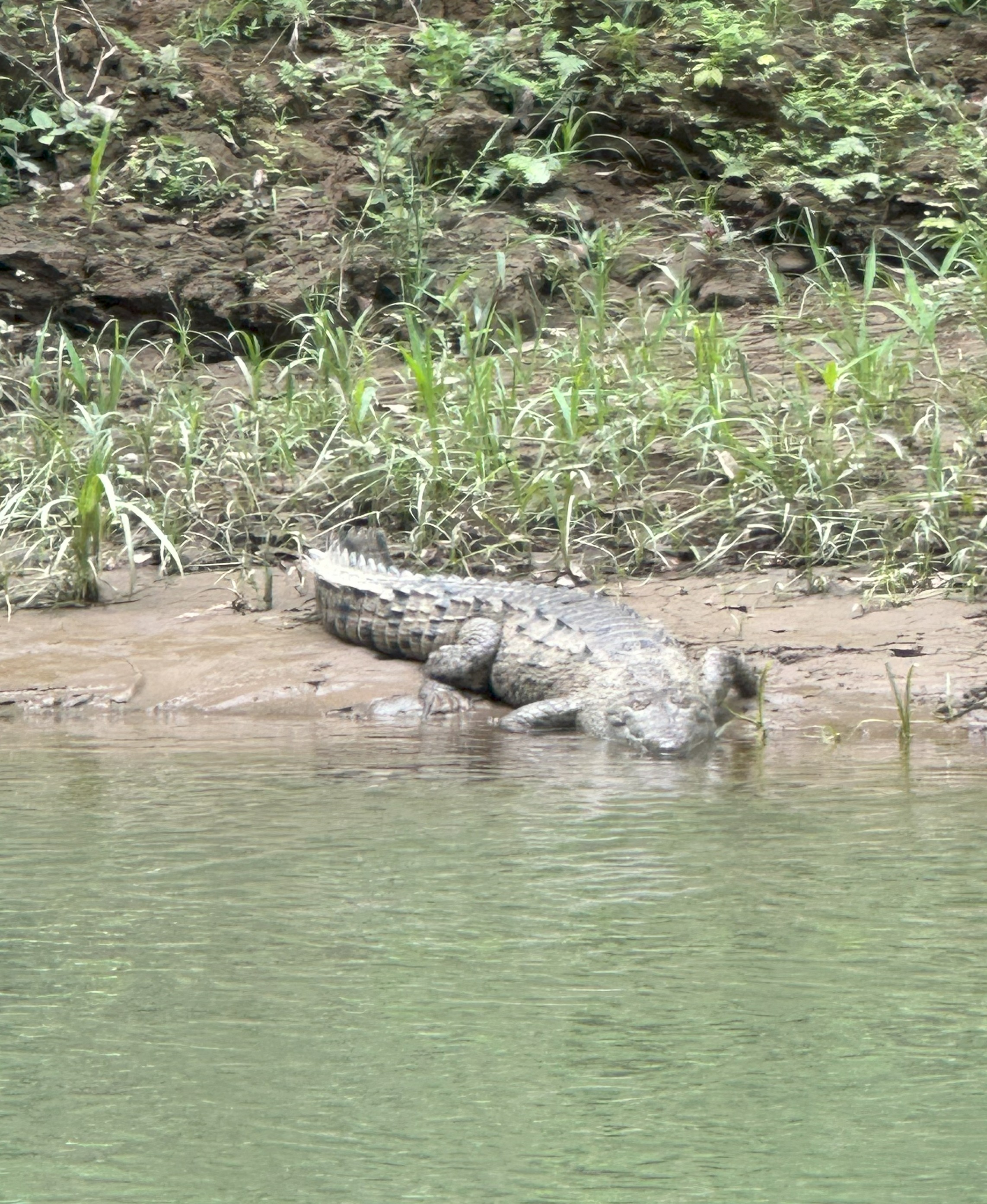
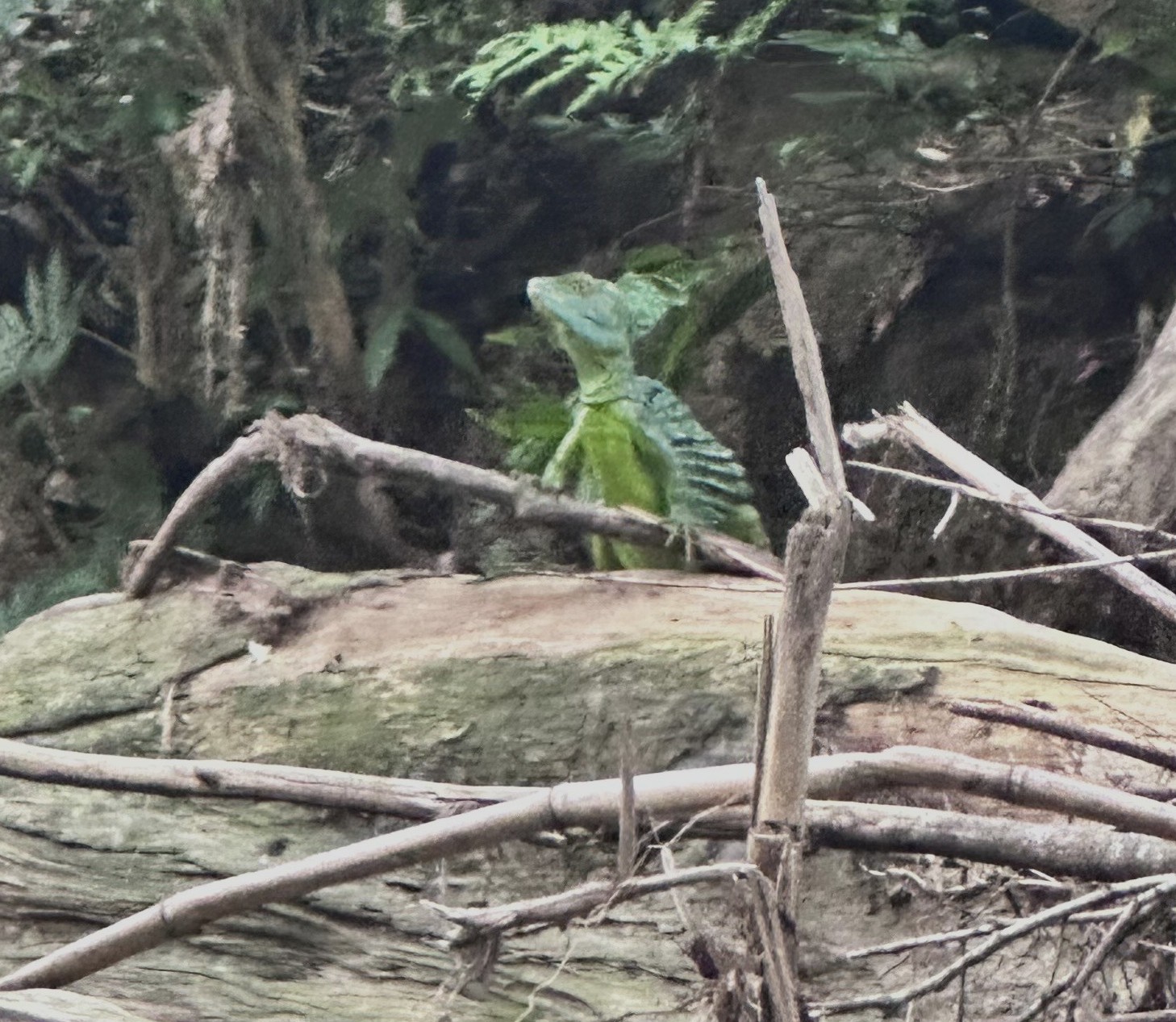
On the float you have a chance to see dozens of species. We saw American crocodiles (several), a river otter, a Jesus Lizard (a basilisk that can run on water, although it didn’t), two species of monkeys, owls, bats, turtles, and Crazy Luna, the raft-hating farmer’s dog (the river bisects a large farm).
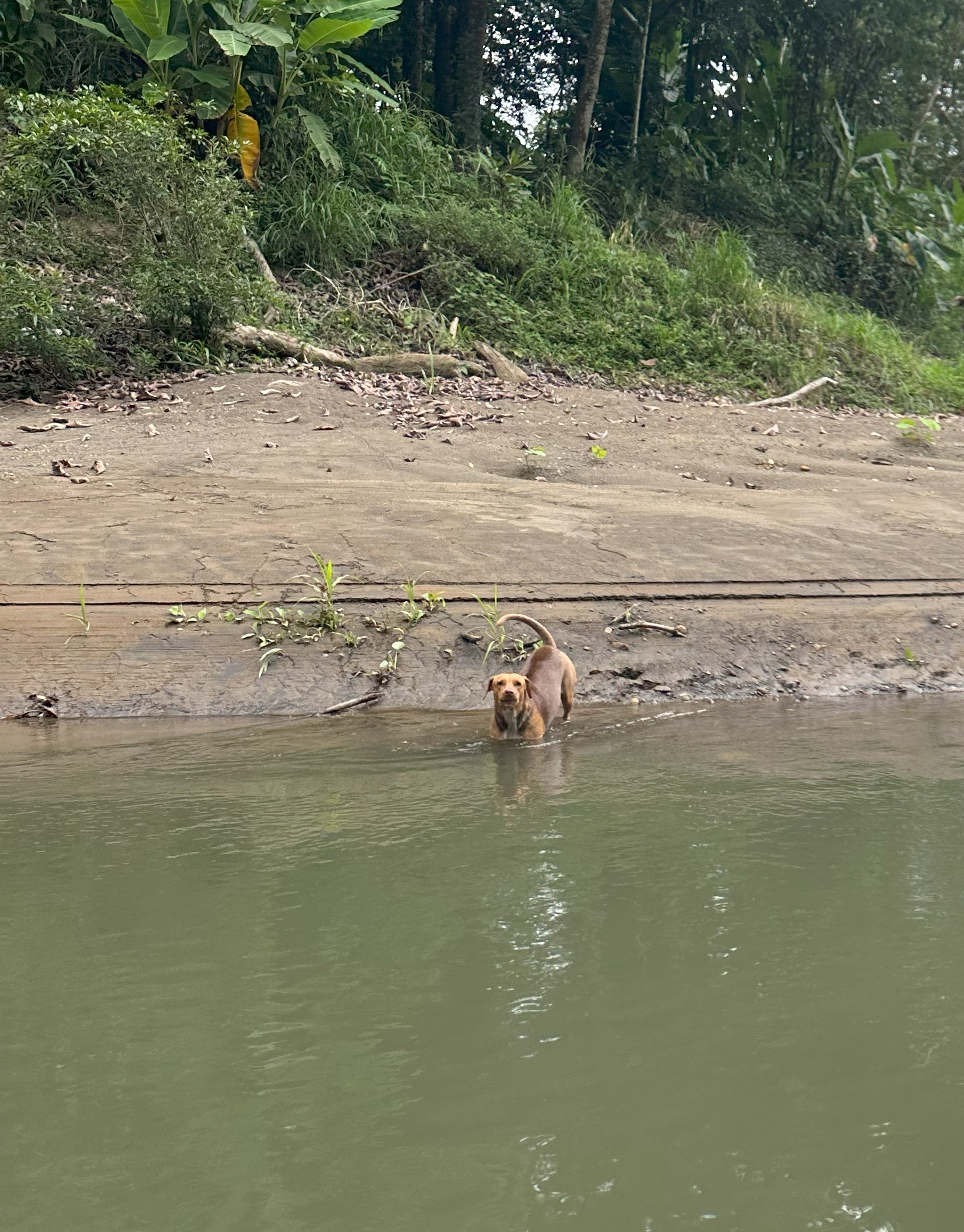
Luna was delightfully persistent, absolutely sure she was scaring the bejezus out of us and forcing the raft to flee downstream. The more warmly we called to her the more furious she got.
We saw so many other beasties, it’s hard to keep count. And you don’t just sit there and stare, you get to help navigate the raft through some very mild fast water, frequently to Samuel’s urgent command to “backpaddle, backpaddle!” to move the raft to the bank so we can closely examine things like owls and bats and Jesus Lizards.
Of course, we’re at a resort & spa, so we spent the afternoon soaking our backpaddling muscles in the hot springs, cooling off in the freshwater pool and sipping a couple of tonic and cranberries.
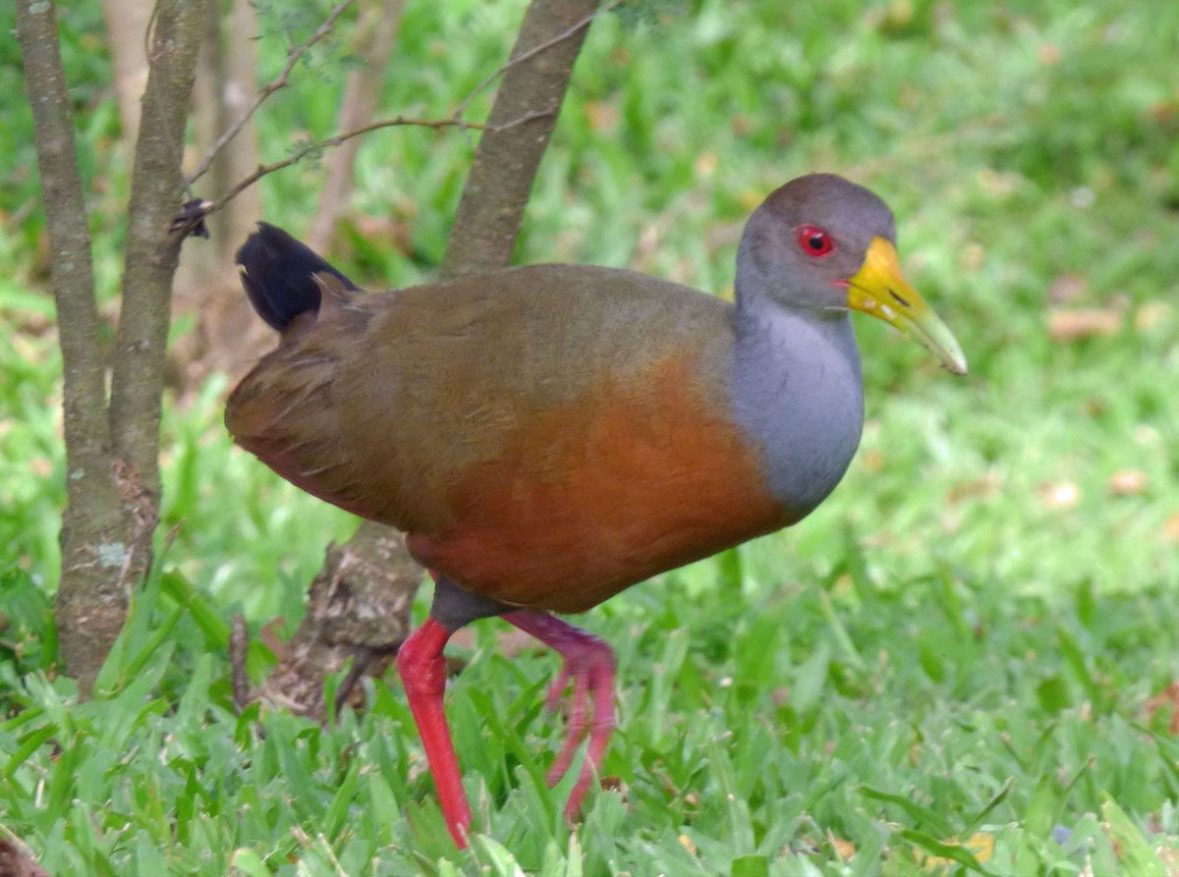
At the pool we were visited by a local, who was quite persistent in watching us. Maybe we were on his turf? Our family bird expert, Glenn, tells us this is a Gray-cowled Wood Rail. His name is Crazy Charlie. He didn’t have much to say.
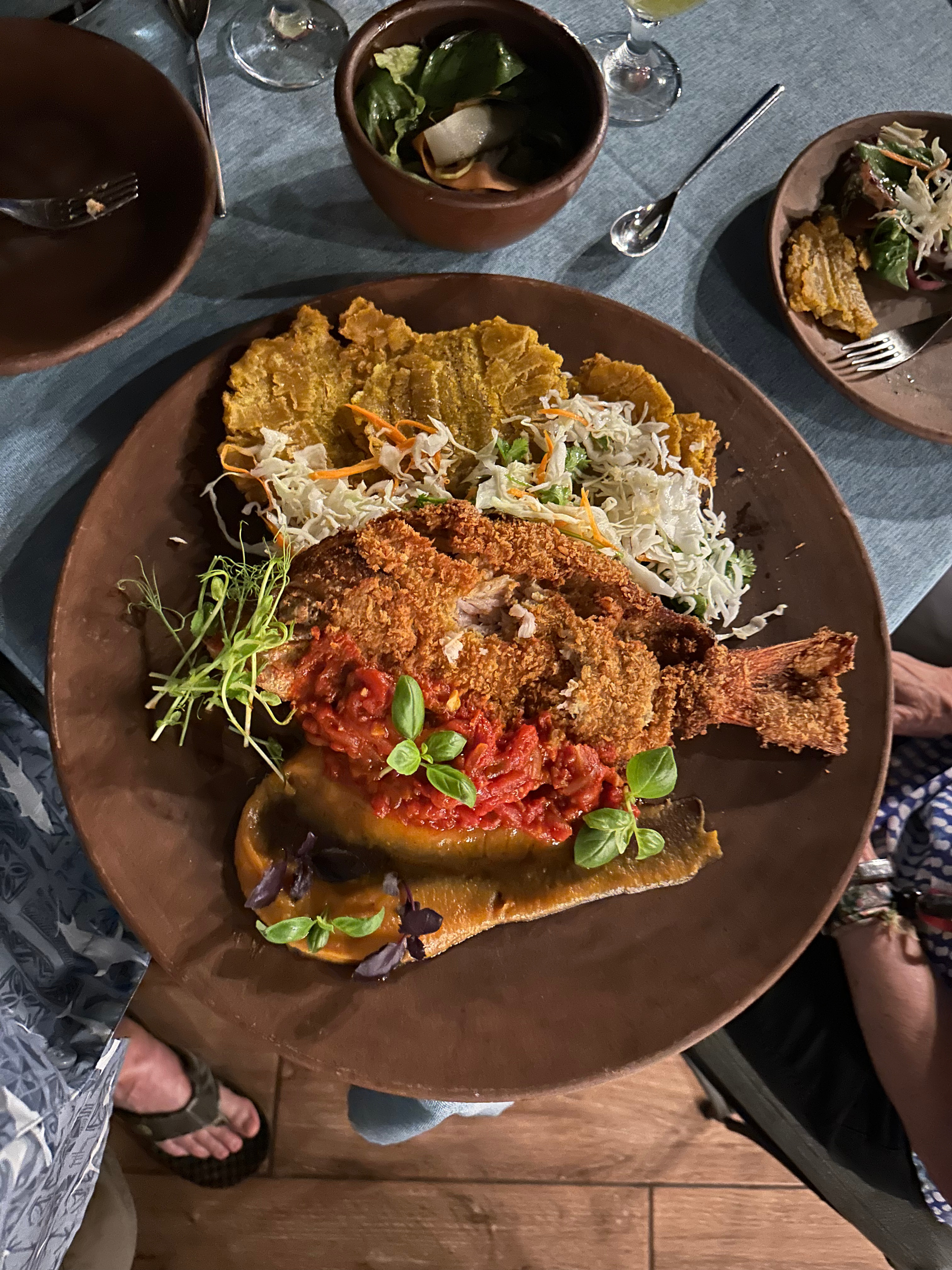
We dined casually in one of the hotel restaurants and chose a whole fried snapper and a couple of salads. We have done the fried whole fish thing before, but this chef had cleverly removed the main part of the skeleton, so the entire center section was crispy skin and meat. It was accompanied by fried plantain chips and a sauce made from pureed squash and just a hint of spiciness and herbs and some fresh tomato salsa. Michelin star deliciosó!
Monday May 5:

This morning, we are pleasantly surprised by Samuel coming to pick us up at the hotel for our Hanging Bridges Tour!
He did this tour for a different group yesterday afternoon after our Safari Float, and he tells us he knows where “everybody” (the wildlife at Hanging Bridges) is today.
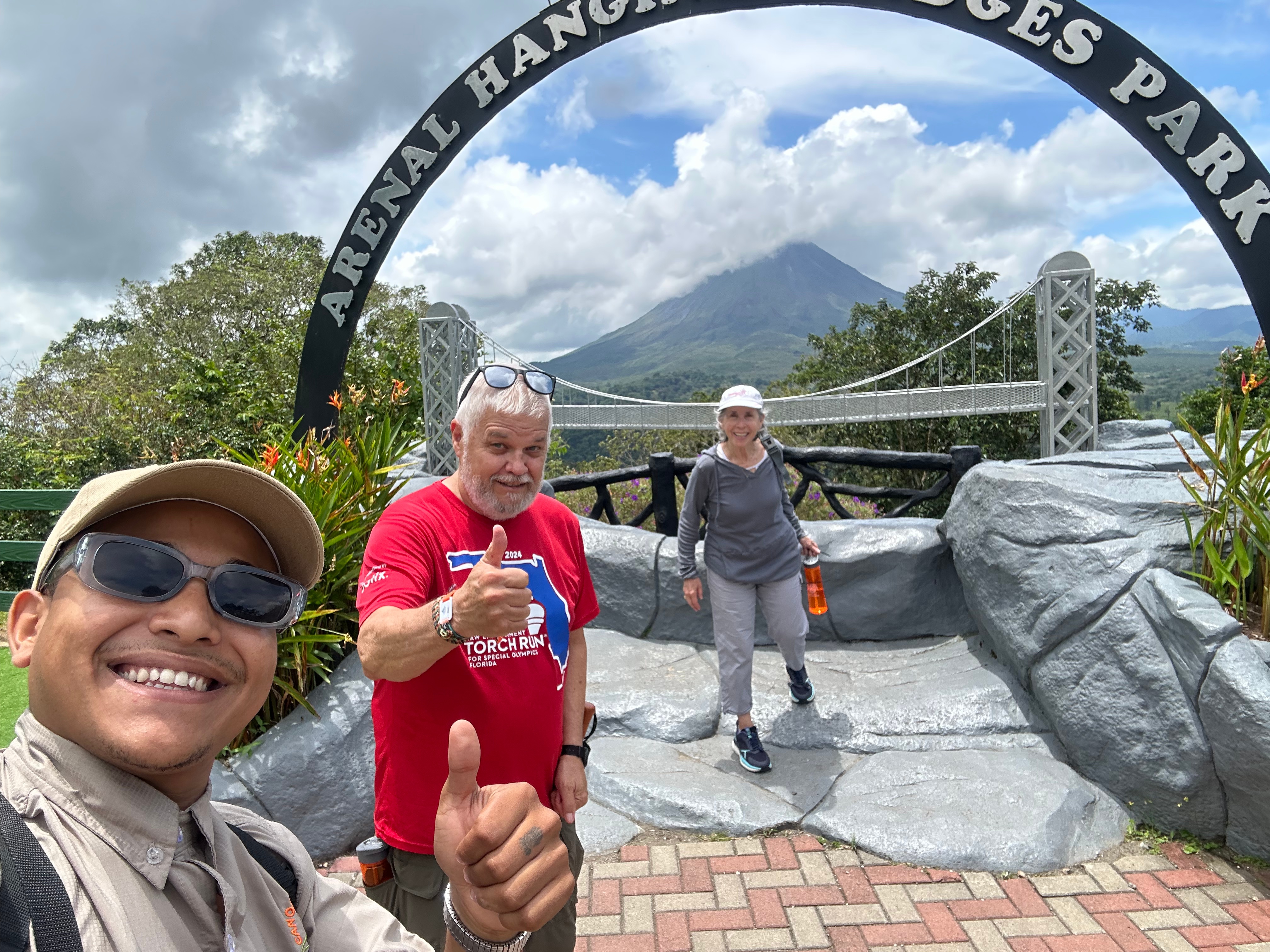
Many of the species on the tour apparently are territorial and migrate around the park on a Pura Vida schedule. Our mood is bright for the short drive, and we are even more excited to find out that the park isn’t crowded. This first week of May is turning out to have pleasant, dry weather and no crowds. We uselessly carried our umbrella everywhere. We would come back at this time in the future for lower prices and fewer people for sure! Especially when we find out that March and April are the hottest months.
The tour is a 2 hour walk along 2 miles of trail that crosses 16 bridges, 6 of them cable-suspension bridges and the other 10 are fixed, although today the last suspension bridge is under refurbishment, so we won’t cross that one. If you are afraid of heights, don’t take this tour. The suspension bridges are totally safe, but the height (up to 400+ feet) and length (up to 92 meters, about a football field) combined with the “bounciness” and the sway from side to side can be unnerving.
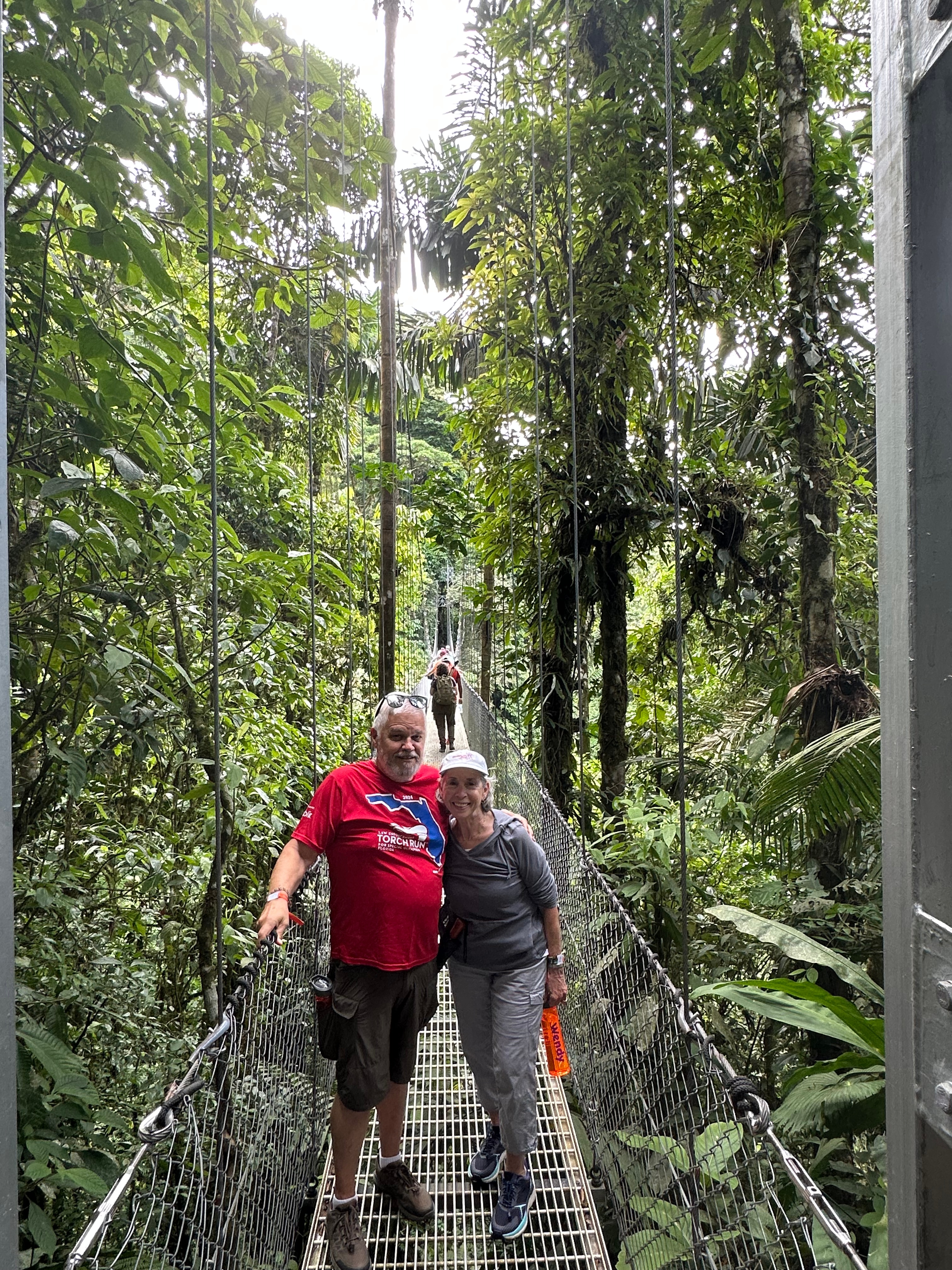
The views are over-the-top spectacular, and it’s really cool to see the same trees from the top that you just saw from the bottom. The hike is up and down the sides of a canyon, and although the path is very well developed and maintained, the inclines can be steep. Wear your best walking shoes or hiking boots! And you get a chance to see quite an array of wildlife.
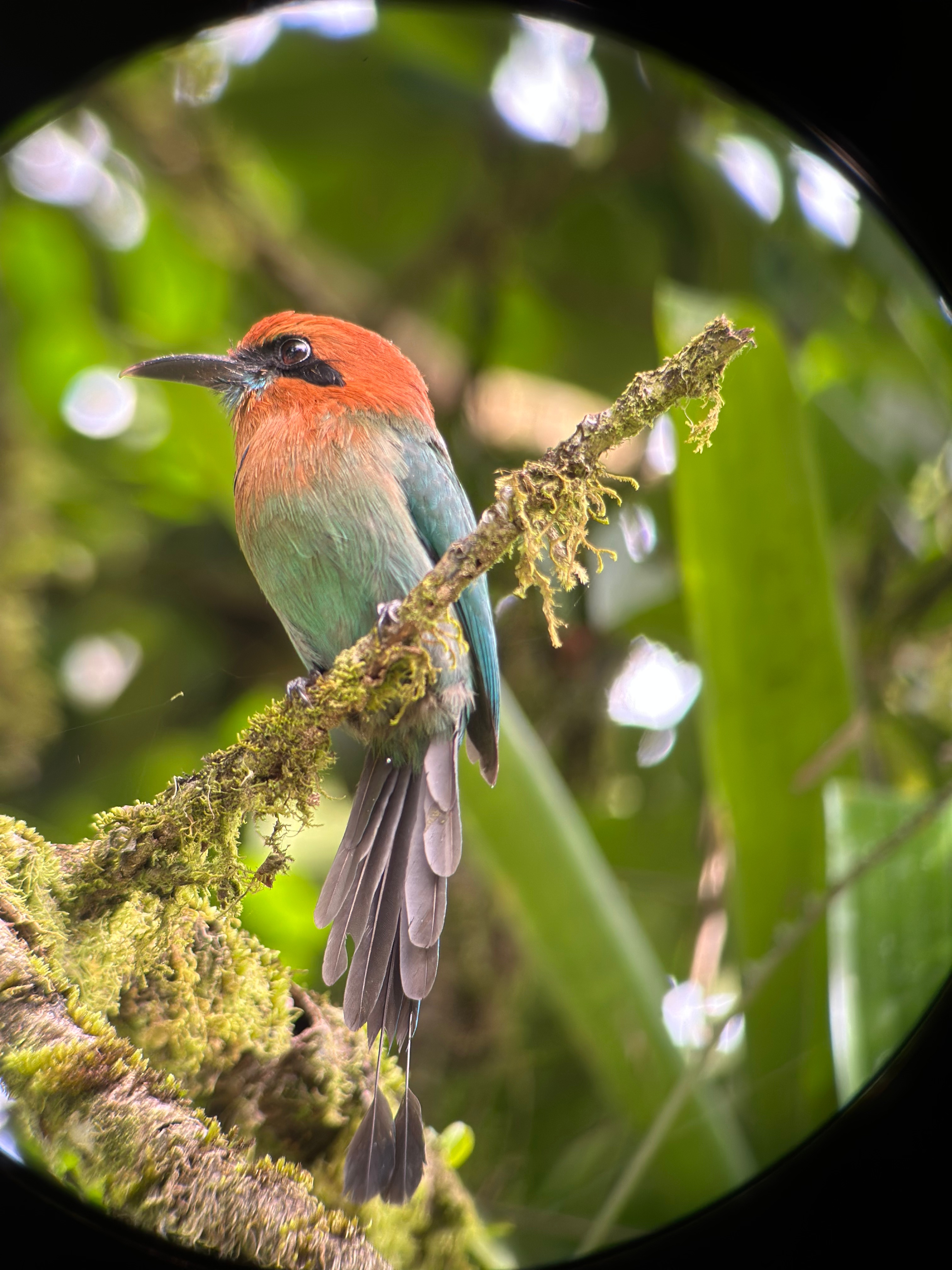
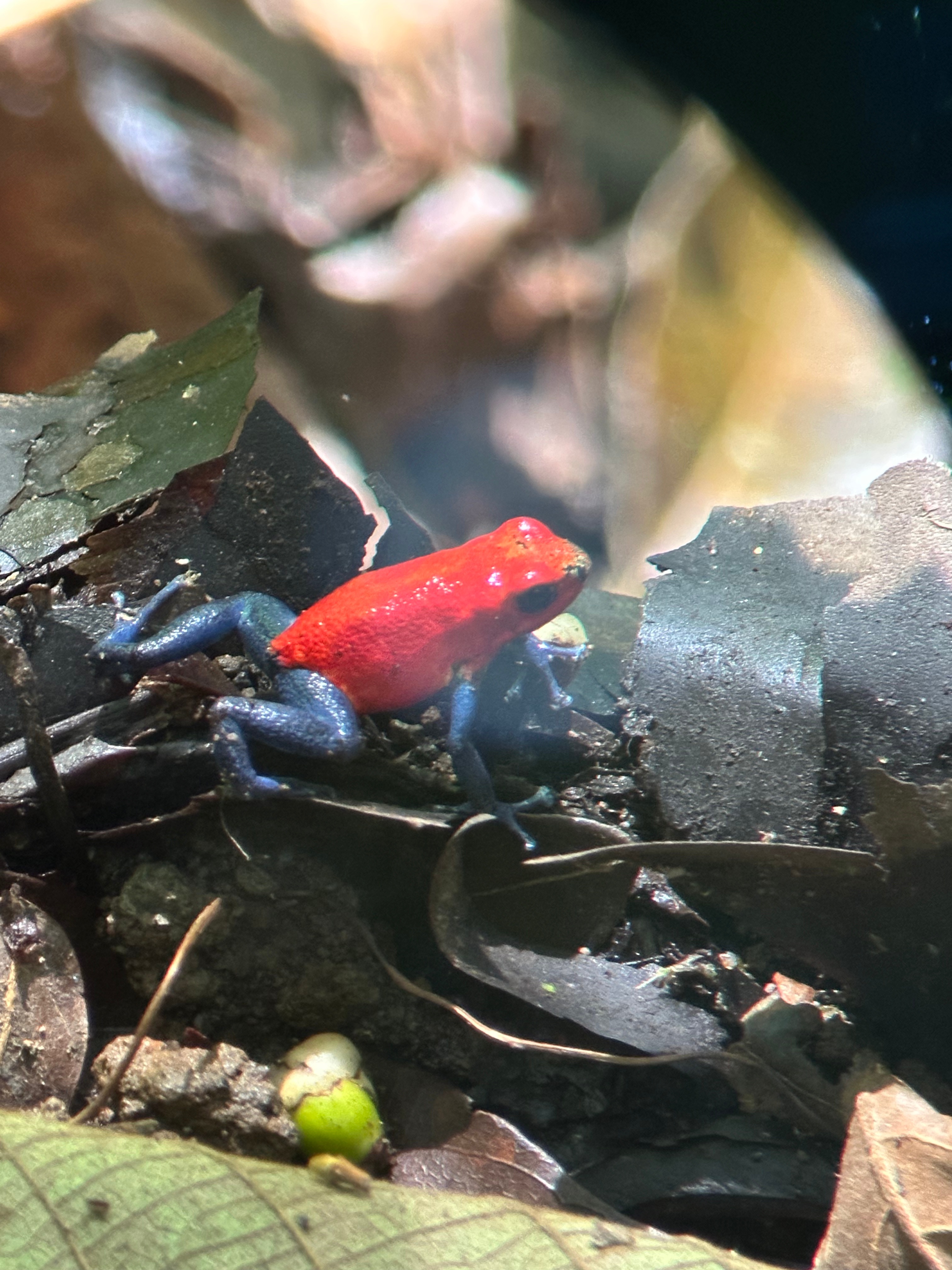
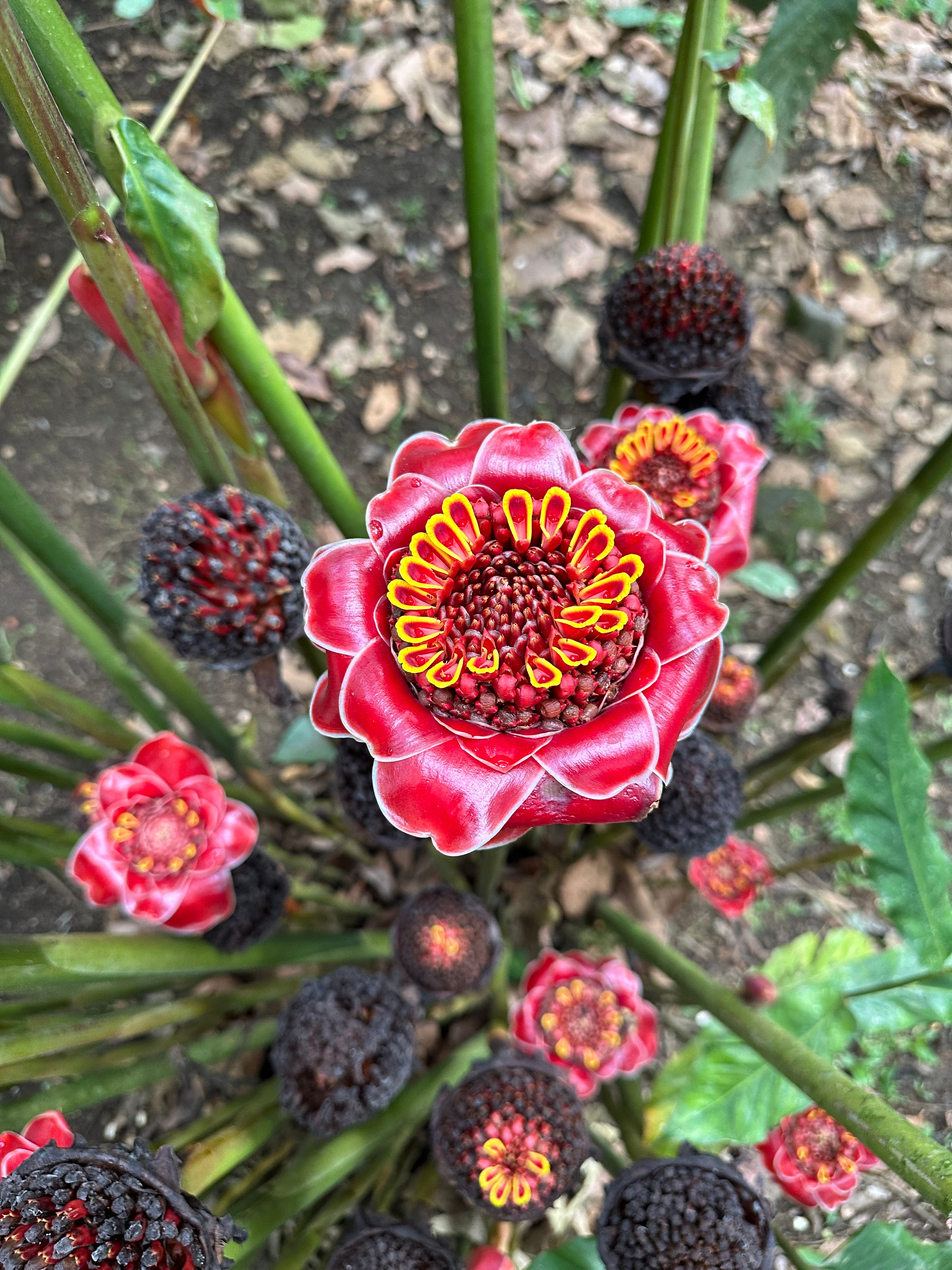
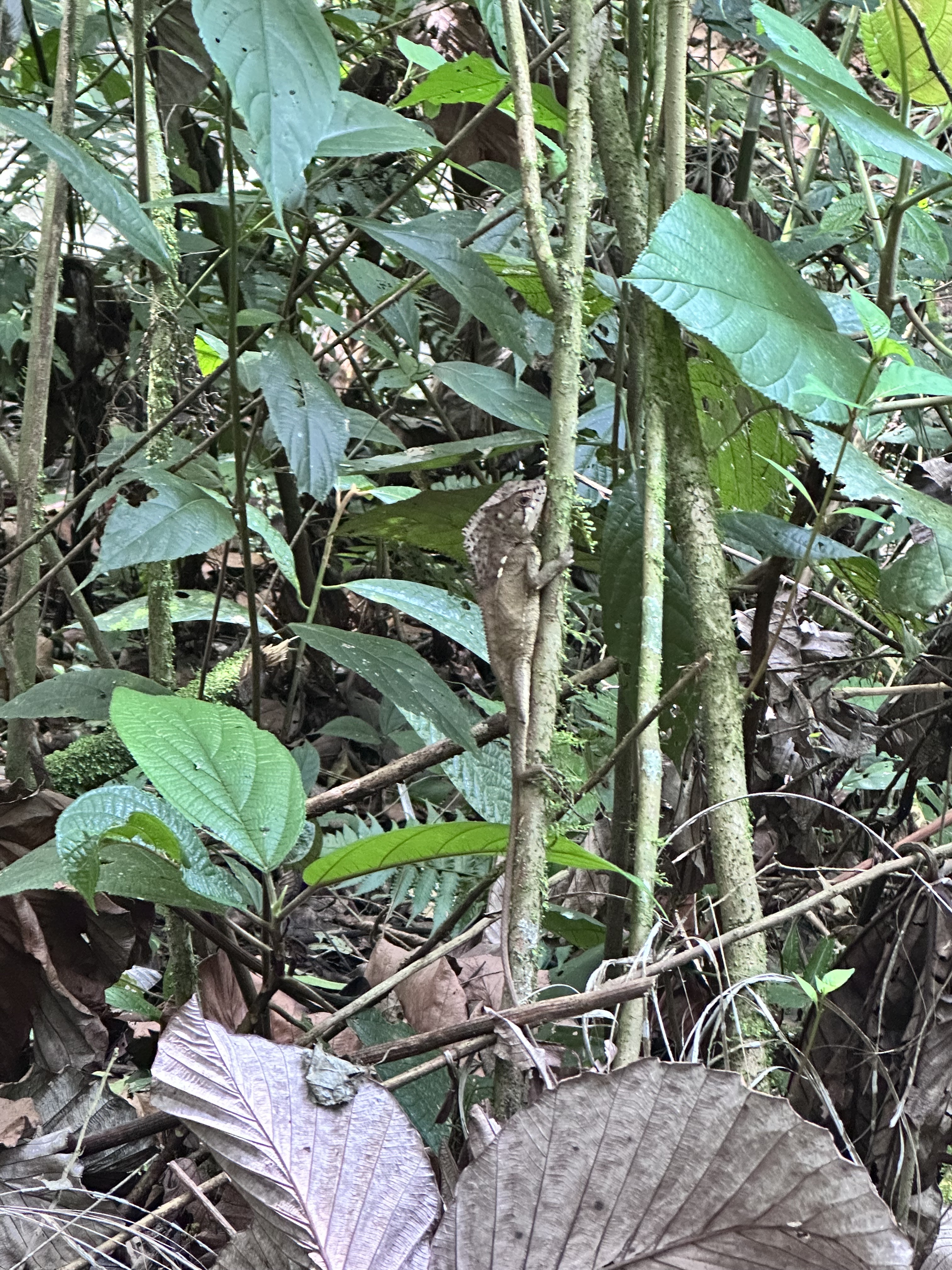
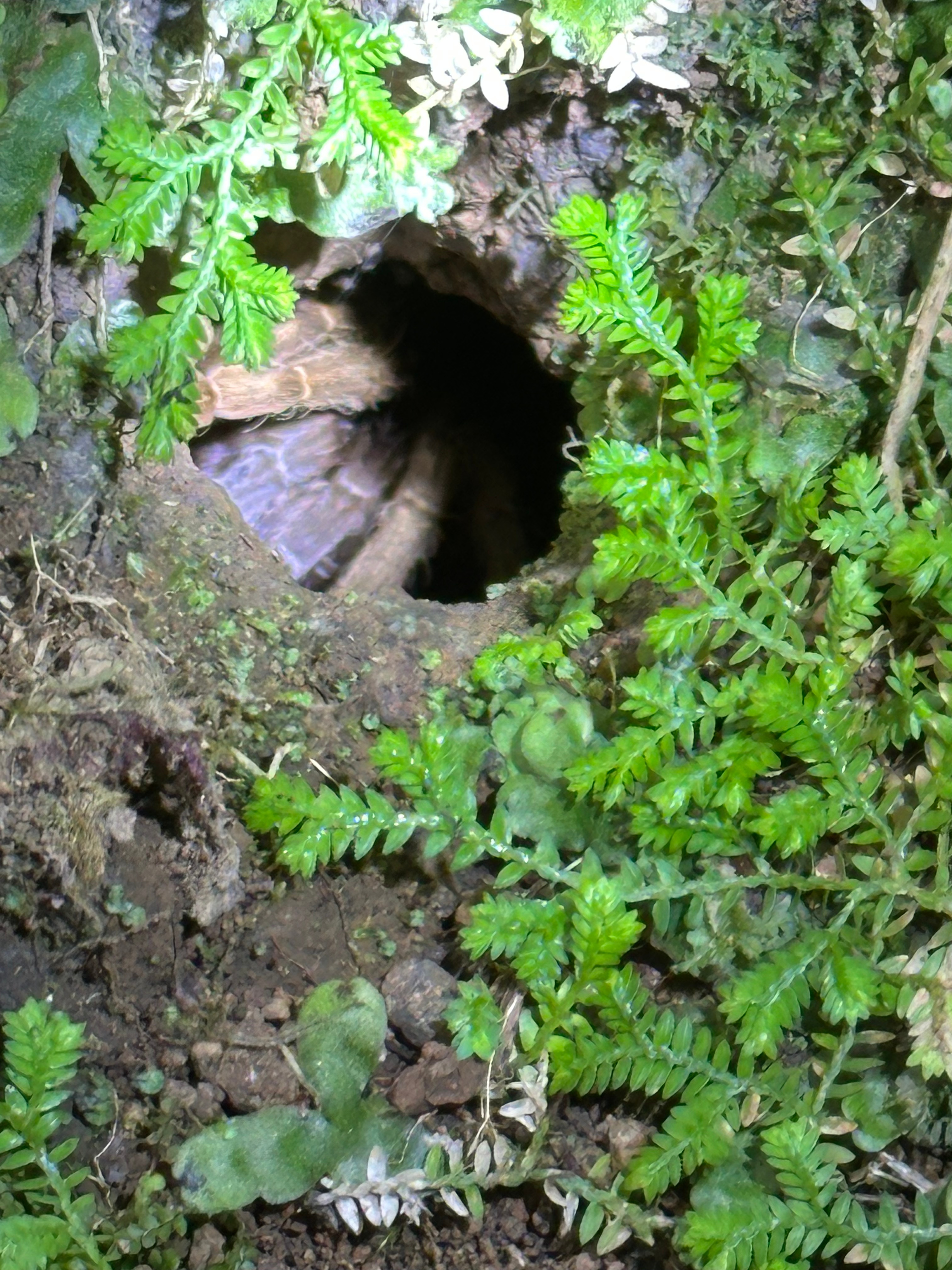
We saw lots of birds, strange worms and caterpillars, spider monkeys, iguanas (several types), a massive march of leaf cutter ants (cut leaves included), spiders, a Soil Crab (very rare in the north of Costa Rica), a tarantula (in his hidey hole), bunches of birds of all types and colors, and tiny Blue Jeans frogs. These bad boys, bright red tops and denim blue bottoms and legs are so poisonous that one frog can kill 6 humans. Their skin slime is collected by pushing them through a funnel made from a plant leaf, and a Spike Palm spine is dipped in it, which is then blown out of a tube made from a banana leaf to take down an enemy. The poison is a hemotoxin, so death is long and tortuous, inevitably resulting in massive organ failure. Too toxic to hunt for food, these darts are only for self-defense. Other vegan toxins treat arrows for hunting food without killing the human consumer. We heard more than one version of the poison dart story, but I picked this one because it has cooler content. The other version had only arrows, no darts, and no enemies in it. What’s the fun in that?
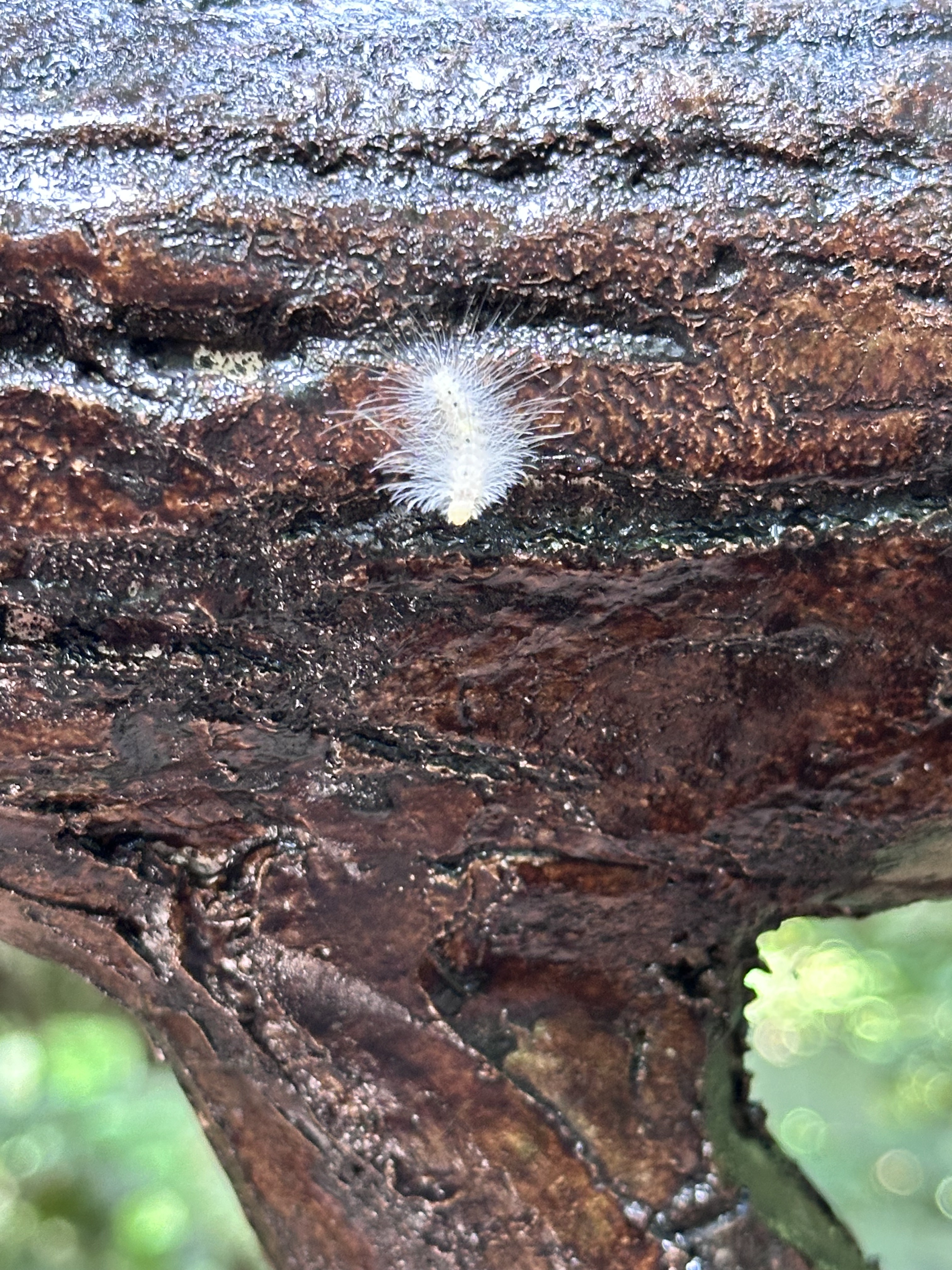
The leaf cutter ants are very industrious. They cut only a certain kind of leaf with a high acid content. They take the cut leaves back to the nest and compact them all together into a mass, which then ferments from the heat and moisture. At some point mushrooms sprout from the fermented blob, and that’s what the ants eat.
Based on the description that Samuel gives of the crowds on this tour during the high season (as recently as last week), I can only envision Disneyland during spring break without any express lines. I’m glad we came later because we never had to wait for anything except a minute or two for the first hanging bridge (capacity is strictly controlled on all the hanging bridges).
After our long soak in the magical mineral springs, we decide that a scouting trip to the town of La Fortuna is in order, about 4 miles away. I have no trouble finding several Ubers within a few minutes of the hotel. We summon one and head out. About 2 miles into the trip our driver suddenly turns into the driveway of a large private estate and pulls up to the security gate and then just sits.
He is chattering away at a mile a minute with a buddy on his phone, and then uses his translation app to inform us that the police have set up a roadblock about .1 miles down the road into town (we can see them easily). Then he explains that “Uber isn’t regulated in Costa Rica”, meaning it’s illegal, and he can’t risk getting pulled into the stop with passengers in the car. So, he calls us a “red cab”. Red is the color of official taxis, and it’s probably pressure from the cab dispatcher on the local mayor that brings out the roadblocks. After all, cab fare into town was about $8 while the Uber was only $5. The cab eventually comes and we escape jail (maybe a little stretch here) by paying the full freight of $8 for ½ the ride into town. I still tipped the Uber driver for what looked and felt like saving us from either a “no bueno” situation or a long walk. And that’s the story we’re sticking with.
La Fortuna is an interesting town that looks like it was purpose-built for tourism. It’s unlike all the small towns we drove through on our way up from San Jose in that every other establishment is either a souvenir shop or a restaurant. Our cab driver recommended La Fortunendo, which has the look and feel of a sit-down fast food place, but the menu and food of a full-on restaurant. We’re not terribly hungry so we settle on some ceviche and a coffee-crusted beef entrecote to share. The portions are large, the beef looks like a sliced London broil. It’s all delicioso, and we woof it down.

A condiment is placed on the table without explanation, and I give it a taste. It is
fire in a glass jar
Down the hatch goes my Coke Zero and glass of water. I like hot food a lot; this small jar would last me 10 years.
The ride back is, you guessed it, via Uber. I appreciate a good underground economy as much as the next Americano. No roadblocks this time, the fare is still $5, and out of gratitude for a quick and easy return I tip the driver another 5er.
Tuesday May 6: Today is our transit day to Arenas Del Mar Beachfront Resort & Rainforest adjacent to Manuél Antonio National Park. This is the only hotel with direct access to 2 beaches (Playa Espadrilla, the public one, and Playa Playitas, the private one) and MANP. It’s a 5-hour road trip, so we elected to hire a private driver so we could soak up the local scenery.
Before we set off, we remarked to our driver how exciting it was to see so much wildlife, but that we had not yet seen a toucan. We drove down the driveway about 100 meters and he stopped and just like that pointed out a small one high in a tree.
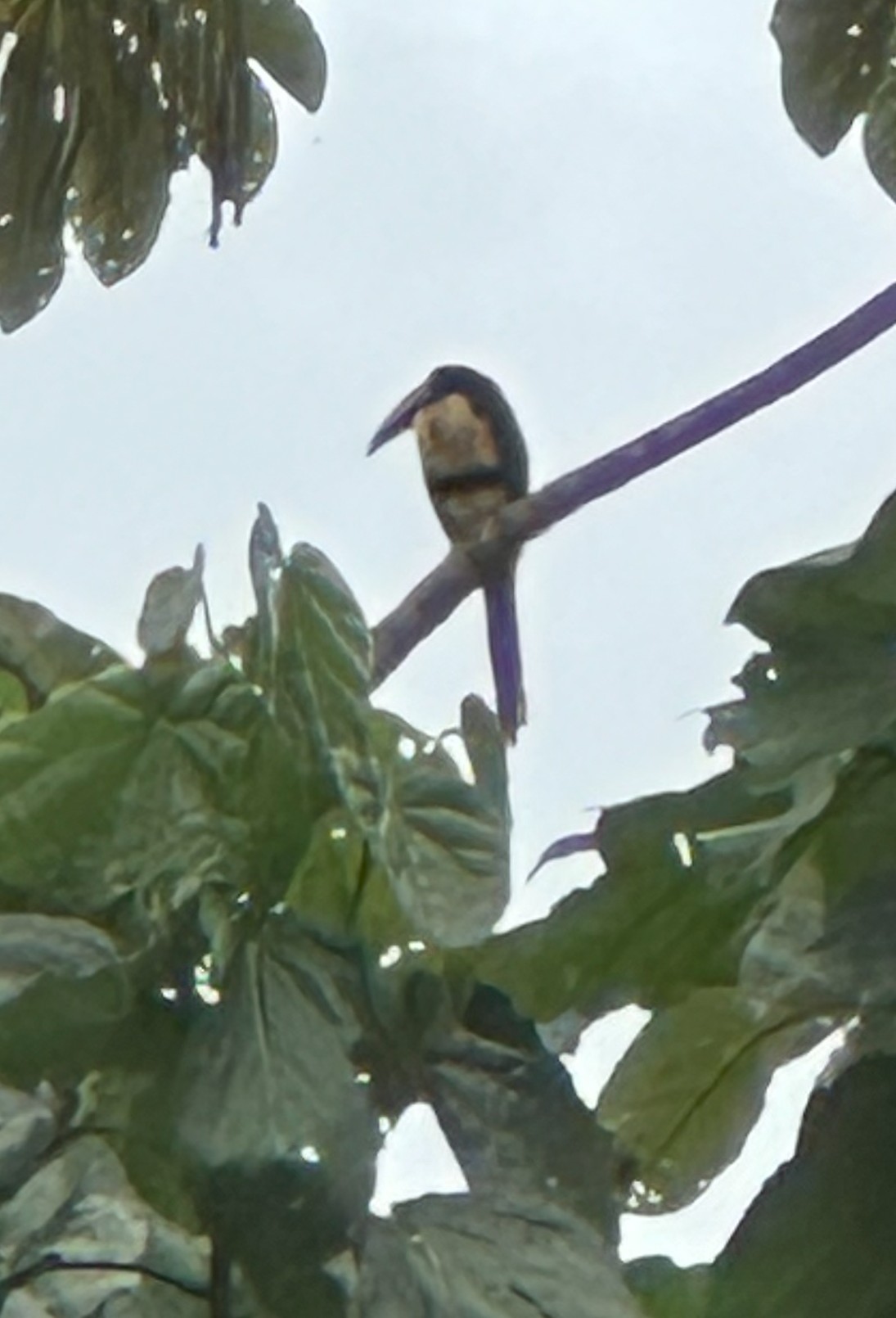
Who knew that spotting wildlife was a Costa Rican superpower. Not much farther, on the main road south, he pulled up to a quick stop, slammed it into reverse (all the cars behind us calmly swerved around us like this is a totally normal thing) and stopped adjacent to a small tree not much taller than the van at the edge of the road. In the base of the branches napped another sloth! Right in front of us this time. So far, all our sloth sightings have been drive-bys, and we are told later that this is because the roads all skirt the perimeters of the forests, and the sloths don’t inhabit the forest interiors, they travel around the edges. In fact, they use overhead wires to transit from one side of the road to the other.
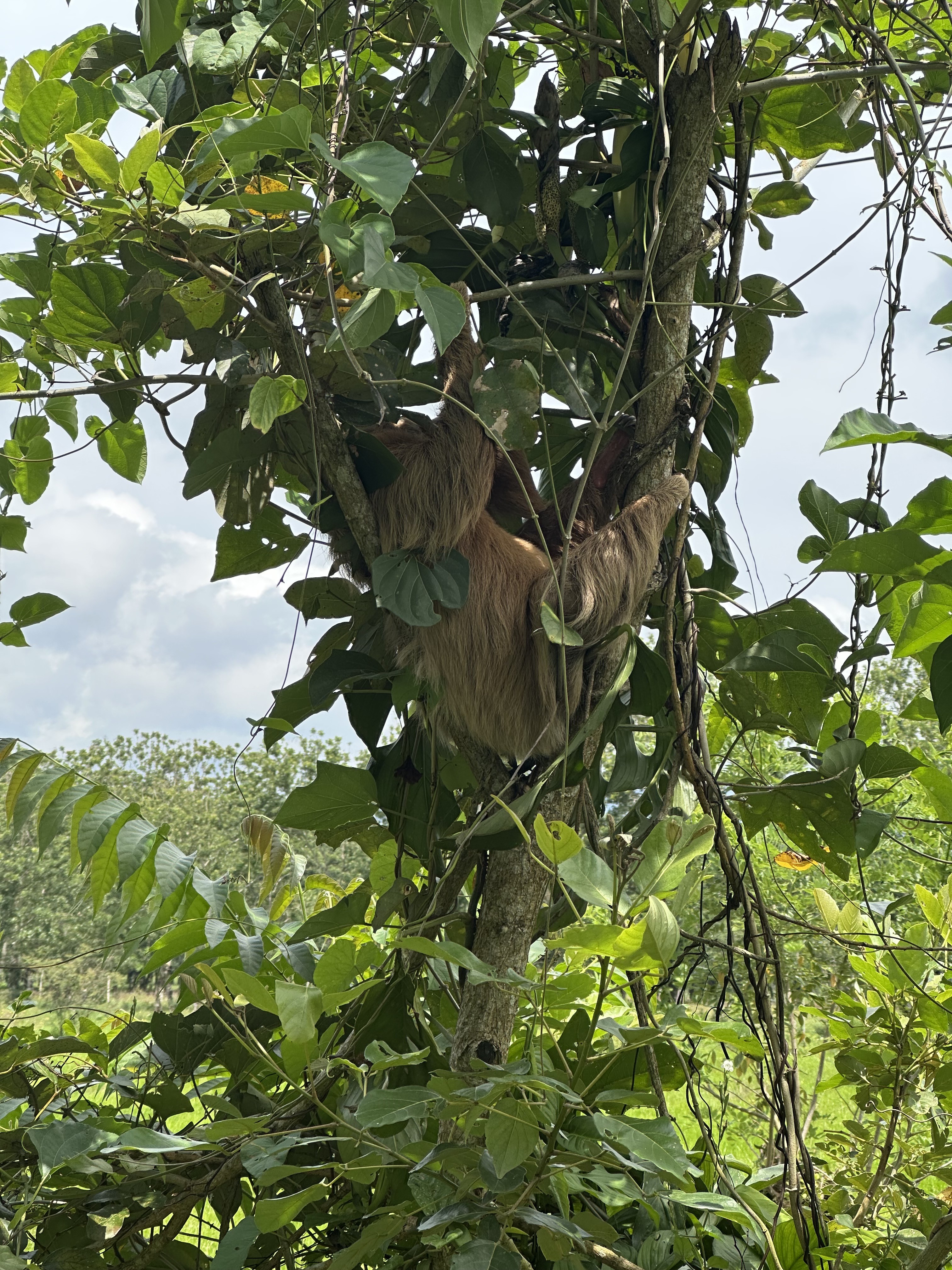
The powerline infrastructure has widely spaced wires to accommodate this wildlife “highway” so that fully cooked animals don’t routinely drop in the road, freshly electrocuted.
We drove south on small roads through the central valley and then into the coastal highlands, where the roads don’t get much wider in spite of the huge increase in truck traffic. The two main mountain ranges in Costa Rica are very different. The mountains on the west are all volcanic, and the soil that developed there has a clay-like texture that is extremely rich in nutrients and minerals. That’s where most of the agriculture takes place. The eastern range formed by tectonic plate upheaval, and is rockier and sandier, with soil less suited to agriculture. Lucky for us, agriculture requires better roads, and our route takes advantage of that. I can only imagine what the roads in the east look like in comparison. It takes us 5 hours to transit about 170 miles.
A little over midway, traffic suddenly comes to a stop as we pass a semi-truck on the oncoming side that has just been sideswiped by another semi-truck traveling in our direction about 4 vehicles ahead of us. The sideswiping truck has swerved all over the road and ended up off the right side in a big ditch. Debris and smoke are everywhere, and traffic in both directions grinds to a halt. One driver has suffered a small cut (our driver provides a band aid), but otherwise everyone is alright, and soon a few men sort out a passageway through the wreckage and we’re lucky to be one of the first to get free and continue our journey. Nobody seems particularly alarmed by all of this, so I can only guess it isn’t that unusual. Thank God we happened to be at a wide spot in the road!
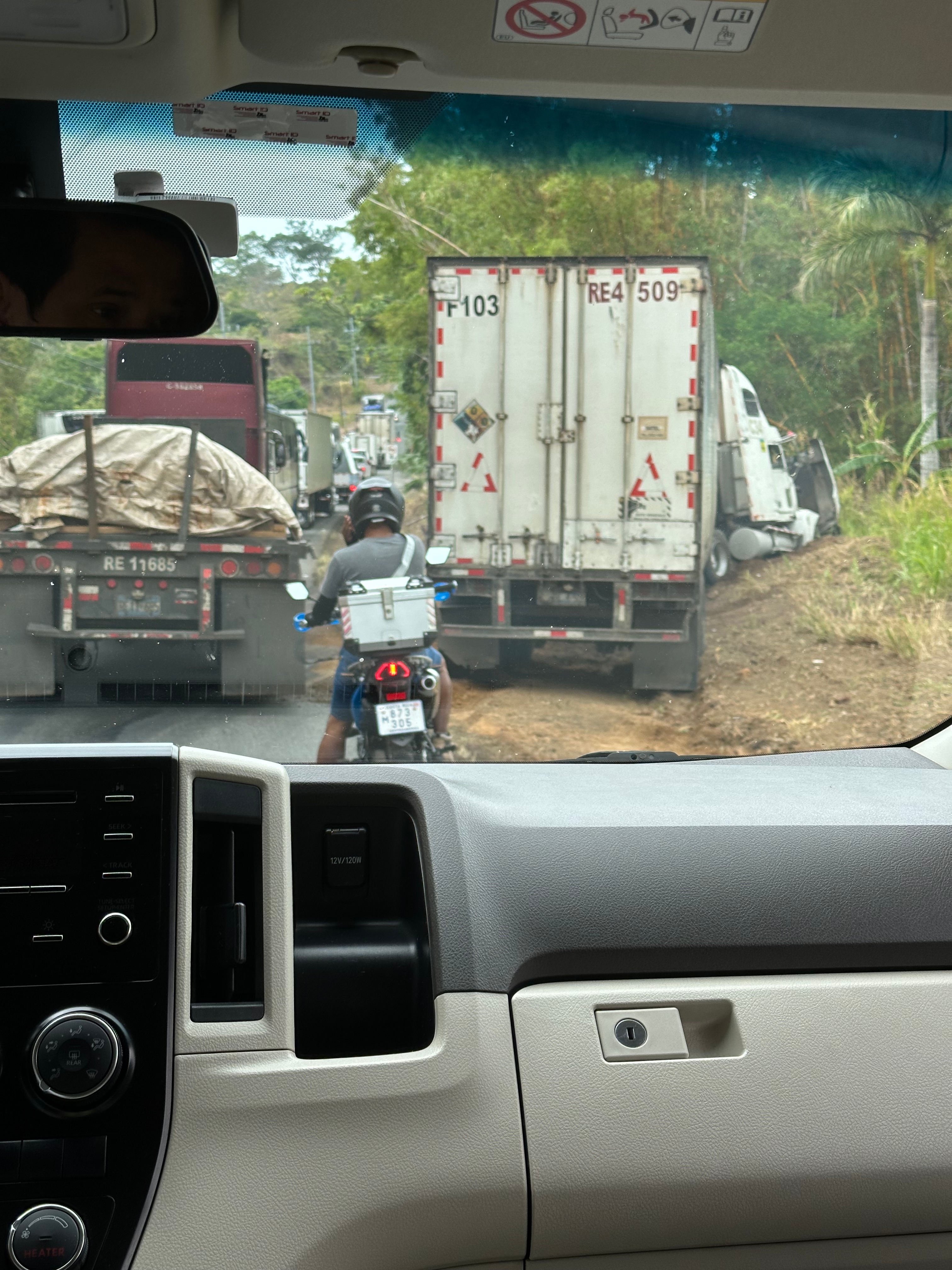
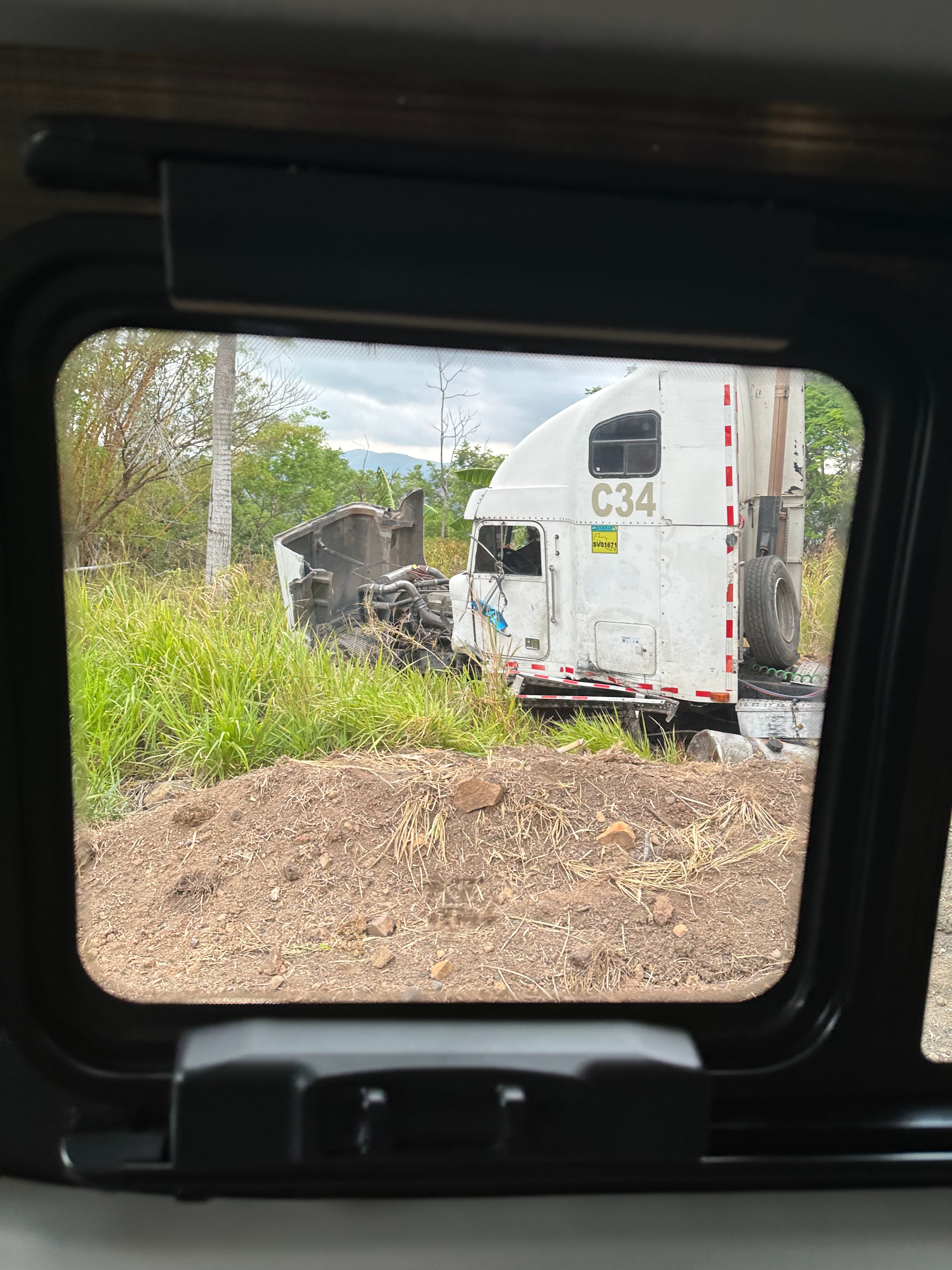

We make sure our seat belts are snug. Our short delay has eaten up the extra time we had by getting a 15 minute earlier start, but we decide to still stop for lunch and a bathroom break at about the 3 ½ hour mark. The driver pulls over at a truck stop close to a bridge, which is awesome because we get a 3 way stop: bathroom (great relief, and clean!), lunch is a large plate of extremely traditional country fare of local veggies and meats with fresh fruit juice ($8, we shared it), and the bridge crosses a wide river full of crocodiles. It was curious that this river also bordered some cattle grazing, and the clash of the cattle drinking from the river that was seemingly teeming with crocodiles looked a little surreal. I’ve seen African documentaries, and this scene looked exactly like the one that has crocs snacking on Wildebeests. A cow looks much like a Wildebeest to me, so I can’t guess what’s keeping all those predators from dining on them.

Next up, our extended stay at Manuel Antonio! Pura Vida Tres!

 MUDDSCAPE
So exciting to see the variety of animals and it’s always better when they are in their natural habitat. Truly a special trip for you!